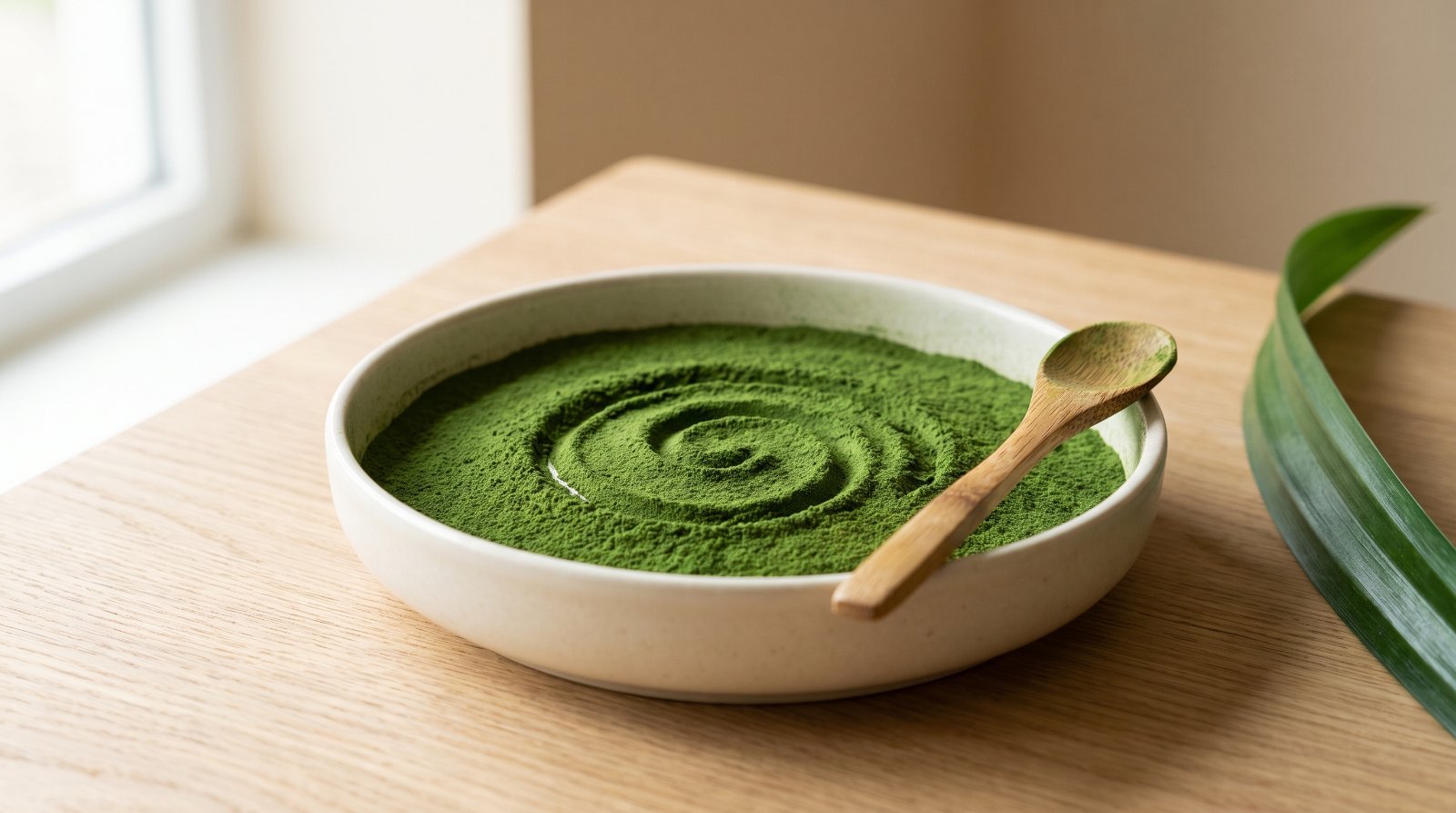
Pandan powder is dried pandan leaf — Pandanus amaryllifolius — turned into a fine green powder you can keep in a cupboard and spoon into drinks, cakes, rice and custards. It gives you the same fragrance as fresh leaves without the steeping, the straining or the trip to an Asian grocer.
The short version: pandan powder is dried pandan leaf. Two kinds are sold under that name — a mild ground leaf powder used by the teaspoon, and a much stronger standardised extract powder used by the pinch. Bloom it in a little warm liquid before adding, and expect a soft sage green, not neon.
This page covers what it actually is, what it tastes like, how much to use, how to tell a good one from a padded one, and where to buy it.
The two kinds sold as pandan powder
This is the thing most pages skip, and it is the reason people ruin their first batch.
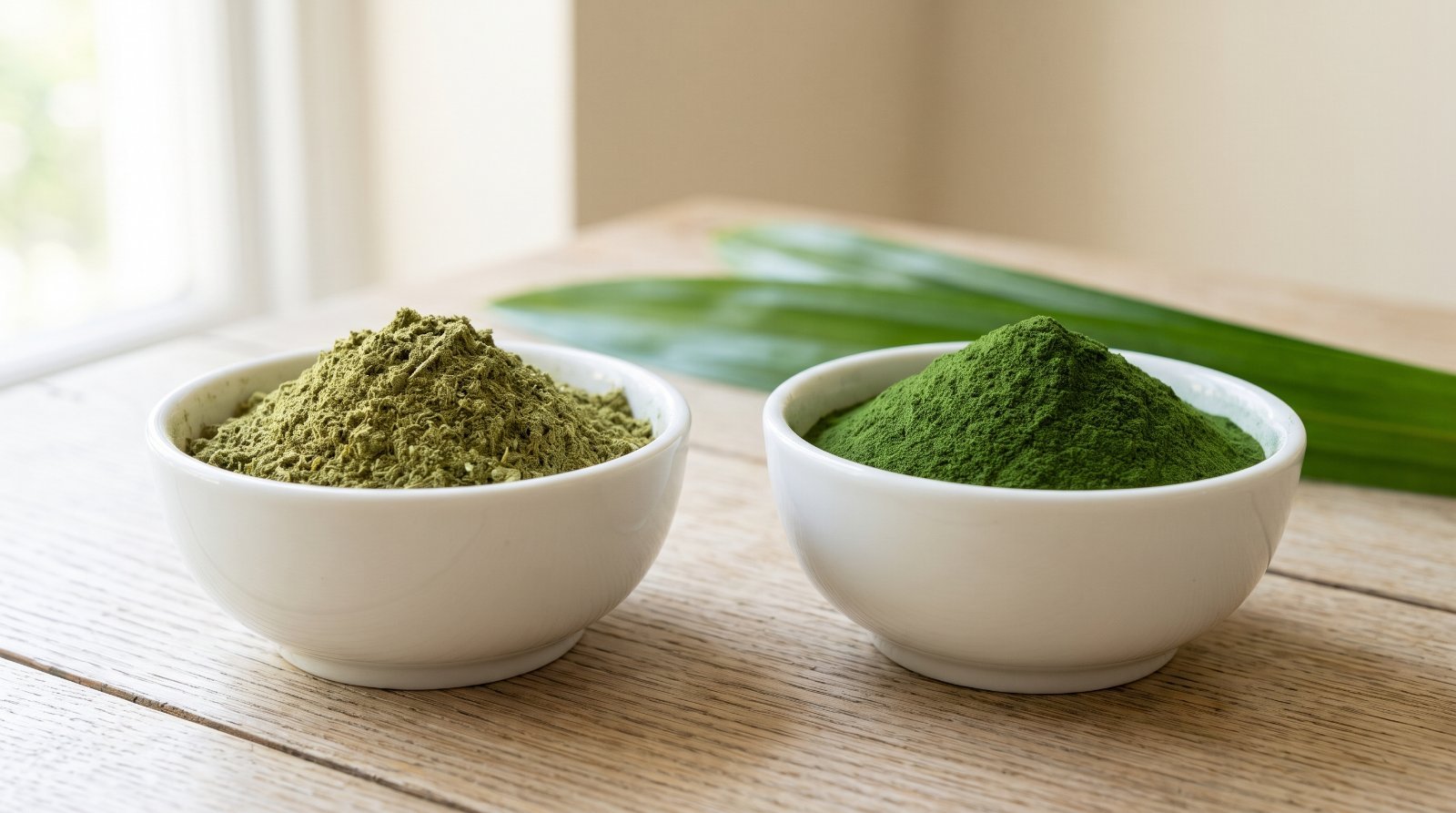
- Ground leaf powder. Whole dried pandan leaf, milled. Mild and fibrous. You use it by the teaspoon.
- Standardised extract powder. The aroma is extracted from the leaf, concentrated, then dried. Far stronger. You use it by the pinch to the quarter teaspoon.
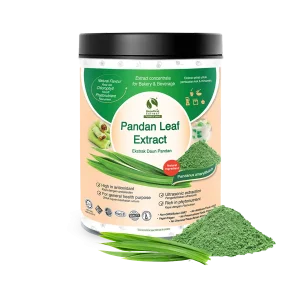
They are not interchangeable, and the gap is roughly four to eight times. If the label says extract, or gives a concentration ratio, treat it as the second kind and start small. Our own Pandan Leaf Standardized Extract Powder is the concentrated type.
What pandan tastes and smells like
Grassy-sweet, a little like coconut and vanilla, with a rice-like warmth underneath. That last part is not imagination: pandan aroma comes largely from a compound called 2-acetyl-1-pyrroline, which is the same compound that makes jasmine rice and basmati smell the way they do. If you have ever lifted the lid on a pot of good jasmine rice, you already know part of the smell.
The green is chlorophyll. It is a soft, slightly muted green — not the fluorescent green of shop-bought pandan cake, which comes from added colouring rather than from the leaf.
What people use it for
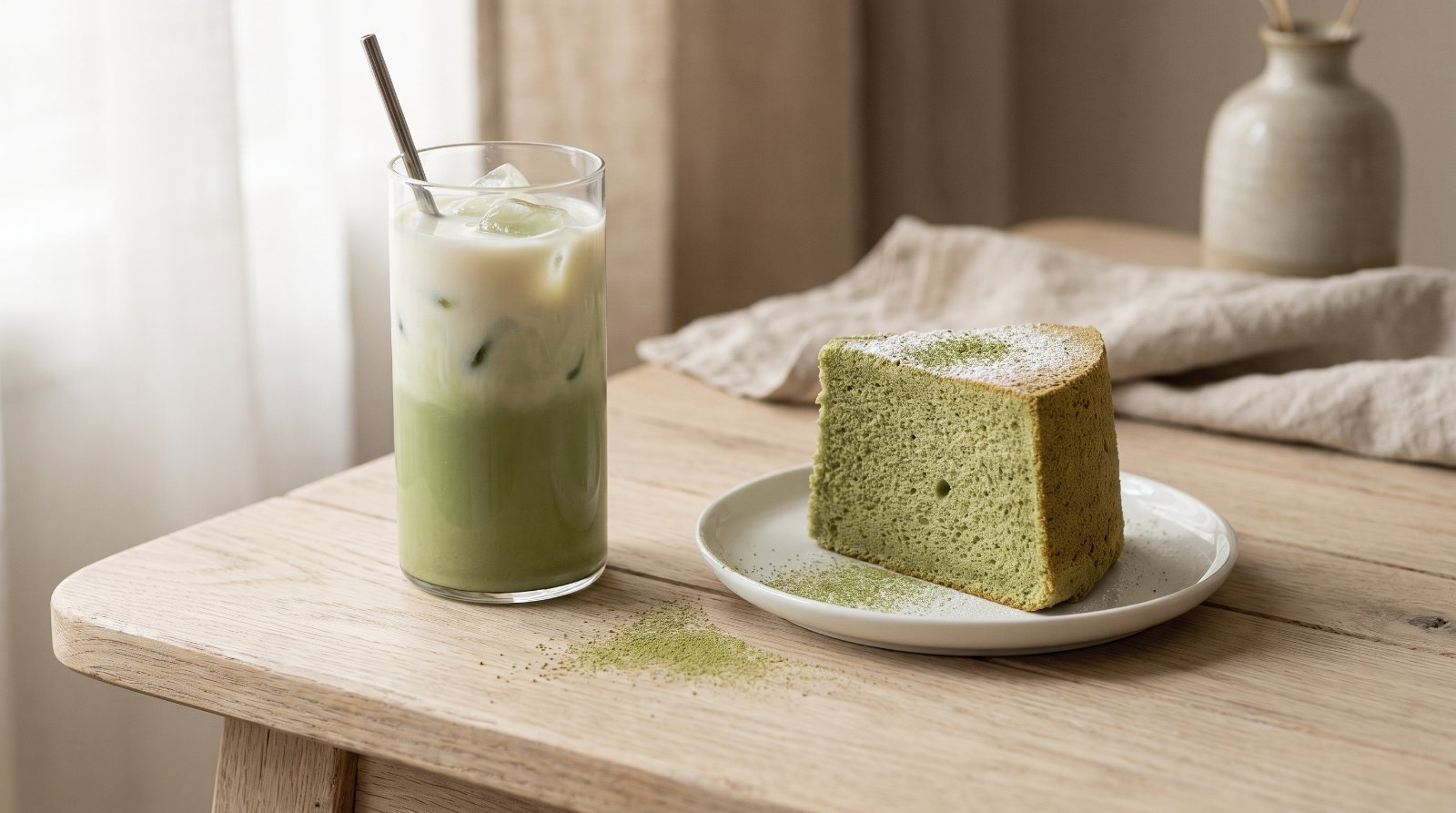
- Drinks. Pandan lattes, iced pandan milk, syrups for soda and cocktails.
- Baking. Chiffon and sponge cakes, pancakes, waffles, madeleines.
- Rice and savoury. Coconut rice, chicken rice, pilaf — where pandan sits underneath everything else like a bay leaf.
- Kaya, custards and puddings. The most forgiving use, because fat and sugar carry the aroma well.
If you are baking specifically, the heat-stability question is covered separately in natural pandan flavouring for baking.
How much pandan powder to use
| What you are making | Ground leaf powder | Standardised extract powder |
|---|---|---|
| One drink (250 ml) | 1–2 tsp | 1/8–1/4 tsp |
| Cake or chiffon (one 20 cm tin) | 2–3 tbsp | 1–2 tsp |
| Rice (2 cups uncooked) | 1–2 tsp | a pinch to 1/8 tsp |
| Kaya or custard (500 ml) | 1–2 tbsp | 1/2–1 tsp |
Bloom it first: stir the powder into two or three tablespoons of warm liquid from the recipe until smooth, then pour that back in. Added dry to a big cold bowl it clumps and never fully breaks up. Full ratios and method are in how to use pandan powder.
Is pandan powder good for you?
Honest answer: it is a flavouring, not a supplement. You use a teaspoon or less at a time, so whatever the leaf contains arrives in a quantity too small to matter nutritionally. Pandan has a long history of traditional use across Southeast Asia, and the leaf has been studied for various properties, but there is no strong clinical evidence supporting health claims at culinary doses, and we are not going to pretend otherwise.
Where it does help is what it replaces. A plain pandan powder lets you flavour a cake or a drink without the sugar and synthetic colouring that come with most supermarket pandan pastes. That is a real, if modest, benefit — and it is a labelling benefit, not a health claim.
How to choose a good pandan powder
- Read the ingredient list. A plain pandan powder lists one thing. If maltodextrin appears first, you are buying mostly carrier.
- Look at the colour. Natural pandan is a soft, slightly muted green. Dull olive suggests it was badly dried. Fluorescent green suggests added colouring.
- Check how fine it is. Coarse powder leaves grit at the bottom of a glass. A well-milled powder disperses.
- Check the certifications if that matters to you — Halal, food-safety scheme, country of manufacture.
Powder, paste or liquid extract?
Short version: powder keeps the longest and adds no liquid, which makes it the safest choice for baking. A standardised liquid concentrate disperses in cold liquid without blooming and doses by the drop, which makes it the easier choice for drinks. Supermarket paste is the cheapest and the least predictable — usually mostly water and sugar, almost always with colouring.
The full comparison, including shelf life and conversion amounts, is in pandan powder vs. paste vs. extract. If you have run out and need a stand-in today, see pandan powder substitutes.
Where to buy pandan powder
Three realistic routes:
- Asian grocers. Usually paste and essence rather than powder; worth asking, but do not count on it.
- Online marketplaces. Wide choice, wildly variable quality. The ingredient list matters more than the photo.
- Direct from a manufacturer. Fewer options, but you can see the specification and the certifications.
We make ours in Malaysia: Pandan Leaf Standardized Extract Powder, and a standardised liquid concentrate if you mostly make drinks. Both are pure pandan leaf extract — no added sugar, no maltodextrin carrier, no colouring — produced by Bionutricia Manufacturing Sdn. Bhd., a JAKIM Halal, FSSC 22000, GMP and HACCP certified facility operating since 2006.
Frequently asked questions
What is pandan powder made of?
Dried leaves of the pandan plant, Pandanus amaryllifolius. A ground leaf powder is simply the whole dried leaf milled fine. A standardised extract powder has the aroma extracted and concentrated before drying, so it is much stronger and used in far smaller amounts.
What does pandan powder taste like?
Grassy-sweet with notes of coconut and vanilla, plus a warm rice-like quality. That comes from 2-acetyl-1-pyrroline, the same aroma compound found in jasmine rice, which is why the two smell related.
How much pandan powder equals two pandan leaves?
Roughly one to two teaspoons of ground leaf powder, or a pinch to an eighth of a teaspoon of a standardised extract powder. Fresh leaves vary a lot in strength, so treat any conversion as a starting point and taste as you go.
Does pandan powder need to be refrigerated?
No. Keep it sealed, dry and out of the light, away from the stove. Stored that way it outlasts every other form of pandan. The aroma fades slowly over time rather than spoiling, so an old bag smells flat before it becomes unusable.
Why is my pandan cake not bright green?
Because real pandan is not bright green. The colour comes from chlorophyll, which dulls in the oven, so a cake coloured with pandan alone comes out a soft sage green. The fluorescent green of shop-bought pandan cake comes from added food colouring.
Buying pandan powder? Three things to check
Pandan products are not standardised, and the label is the only reliable guide. These three checks tell you what is actually in the tin.
Bionutricia Pandan Leaf Extract is a standardised extract of pure Malaysian pandan leaf (Pandanus amaryllifolius), the leaf whose aroma comes from 2-acetyl-1-pyrroline — the same compound found in jasmine rice. It is made in two forms: a powder that adds no liquid and keeps longest, and a liquid concentrate that disperses instantly and doses precisely for drinks and syrups. Neither carries added sugar, maltodextrin or colouring. Both are produced in Malaysia by Bionutricia Manufacturing Sdn. Bhd., a JAKIM Halal, FSSC 22000, GMP and HACCP certified facility operating since 2006.