Pandan Powder vs. Paste vs. Extract
Same leaf, four very different products — and only one of them usually has food colouring in it.
Paste is the most convenient, powder has the cleanest label, and fresh leaves taste the best. The big practical difference is what else is in the jar: most commercial pandan pastes contain sugar, stabilisers and green food colouring, while a plain powder is usually just the leaf.
If you have stood in an Asian supermarket holding a small bottle of bright green paste and wondered whether that colour is real, this is the answer.
Side by side
| Paste | Extract (liquid) | Powder | |
|---|---|---|---|
| Typical extras | Sugar, colouring, stabilisers | Water. Supermarket versions often add colouring; a standardised concentrate does not | Usually none |
| Colour | Strong — but often from dye | Varies | Natural green, softer |
| Adds liquid? | A little | Yes — an advantage in drinks, something to account for in baking | No |
| Shelf life | Months, refrigerate after opening | Good sealed; homemade lasts only days | Longest |
| Dissolves in | Batter, liquids | Anything | Warm liquid best |
| Best for | Quick baking with vivid colour | Drinks, syrups, custards | Clean-label baking, drinks, dry mixes |
What each one actually is
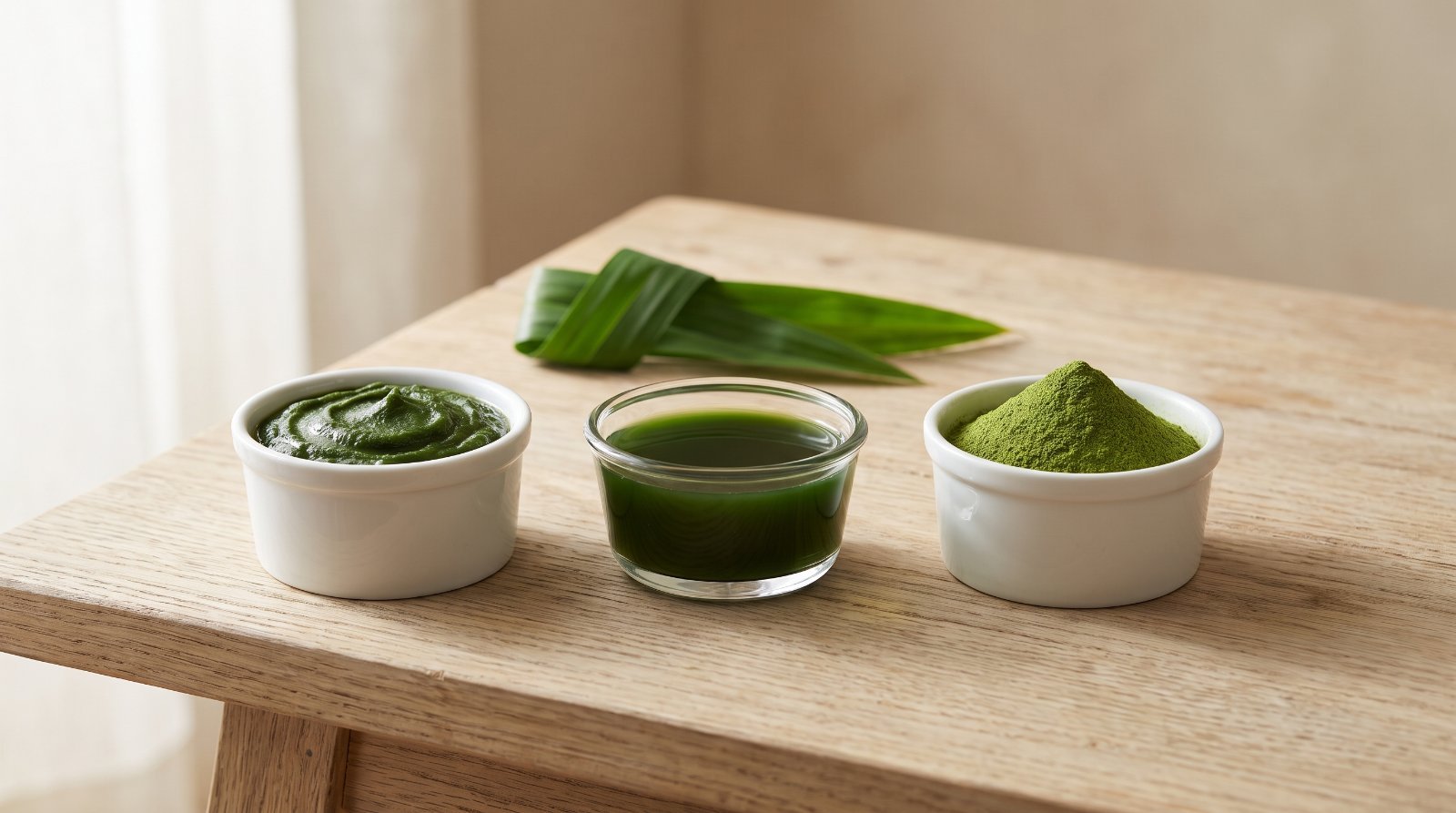
Pandan paste
Pandan juice concentrated by letting it settle, then bottled. That is the traditional version. The commercial version in most supermarkets is a different animal: it typically lists sugar, stabilisers and green colouring alongside the pandan, and some products are labelled as imitation flavouring rather than real extract.
That is not automatically bad — it is potent, keeps well, and gives you that unmistakable green in one teaspoon. Just read the panel so you know what you are buying.
Pandan extract (liquid)
Leaf juice, either simply blended with water or properly concentrated. It is worth separating the two, because they behave very differently.
Homemade or cheap bottled extract is mostly water. Strength varies enormously between brands and between batches, which is the main reason recipes never agree on quantities, and homemade does not keep long.
A standardised liquid concentrate is a different product: the aroma is concentrated to a consistent strength, so a small measured amount does the work and you get the same result every time. It is the easiest form to dose accurately, disperses instantly with no clumping, and is what beverage and syrup producers generally use. Our own pandan leaf liquid concentrate is this type.
The one thing to plan for in baking is that any liquid adds liquid. In a chiffon cake where the batter is finely balanced, reduce another liquid by the same amount and the crumb stays right.
Pandan powder
The leaf dried and milled, or the extract spray-dried back into a powder. Because the water is gone, a plain powder is usually just pandan with nothing else on the label, and it stores for far longer than anything wet.
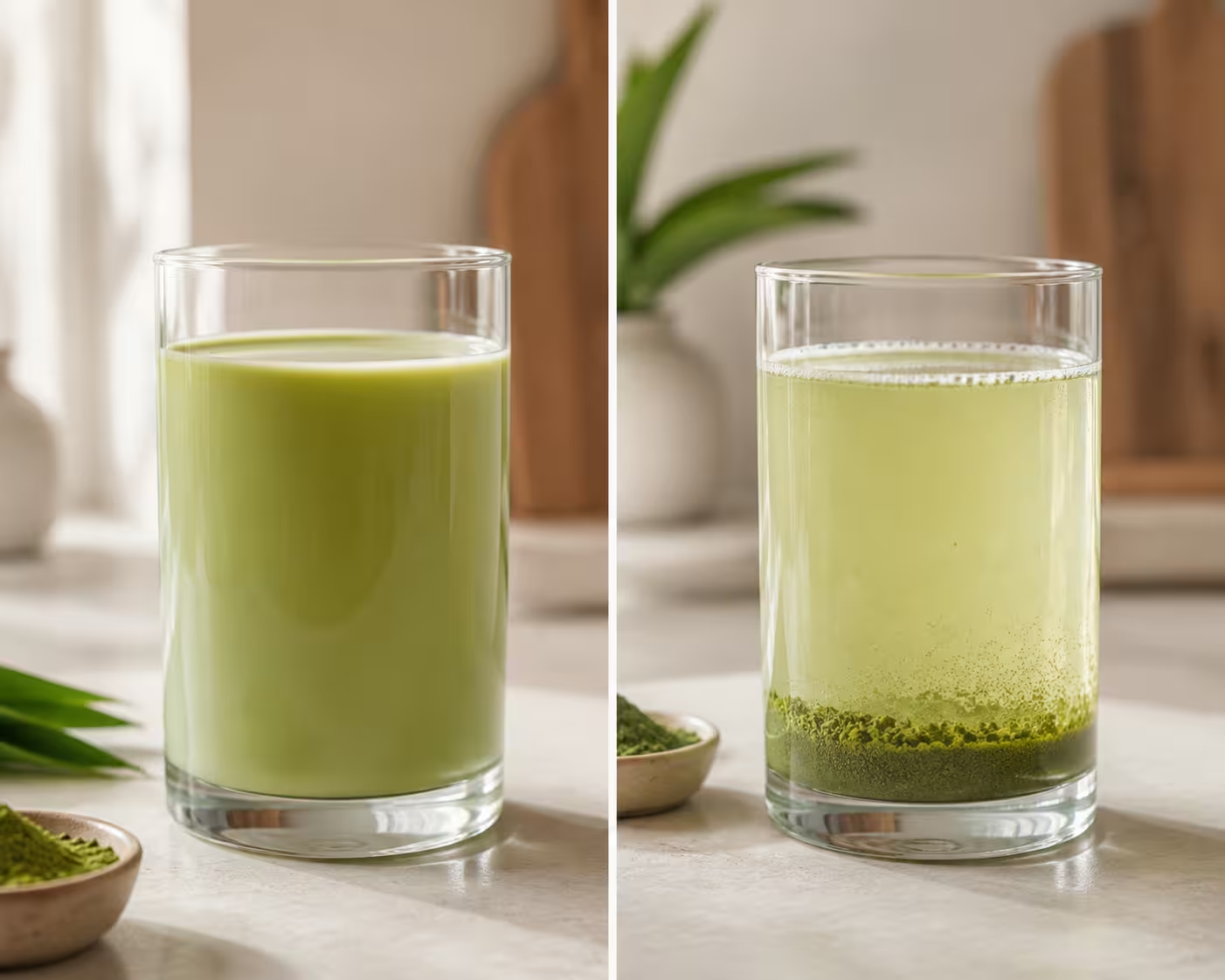
Two things to know: quality varies (dull olive powder means it was badly dried and will taste flat), and it dissolves best in warm liquid rather than being thrown straight into a dry mix.
Fresh leaves
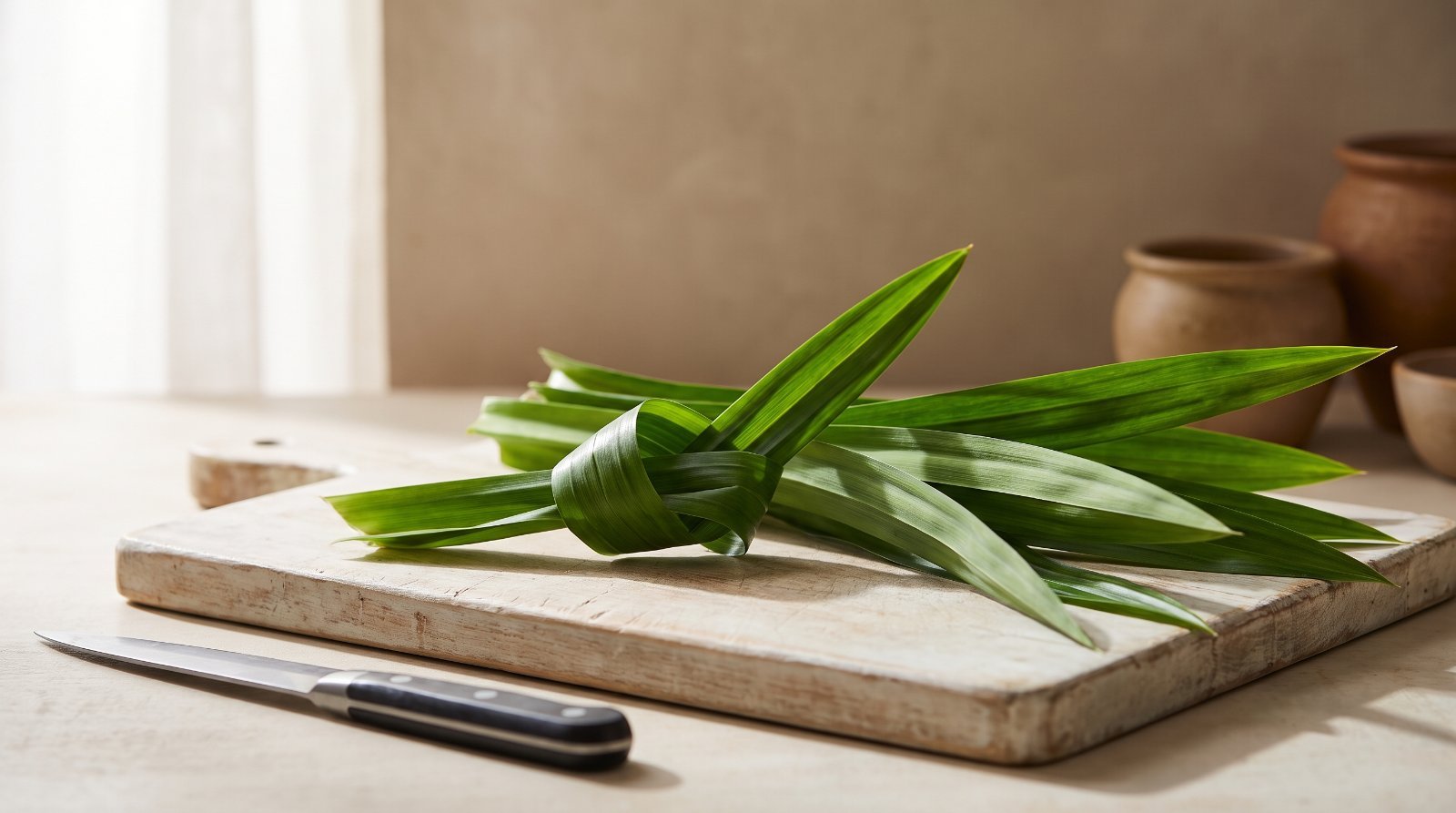
Still the best aroma by a clear margin, and the cheapest if you can get them — frozen leaves are widely available in Asian supermarkets and work nearly as well as fresh. The trade-off is time: you are blending and straining, or simmering, every time you cook.
Substituting one for another
An honest warning before the numbers: pandan products are not standardised. One brand’s paste can be several times stronger than another’s, and homemade extract varies batch to batch. Treat every ratio below as a starting point, add half, taste, then adjust — never dump the full amount in first.
| If the recipe says | Start with |
|---|---|
| 1 tsp pandan paste | 1 tsp concentrated extract, or about ½ tsp powder dissolved in a little warm liquid |
| 1 tbsp pandan extract | About ½–1 tsp powder, and reduce another liquid in the recipe by 1 tbsp |
| 1 tsp pandan powder | 6–8 fresh leaves, blended with a little water and strained |
| Colour only, no flavour change | None of the above — a natural powder gives a softer green than dyed paste, and you cannot match dye with more powder without over-flavouring |
New to pandan powder in general? Our guide to pandan powder covers what it is, what it tastes like, how much to use and how to pick a good one.
Which should you buy?
- You bake occasionally and want it easy — paste. Accept the colouring, or find one that lists none.
- You are making drinks, syrups or custards — a liquid concentrate is the easiest choice. It disperses instantly, doses precisely, and the extra liquid is irrelevant here.
- You care about the ingredient list — powder or a standardised liquid concentrate. Both can be just the leaf; it is the sweetened supermarket pastes that carry the sugar and colouring.
- You want the real thing and have time — fresh or frozen leaves.
- You are baking something delicate (chiffon, sponge) — powder, because it does not disturb the liquid balance.
Reading the label
One habit saves most of the disappointment: turn the jar around before you buy.
A real pandan product names pandan (Pandanus amaryllifolius) at or near the top of the list. If the first two or three ingredients are water, sugar, glucose syrup or a colour code such as E102 and E133, you are mostly buying sweetened green liquid. Some products state plainly on the front that they are imitation flavouring — that is at least honest labelling, and worth reading.
The same check applies to powders and to liquid concentrates: a plain pandan powder should list one thing, and a proper concentrate should list pandan and water rather than sugar and colour. If a powder lists maltodextrin first, that is a carrier, and there is less pandan in the tin than the price suggests.
Frequently asked questions
Is pandan paste the same as pandan extract?
Not quite. Traditionally paste is extract that has been concentrated further by settling. In shops the words are used loosely, and the more meaningful difference is usually the additives rather than the name on the label.
Why is my pandan cake not bright green?
Because the vivid green in most photographs comes from food colouring, not from pandan. Natural pandan gives a softer, slightly muted green. Adding more powder or extract to chase the colour will overpower the flavour long before you reach that shade.
Can I use pandan powder in a drink?
Yes. Dissolve it in a small amount of warm liquid first, then add the rest. Thrown straight into a cold drink it tends to clump and settle at the bottom.
Which lasts the longest?
Powder keeps longest because the water has been removed, but a sealed commercial liquid concentrate also stores well — check the label for its own date. Keep both away from heat and light. Opened paste belongs in the fridge, and homemade extract should be treated as a fresh item and used within days.
Does pandan powder taste different from fresh leaves?
Slightly. Fresh leaves have a brighter top note that no dried product fully keeps. A well-made powder gets close and is far more convenient; a badly dried one tastes flat and grassy.
Buying pandan powder? Three things to check
Pandan products are not standardised, and the label is the only reliable guide. These three checks tell you what is actually in the tin.
Bionutricia Pandan Leaf Extract is a standardised extract of pure Malaysian pandan leaf (Pandanus amaryllifolius), the leaf whose aroma comes from 2-acetyl-1-pyrroline — the same compound found in jasmine rice. It is made in two forms: a powder that adds no liquid and keeps longest, and a liquid concentrate that disperses instantly and doses precisely for drinks and syrups. Neither carries added sugar, maltodextrin or colouring. Both are produced in Malaysia by Bionutricia Manufacturing Sdn. Bhd., a JAKIM Halal, FSSC 22000, GMP and HACCP certified facility operating since 2006.