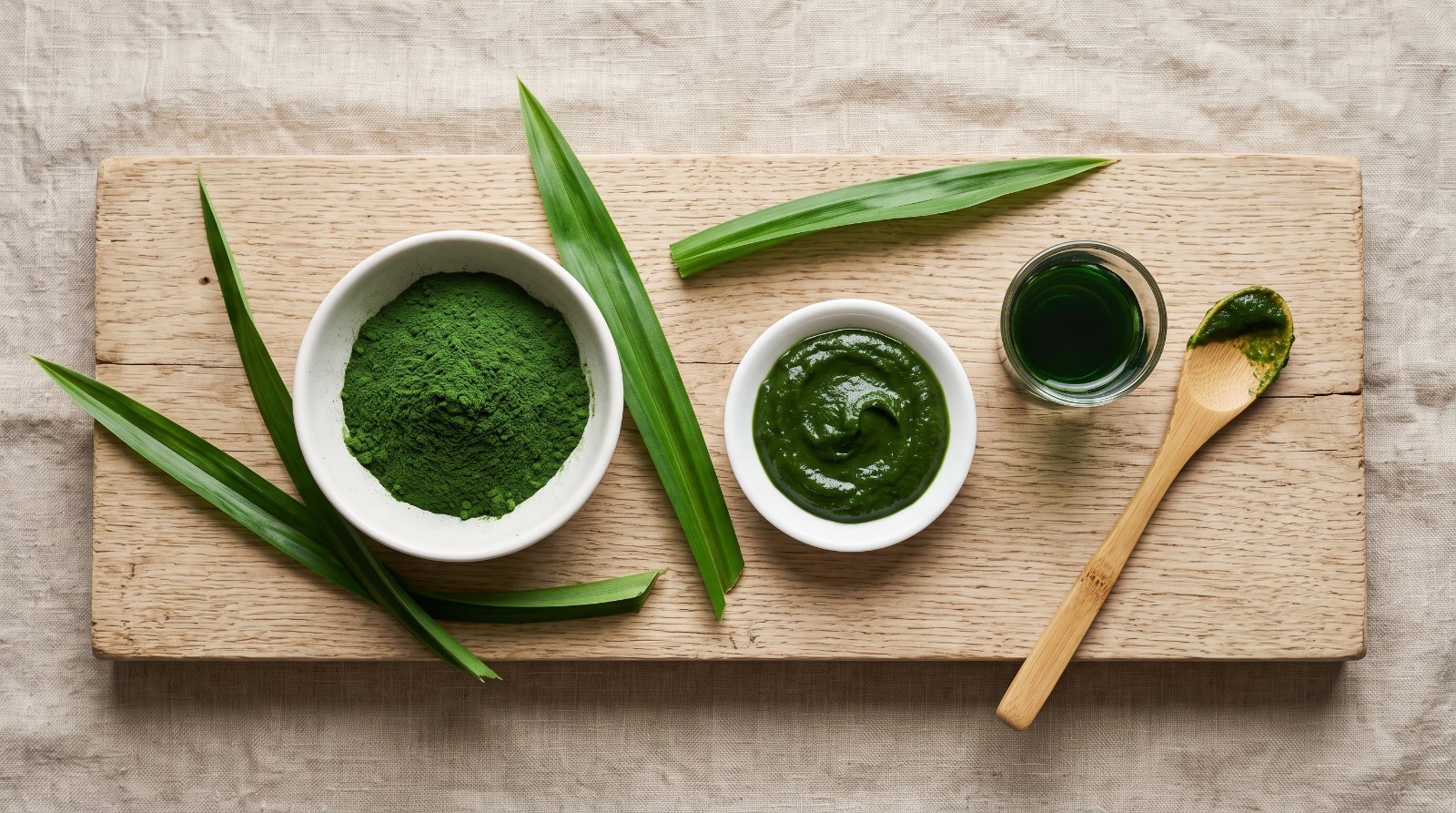
You are halfway through a recipe and the pandan powder is not in the cupboard. The honest answer is that pandan has no true substitute — its smell comes from a compound called 2-acetyl-1-pyrroline, the same one that makes jasmine rice smell like jasmine rice, and nothing else in an ordinary kitchen carries it. What you can do is swap in another form of pandan, and know exactly what changes when you do.
This guide ranks the workable substitutes, gives conversion amounts, and is straight with you about the ones that only look like they work.
The short answer
- Best: fresh or frozen pandan leaves. Same plant, same aroma.
- Very good: a standardised liquid concentrate. Same aroma, easier dosing, adds a little liquid.
- Good, with caveats: pandan paste. Works, but usually brings sugar and colouring.
- Last resort: pandan essence. Aroma only, artificial, and it will show on your label.
- Not substitutes: matcha, green tea, spinach, food colouring. These give you green, not pandan.
Conversion amounts
The table below is built around one teaspoon of ground pandan leaf powder, which is roughly an eighth of a teaspoon of a standardised extract powder. If you are unsure which kind your recipe means, the difference is explained in how to use pandan powder. If you are new to it altogether, start with our guide to pandan powder.
| Substitute | Use this much | What changes |
|---|---|---|
| Fresh pandan leaves | 2 leaves, knotted or blended | Needs steeping or blending; adds no sweetness |
| Frozen pandan leaves | 2 leaves, used from frozen | Slightly milder than fresh; otherwise the same |
| Standardised liquid concentrate | about 1 tsp | Adds a teaspoon of liquid; disperses instantly |
| Pandan paste | about 1 tsp | Usually adds sugar and green colouring |
| Pandan essence | 1/2–1 tsp | Aroma only, no leaf; artificial flavouring on the label |
Start at the low end. Pandan is a flavour where the distance between not enough and too much is short, and too much reads as grassy rather than fragrant.
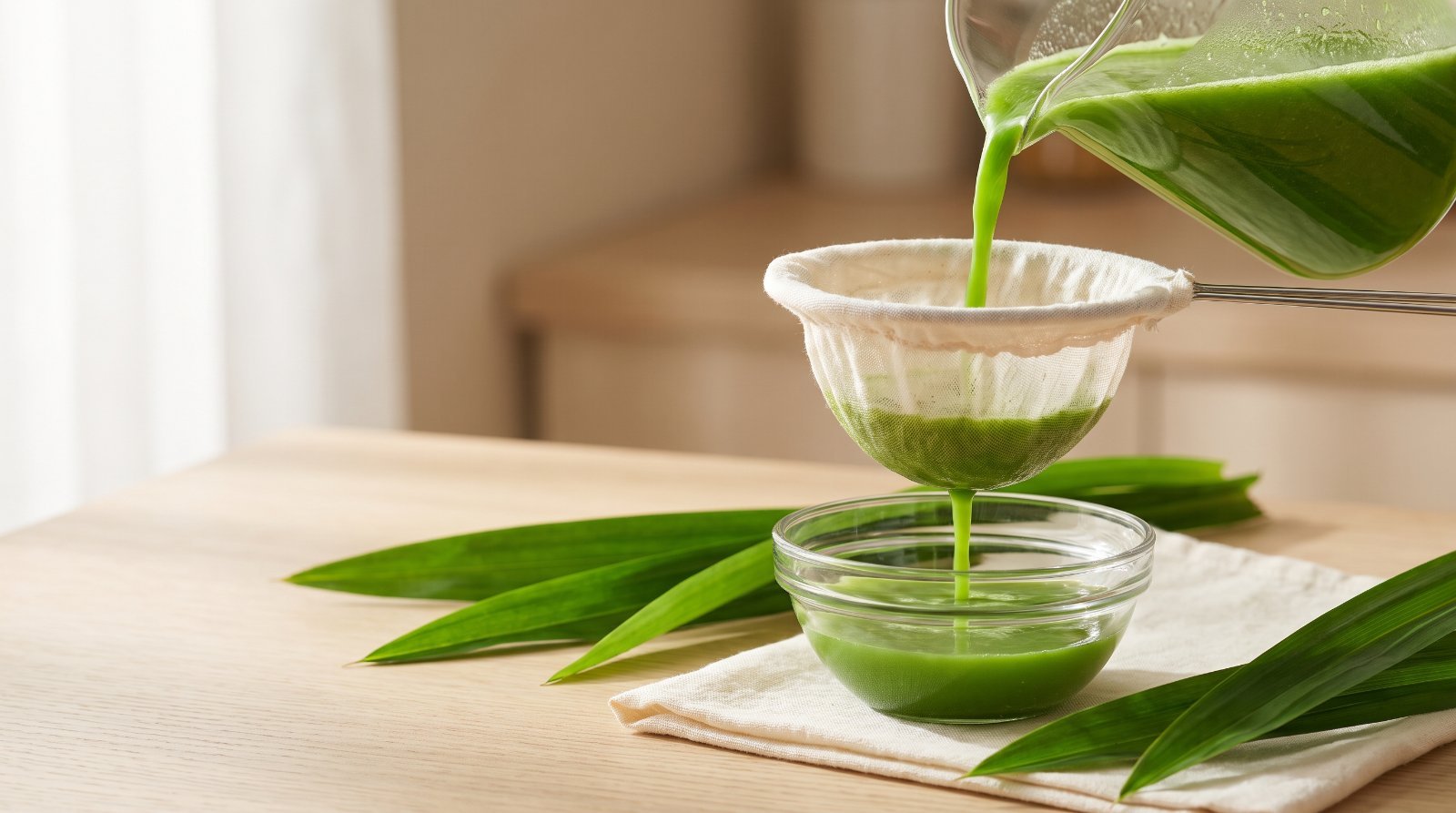
Fresh or frozen pandan leaves
The closest substitute, because it is the same plant. Two ways to use them.
Knot and steep. Tie two or three leaves into a loose knot and simmer them in the liquid part of the recipe — coconut milk, rice cooking water, syrup. Remove before serving. This is how pandan is used in most Southeast Asian kitchens, and it suits rice, curries and syrups.
Blend and strain. Chop the leaves, blend with a little water, then squeeze through a cloth. You get a strong green juice that goes into batters and custards. Use it the day you make it; it fades quickly and does not keep.
Frozen leaves work almost as well as fresh and are far easier to find outside Asia. Use them straight from the freezer without thawing.
Standardised liquid concentrate
If you want the pandan without the leaf-handling, a standardised liquid concentrate is the closest thing to a drop-in replacement for powder. The strength is consistent from bottle to bottle, it disperses in cold liquid without blooming, and it doses by the drop. The one adjustment is moisture: you are adding about a teaspoon of liquid where the powder added none, which matters in a delicate batter and not at all in a drink.
Pandan paste
Paste is the easiest to find in a supermarket and the least predictable. Most jars are mostly water and sugar with pandan somewhere down the list, and nearly all of them carry green colouring. It will flavour your dish, but it also sweetens it and gives you a green that is brighter than anything the leaf produces.
Swap roughly one teaspoon of paste for one teaspoon of ground leaf powder, then taste the batter before you add the rest of the sugar. A fuller comparison of the forms is in pandan powder vs. paste vs. extract.
Pandan essence
Essence is a flavouring rather than an extract: aroma compounds in a carrier, usually with colouring, often with no pandan leaf in it at all. It smells convincingly of pandan and it is cheap. If you are baking for yourself on a Tuesday, it is fine. If anyone is going to read the ingredient list, it is the one substitute that will show.
What will not work
- Matcha or green tea. Gives you green and bitterness. The flavour is nothing like pandan.
- Spinach or wheatgrass. Colour only, plus a vegetal note you do not want in a dessert.
- Green food colouring. Colour with no flavour at all. This is what most bright green pandan cake actually is.
- Vanilla. Often suggested online. It is a sweet aromatic, so the cake will taste fine — it just will not taste of pandan.
If you have no pandan in any form
Then make the dish without it rather than faking it. A coconut chiffon or a plain kaya is a good thing on its own; a green cake flavoured with essence and colouring is a worse version of both. The one partial exception is rice: cooking with jasmine rice gives you a faint version of the same aroma compound, which is why pandan and jasmine rice smell like relatives.
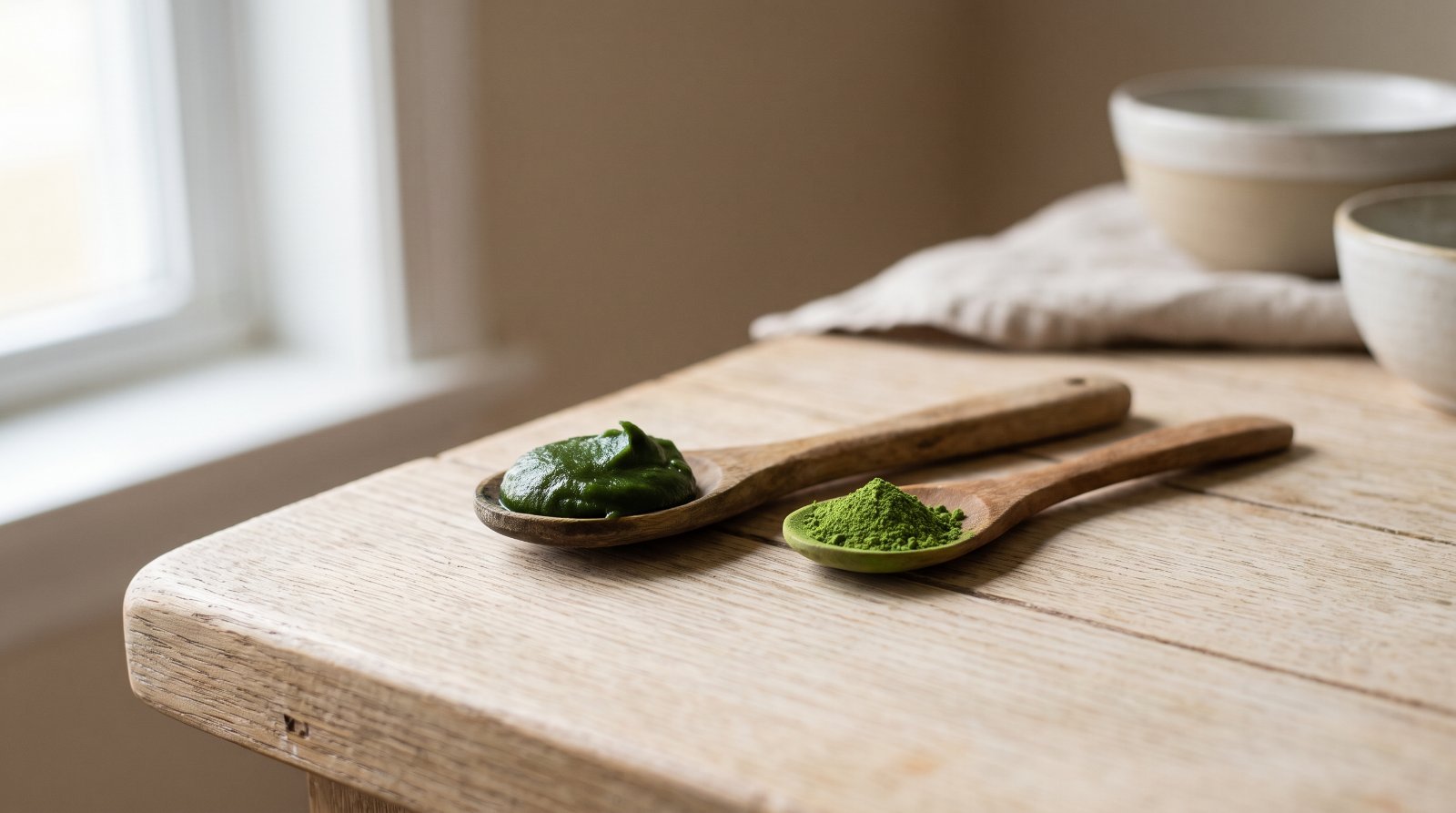
Going the other way: powder as the substitute
Most people arrive at this page from the opposite direction — a recipe calls for leaves or paste and all they have is powder. That swap is easier, because powder is the most concentrated and the most stable form.
| Recipe calls for | Ground leaf powder | Standardised extract powder |
|---|---|---|
| 2 fresh pandan leaves | 1–2 tsp | a pinch to 1/8 tsp |
| 1 tsp pandan paste | 1–2 tsp | about 1/8 tsp |
| 1 tsp pandan liquid extract | 1 tsp | about 1/8 tsp |
Two things to remember. Powder adds no liquid, so put back the teaspoon of moisture the paste or extract was contributing if the batter is delicate. And bloom it in a little warm liquid before it goes in, or it will clump. Our own Pandan Leaf Standardized Extract Powder is the concentrated type, so use the right-hand column.
Which substitute for which dish
| Dish | Best choice | Why |
|---|---|---|
| Drinks and lattes | Liquid concentrate | Disperses cold, doses precisely, no blooming |
| Cakes and chiffon | Powder or blended fresh leaves | Controls moisture; honest colour |
| Rice and savoury | Knotted fresh or frozen leaves | Aroma without changing the texture |
| Kaya and custard | Powder or liquid concentrate | Fat and sugar carry the aroma well |
| Syrups and jellies | Fresh leaves, steeped | Long steeping suits the method |
Frequently asked questions
What can I use instead of pandan powder?
Fresh or frozen pandan leaves are the closest substitute, followed by a standardised liquid concentrate and then pandan paste. Replace one teaspoon of ground leaf powder with two leaves, or about one teaspoon of concentrate or paste. Matcha, spinach and green colouring are not substitutes; they change the colour without giving you the flavour.
Can I use pandan essence instead of pandan powder?
Yes, and it will smell right, but essence is an artificial flavouring rather than an extract of the leaf. Use half to one teaspoon in place of one teaspoon of ground leaf powder. It is the one substitute that shows up on an ingredient list, so avoid it if anyone will read the label.
How many pandan leaves equal a teaspoon of pandan powder?
About two leaves for one teaspoon of ground leaf powder, or about two leaves for a pinch to an eighth of a teaspoon of a standardised extract powder. Fresh leaves vary in strength with age and variety, so taste as you go rather than trusting the number.
Is matcha a good substitute for pandan?
No. Matcha gives you a green colour and a bitter, grassy tea flavour that has nothing in common with pandan. If a recipe asks for pandan and you use matcha, you are making a different dessert, not a substituted one.
Can I make pandan extract at home?
Yes. Blend chopped pandan leaves with a little water and strain through a cloth to get a strong green juice. Use it the same day, since homemade extract has no preservative and its aroma fades within a few days in the fridge.
Buying pandan powder? Three things to check
Pandan products are not standardised, and the label is the only reliable guide. These three checks tell you what is actually in the tin.
Bionutricia Pandan Leaf Extract is a standardised extract of pure Malaysian pandan leaf (Pandanus amaryllifolius), the leaf whose aroma comes from 2-acetyl-1-pyrroline — the same compound found in jasmine rice. It is made in two forms: a powder that adds no liquid and keeps longest, and a liquid concentrate that disperses instantly and doses precisely for drinks and syrups. Neither carries added sugar, maltodextrin or colouring. Both are produced in Malaysia by Bionutricia Manufacturing Sdn. Bhd., a JAKIM Halal, FSSC 22000, GMP and HACCP certified facility operating since 2006.