Why do gummy supplements lose potency faster than tablets or capsules? Because a gummy is not a dry dosage form — it is a warm-deposited, acidic, high-moisture gel. The three conditions a formulator normally protects an active from (heat, low pH, free water) are the gummy matrix itself. That is why gummies, the best-selling supplement format since 2022, carry the industry’s biggest hidden overages and its most public label-claim failures — and why the fix starts with the ingredient specification, before the first batch is ever deposited.
Formulator Briefing · Bionutricia Extract
The gummy eats your active
Gummies won the supplement market. They are also the hardest place to keep an active alive. Here is why — and how to spec for it.
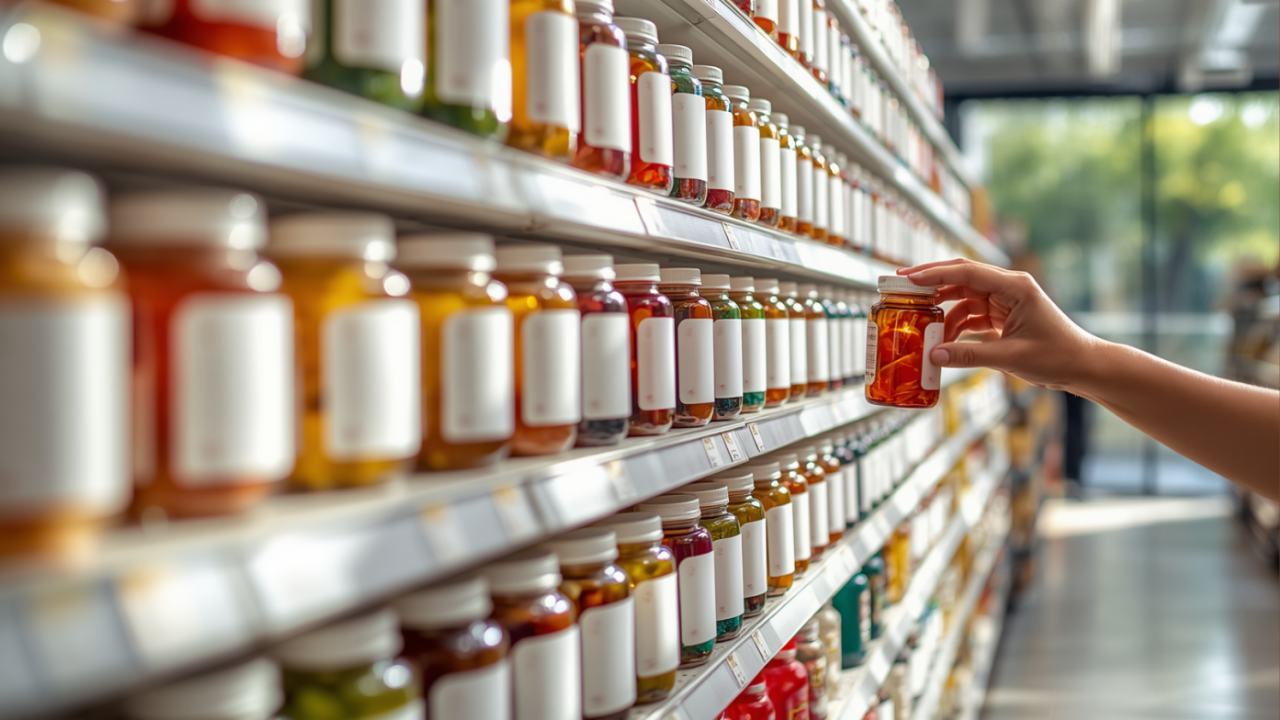
The format that ate the market
Gummies overtook every other supplement format in sales in 2022 and never gave the lead back. The global gummy market is ≈US$30 billion in 2026, growing ~11% a year.
Nutraceuticals World · Straits Research 2026
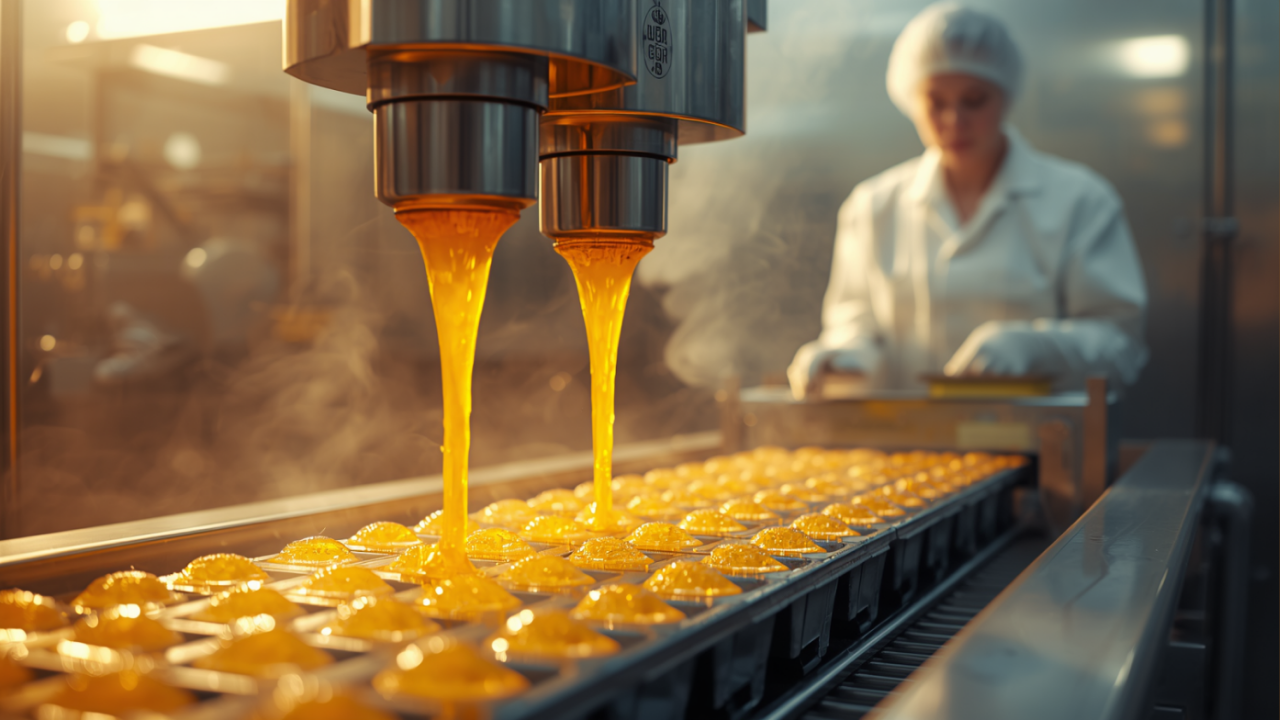
Attack route 1 · Heat
Cooked before it exists
The gummy mass is boiled, held warm and deposited hot. Heat-labile actives start degrading before the first gummy has even set.

Attack routes 2 & 3 — acid + water
Citric and malic acid hold the matrix at pH ≈3–4, and high water activity keeps every molecule mobile. The degradation chemistry that a dry tablet freezes, a gummy keeps running — for the whole shelf life.
What the lab found in gummies
Cohen et al., JAMA 2023;329(16):1401–1402. Findings describe the tested retail products, not any brand or any ingredient supplied by Bionutricia.
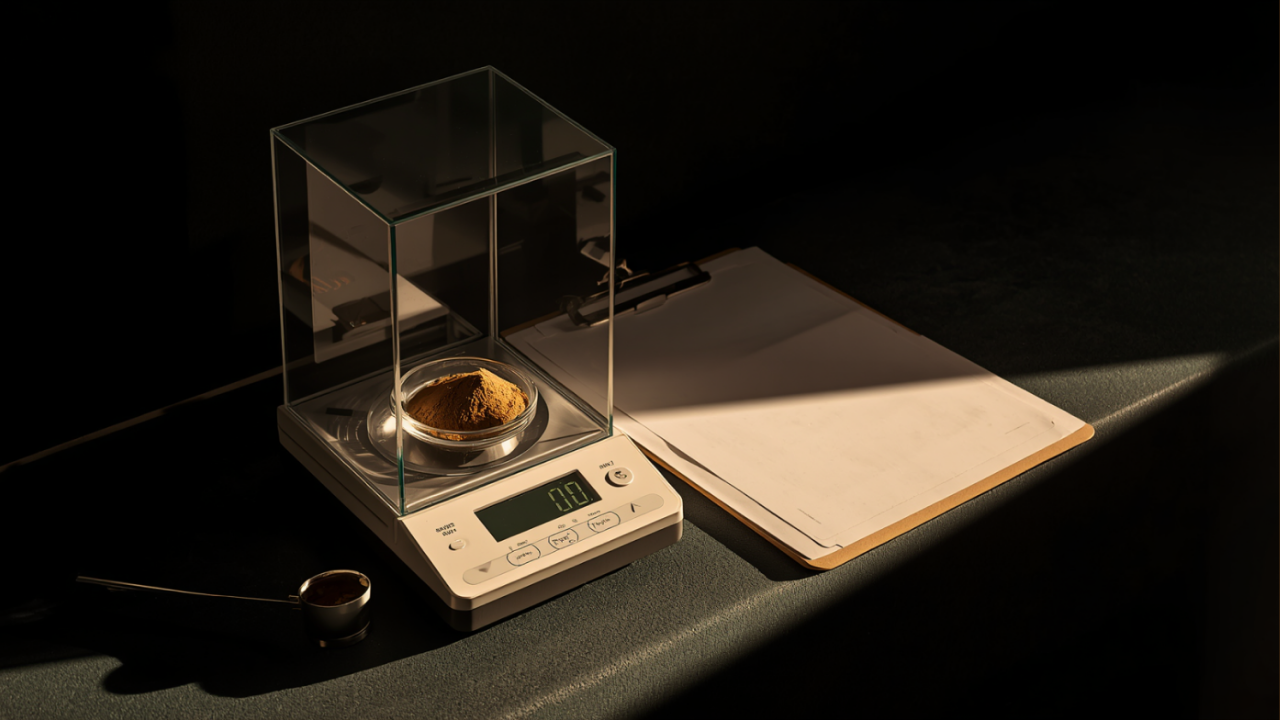
The industry’s quiet fix
The overage tightrope
Manufacturers routinely add 20–50% extra active so the label claim survives to expiry. Too little fails at month 18. Too much overdoses at release. Guesswork is not a stability strategy.

Payoff
The gummy-grade checklist
① Stability data in a low-pH, high-moisture matrix ② A named marker compound you can assay at release AND expiry ③ A dispersion grade that deposits evenly ④ Overage guidance built on data ⑤ Per-lot CoA + ingredient-level halal documentation.
Bionutricia Extract · Est. 2006
Make the #1 format work for your active
Standardized botanical extracts, natural colourants & flavours and liposomal vitamin systems — supplied as bulk ingredients with the documentation a gummy line actually needs. bionutriciaextract.com
The format that ate the market
Gummies first outsold every other supplement delivery format in 2022 and have stayed on top since (Nutraceuticals World). Market analysts put the global gummy market at about US$27.2 billion in 2025, crossing US$30 billion in 2026 on a ~10.8% annual growth rate (Straits Research), with nutraceutical gummies alone projected to reach US$47.8 billion by 2030 at 14.4% CAGR (MarketsandMarkets). For a brand owner the commercial logic is obvious: consumers who abandon tablets do not abandon gummies. For a formulator, the same launch decision quietly moves every active ingredient into the most hostile matrix in the mainstream supplement world.
Why the gummy matrix attacks actives: three routes
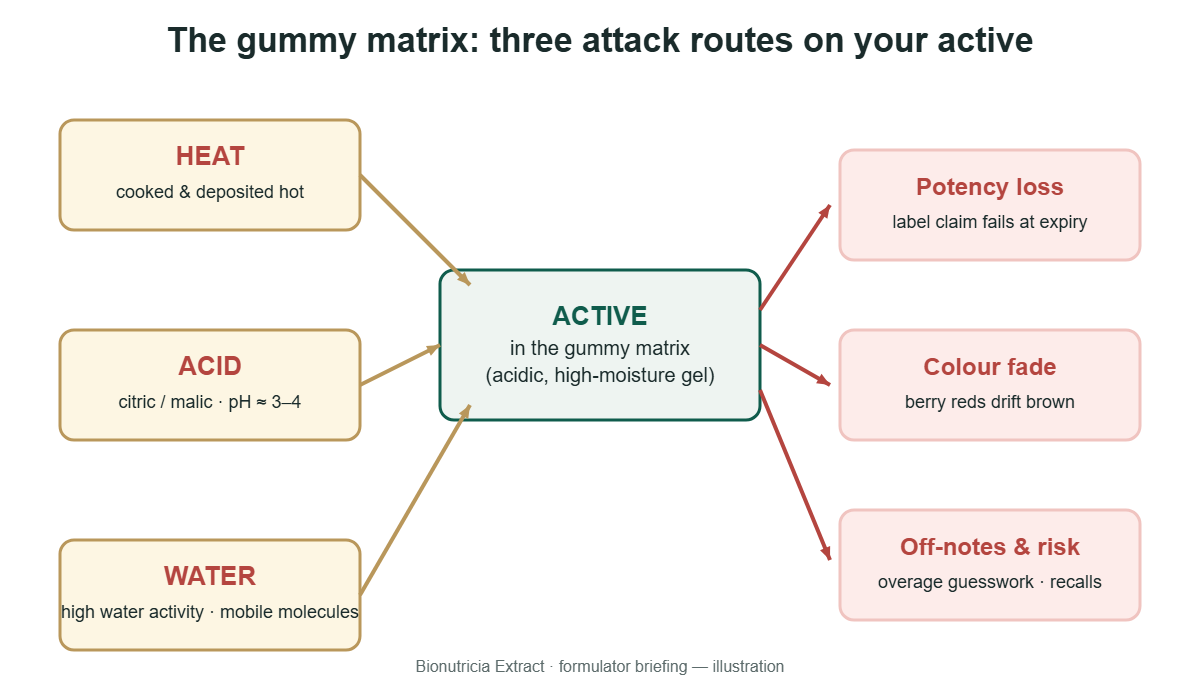
A tablet is a compressed, dry, near-neutral powder — molecularly speaking, a parking lot. A gummy is the opposite on all three axes, and each difference is a separate degradation route.
Route 1 — process heat. Gummy manufacture cooks a gelatin or pectin syrup and holds it warm through depositing. Pectin systems in particular set fast and are typically deposited at higher temperatures. Heat-labile actives — vitamin C, B-vitamins, polyphenol-rich botanical fractions, carotenoid and anthocyanin colours — take their first losses before the gummy has even set, which is why stability planning that starts at “storage” has already missed the largest single hit.
Route 2 — acid. Almost every gummy is flavoured with citric or malic acid, holding the finished gel around pH 3–4. That environment is hostile to acid-sensitive actives (vitamin B12 is the textbook case) and steadily shifts colour and flavour chemistry through shelf life.
Route 3 — water activity. A gummy is a water-based gel. Where a well-dried extract powder or tablet sits at low water activity, gummies run far higher, and free water means molecular mobility: oxidation, hydrolysis and Maillard-type reactions keep running on the shelf. Published stability work on vitamin C gummies reports that holding water activity below ≈0.6 measurably improves both microbial stability and vitamin retention (ACS Omega, 2026). Water activity is a property of the finished gummy — but which grade of ingredient you buy decides how much moisture and reactivity you bring in with it. We covered why water activity, not moisture content, is the number that predicts powder behaviour in Water Activity vs Moisture Content.
What the degradation chemistry looks like
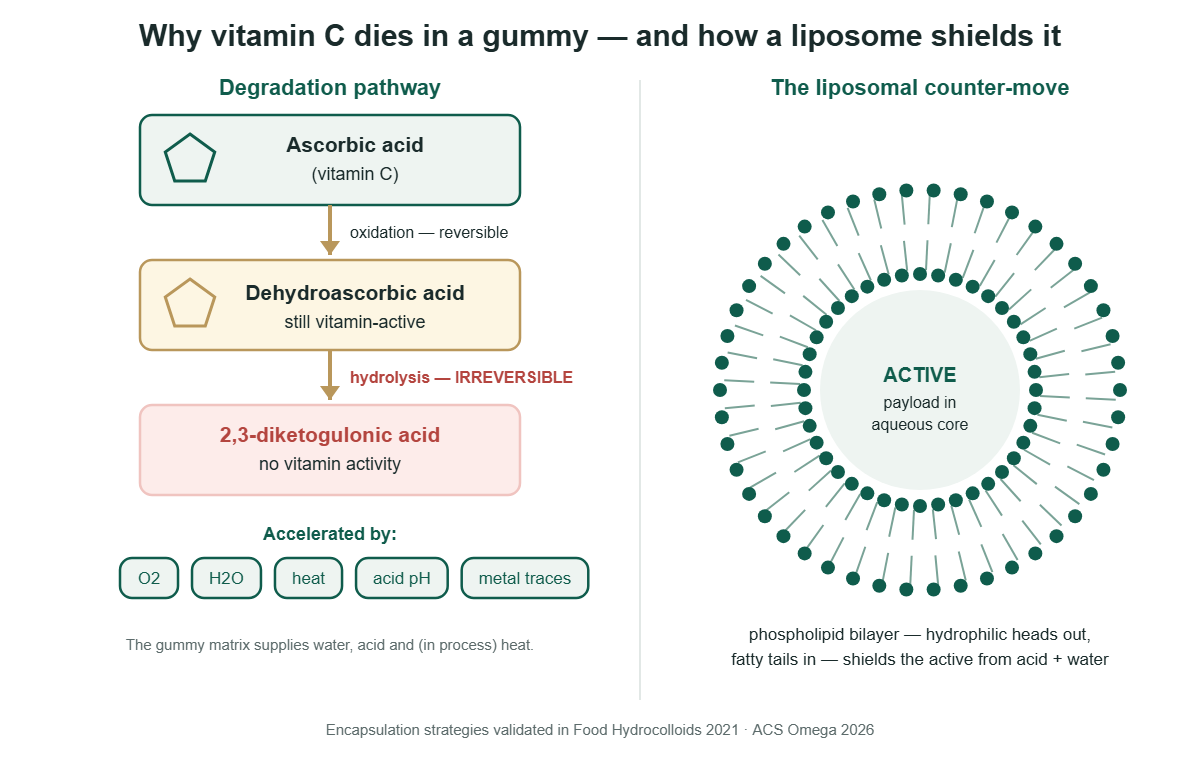
Take the most common gummy active as the worked example. Ascorbic acid (vitamin C) oxidises first to dehydroascorbic acid — a reversible step — and then hydrolyses irreversibly to 2,3-diketogulonic acid, which has no vitamin activity. Oxygen, moisture, heat and metal traces all accelerate the chain, which is why the same molecule that survives two years in a foil-sealed dry sachet can lose double-digit percentages in a gummy within months. Anthocyanin colours degrade along their own temperature- and pH-dependent pathways (the reason a berry-red gummy drifts brown), and B12’s cobalt-centred ring is attacked in exactly the acid range gummies are flavoured to. None of this is exotic chemistry — it is ordinary chemistry given water and warmth, which is precisely what the matrix provides.
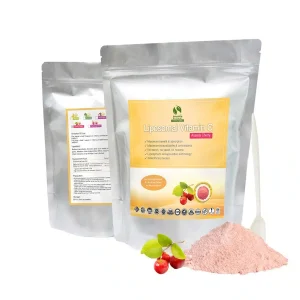
Encapsulation is the counter-move with the strongest published support. A 2021 study in Food Hydrocolloids showed vitamin C stability in gummies improved significantly when the vitamin was encapsulated in a casein gel before incorporation. More recently, a 2026 study in ACS Omega built heat-stable liposomal vitamin C gummies, reporting that the liposomal system protected the vitamin through both gummy preparation and storage. The principle both studies demonstrate: put a physical barrier — a protein gel, a phospholipid bilayer — between the active and the matrix, and the matrix has to get through the wall before it gets to the molecule. This is the same logic behind the liposomal vitamin systems Bionutricia supplies as bulk ingredients for exactly these applications.
The label-claim evidence: what independent testing found
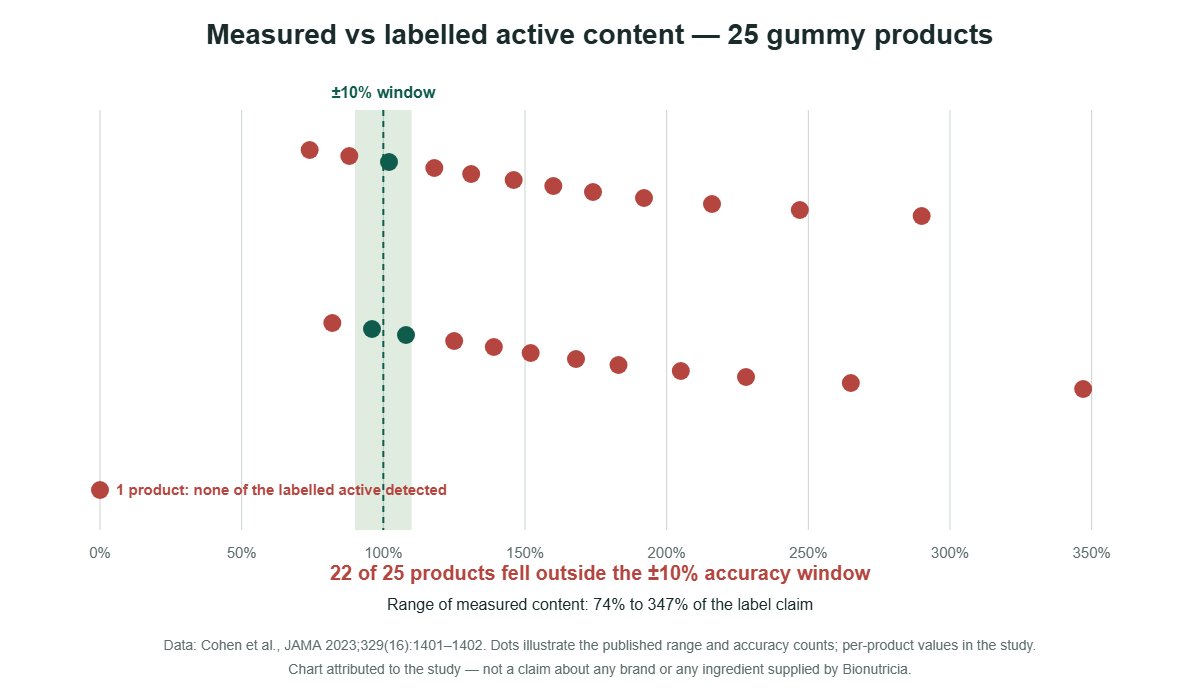
The clearest public evidence of how hard this format is to keep honest came from a peer-reviewed analysis published in JAMA. Cohen and colleagues purchased 25 melatonin gummy products and assayed their actual content: measured levels ranged from 74% to 347% of the label claim, 22 of 25 products (88%) fell outside a ±10% accuracy window, and one product contained none of the labelled active at all (Cohen et al., JAMA 2023;329(16):1401–1402). The study describes those tested retail products — not any ingredient category Bionutricia supplies — but the pattern it exposes is a format-level problem: a matrix that degrades actives unpredictably invites overage guesswork, and overage guesswork lands products anywhere from under-claim to more than triple-claim. Retail and marketplace verification programs now test finished products at exactly this level, so the gap between label and assay is no longer a private matter — a shift we mapped in the retailer-verification wave.
The overage tightrope
The industry’s standard answer to matrix losses is the overage: adding more active than the label declares so the claim still holds at expiry. Contract-lab and trade guidance commonly describes gummy overages of 20%, 30%, even 50% for the most degradation-prone actives. An overage is not wrong — it is an engineering allowance. What is wrong is an overage chosen by folklore. Too small, and the product fails assay at month 18 (a recall conversation). Too generous, and a fat-soluble vitamin can sit uncomfortably high at release. The defensible overage is calculated from real degradation data for the specific active grade, in a matrix like yours — which is exactly the data a serious ingredient supplier should be able to discuss with you. Everything upstream in your shelf-life plan depends on it; the storage half of the problem is covered in our extract shelf-life & storage guide, and what “preservative-free” does to the same math in Going Preservative-Free?.
Botanical extracts in gummies: what actually decides success
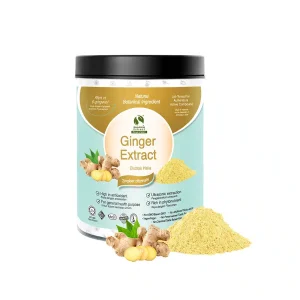
Botanical extracts add two twists to the gummy problem. First, identity and potency: a “10:1 extract” with no named marker compound cannot be verified in the finished gummy at all — there is nothing to assay. A standardized extract with a named marker (a spearmint extract standardized for rosmarinic acid, a ginger extract for 6-gingerol) gives your lab a molecule to measure at release and at expiry, which is the only way a botanical label claim survives third-party testing. Second, physical form: gummy deposition punishes coarse, poorly-wetting powders with cloudy gels, speckling and nozzle wear. Particle size and solubility grade matter as much as assay — the difference between water-dispersible and oil-soluble routes is mapped in our formulator’s guide to extract solubility, and the flavour consequences (botanical bitterness amplified in a high-sugar, acid matrix) in taste & off-note masking.
Then there is the architecture question every halal-market gummy faces: the gel itself. Bovine gelatin brings source-and-slaughter documentation requirements; pectin and other plant hydrocolloids sidestep the animal-origin question entirely and set faster — at the price of hotter deposits and tighter pH control, i.e. more of attack routes 1 and 2. Whichever gel you choose, halal status in a gummy is decided at INGREDIENT level — the gel, the actives, the colours, the flavours, the coating oils — not by the finished-product logo alone. How ingredient-level certification actually works is covered in the JAKIM certification guide and what makes an extract genuinely animal-free.
The gummy-grade checklist: five asks before you buy the ingredient
Put these five questions in your next ingredient brief. They cost nothing to ask and they separate suppliers who have actually supported gummy launches from suppliers quoting a price per kilo.
1. “What happens to this active at pH 3.5 and high water activity?” A gummy-experienced supplier has stability guidance — published data, in-house observations, or both — for their grade in acidic, high-moisture systems.
2. “What is the named marker compound, and what is the validated assay?” If the answer is a ratio and a shrug, the label claim cannot be defended at expiry. Species, plant part, marker, range, method — the portable-spec discipline.
3. “What particle size and dispersion grade do you recommend for depositing?” The right grade flows through nozzles, wets evenly and leaves the gel clear.
4. “What overage does your degradation data support in a matrix like ours?” A number with reasoning beats a folklore percentage in either direction.
5. “Show me the per-lot CoA and the ingredient-level halal certificate.” Every input in the gummy — active, gel, colour, flavour — should arrive with both. One dossier, many gatekeepers: the same file that satisfies your certifier now satisfies marketplace verification programs too.
When the matrix is the problem: formats that skip it entirely
Sometimes the honest answer to the gummy-grade checklist is that the active you care about most should not live in a sugar-acid gel at all. Every argument in this article runs in reverse for the formats Bionutricia manufactures on the OEM side (bionutricia.com):
Powder stick-pack and sachet blends keep the active where it is happiest — dry. No deposit-heat step, no acid gel, low water activity: the degradation chemistry this article maps is largely frozen, which means more of the phytonutrient you paid for survives to expiry, on a far smaller overage.
Liquid sachets, liquid bottles and pouch beverages trade shelf-dryness for delivery: they can carry Bionutricia’s liposomal vitamin systems, applying the same encapsulation logic the studies above validated — the bilayer shields the active in the bottle and is built to support its absorption after it is swallowed.
Gel sachets and chewable tablets keep the “not a pill” consumer promise that made gummies win — chew, tear, squeeze — without the candy matrix, and all of these formats can be formulated sugar-free. That matters commercially: a gummy is confectionery, and its sugar-plus-acid load is exactly what parents and dentists increasingly hold against the format. A sugar-free sachet or chewable carries the same daily-ritual convenience with none of that objection on the label.
So the portfolio conversation has two doors: formulate the gummy properly with gummy-grade ingredients (this article’s checklist), or move the hero active into a sachet, liquid or chewable line — manufactured OEM by Bionutricia — and let the gummy carry the flavour-led SKUs. Many brands do both.
One brief, one range: what a gummy project pulls from the Bionutricia catalogue
A gummy brief rarely stops at one active — the same buyer needs the colour, the flavour and the protection strategy too, and running them on one documentation standard (per-lot CoA + ingredient-level halal certificate on every input) is what keeps the dossier audit-ready. Across the Bionutricia range, the pieces a gummy project typically pulls together:
Gummy actives with a verifiable identity. The berry family is the backbone of the category — elderberry, bilberry (standardized for anthocyanins), blackcurrant, cranberry, acai and goji — alongside the naturally vitamin-C-dense pair acerola and amla, and sea buckthorn (omega-7 ingredient guide) for beauty-from-within positioning. Botanical extracts with named markers give the finished gummy something to assay: ginger standardized for 6-gingerol, spearmint extract for rosmarinic acid, scopoletin-verified noni and spinach extract among them.
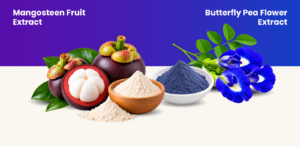
Natural colour that survives an acid gel. The synthetic-dye exit is landing on gummies first, and the natural palette is already in the range: butterfly pea blue, pandan green, ube purple and roselle crimson — chosen with the same pH logic this article describes, since anthocyanin shades shift with acidity.
Flavour and fruit body. Fruit powders carry both flavour and label story in one input: strawberry, lemon, mango and passion fruit among a catalogue of over a thousand ingredients on the same documentation standard.
Protection for the actives the matrix punishes hardest. Liposomal vitamin systems apply the encapsulation logic from the studies above as a ready bulk ingredient, and pectin is available on the same halal-certified footing as the gel architecture itself.
All of it is halal-certified at ingredient level. Bionutricia supplies the bulk ingredient for B2B formulation; brand owners and manufacturers formulate it into their chosen finished format — gummies, capsules, tablets, sachets, beverages, bakery and confectionery applications alike.
Related guides
Water Activity vs Moisture Content: Why Two Extracts at the Same Moisture Behave Differently
Botanical Extract Shelf Life & Storage: How Long Do Extracts Last?
Going Preservative-Free? You May Be Deleting Your Shelf Life
Nanoemulsion vs Liposomal Encapsulation: Which Delivery System for Your Actives?
Water-Soluble vs Oil-Soluble Botanical Extracts: A Formulator’s Guide
Taste, Bitterness & Off-Note Masking in Botanical Extract Formulation
References
1. Cohen P.A., Avula B., Wang Y.-H., Katragunta K., Khan I. Quantity of melatonin and CBD in melatonin gummies sold in the US. JAMA. 2023;329(16):1401–1402.
2. Development of Highly Stable Vitamin C Gummies Using In Situ Soft Sphere Integrated (ISSI) Liposomal Technology. ACS Omega. 2026. doi:10.1021/acsomega.5c09739.
3. Improvement of vitamin C stability in vitamin gummies by encapsulation in casein gel. Food Hydrocolloids. 2021;113:106414.
4. Next-Gen Gummies: Addressing Manufacturing Challenges to Deliver Best-in-Class Formulations. Nutraceuticals World.
5. Gummy Supplements Market Size, Share & Growth Forecast. Straits Research, 2026.
6. Nutraceutical Gummies Market to Reach USD 47.80 Billion by 2030 (14.4% CAGR). MarketsandMarkets, August 2026.
7. Gummy supplements: Perils and possibilities. Nutritional Outlook.
8. Vitamin Gummies: Solving the Shelf-Life & Stability Headache. ContractLaboratory.com.
Frequently asked questions
Why do gummy vitamins lose potency faster than tablets?
Because the gummy matrix combines the three main degradation drivers: process heat during cooking and depositing, an acidic pH of roughly 3–4 from citric or malic acid, and high water activity that keeps degradation chemistry running throughout shelf life. A dry tablet largely freezes those reactions; a gummy keeps them fed.
What is an overage in gummy manufacturing, and how much is typical?
An overage is extra active added above the label claim so the product still meets the claim at expiry after matrix losses. Trade and contract-lab guidance commonly cites 20–50% for degradation-prone actives in gummies. The defensible number comes from degradation data for the specific ingredient grade, not from a folklore percentage.
Pectin or gelatin for halal gummies?
Pectin and other plant hydrocolloids avoid the animal-origin question entirely, which simplifies halal documentation; gelatin requires source-level certification. Pectin systems typically deposit hotter and need tighter pH control, so heat-labile actives may need more protection. Either way, halal status is established ingredient by ingredient — gel, actives, colours and flavours each need their own documentation.
Can botanical extracts survive in a gummy?
Yes, when three things line up: a standardized extract with a named marker compound so potency can be verified in the finished product, a particle-size and dispersion grade suited to depositing, and an overage or protection strategy (such as encapsulation) informed by how that active behaves in acid and moisture.
How do I verify my gummy still meets label claim at expiry?
Specify a named marker compound and a validated assay method in the ingredient spec, keep per-lot CoAs, and put finished-product assay at release and at expiry into your stability program. If the ingredient has no named marker, there is nothing to measure and no way to defend the claim.
Are gummies a bad format choice for a supplement brand?
No — they are the best-selling format in the market. They are simply the format where ingredient specification, stability data and overage discipline matter most. Brands that treat the gummy matrix as an engineering constraint, not an afterthought, launch products that survive both shelf life and third-party testing.
What formats retain actives better than gummies, without losing the convenience?
Dry formats — powder stick-packs and sachets — avoid all three attack routes at once: no deposit heat, no acid gel, low water activity, so more of the active survives to expiry on a smaller overage. Liquid sachets, bottles and pouch beverages can carry liposomal delivery systems that shield the active, and gel sachets and chewable tablets keep the chewable, not-a-pill experience while allowing sugar-free formulation, avoiding the added-sugar load of a candy matrix. Bionutricia manufactures these formats OEM (bionutricia.com), alongside supplying the bulk ingredients for brands committed to gummies.