Sea Buckthorn Extract and Omega-7: A Beauty-From-Within Ingredient Guide
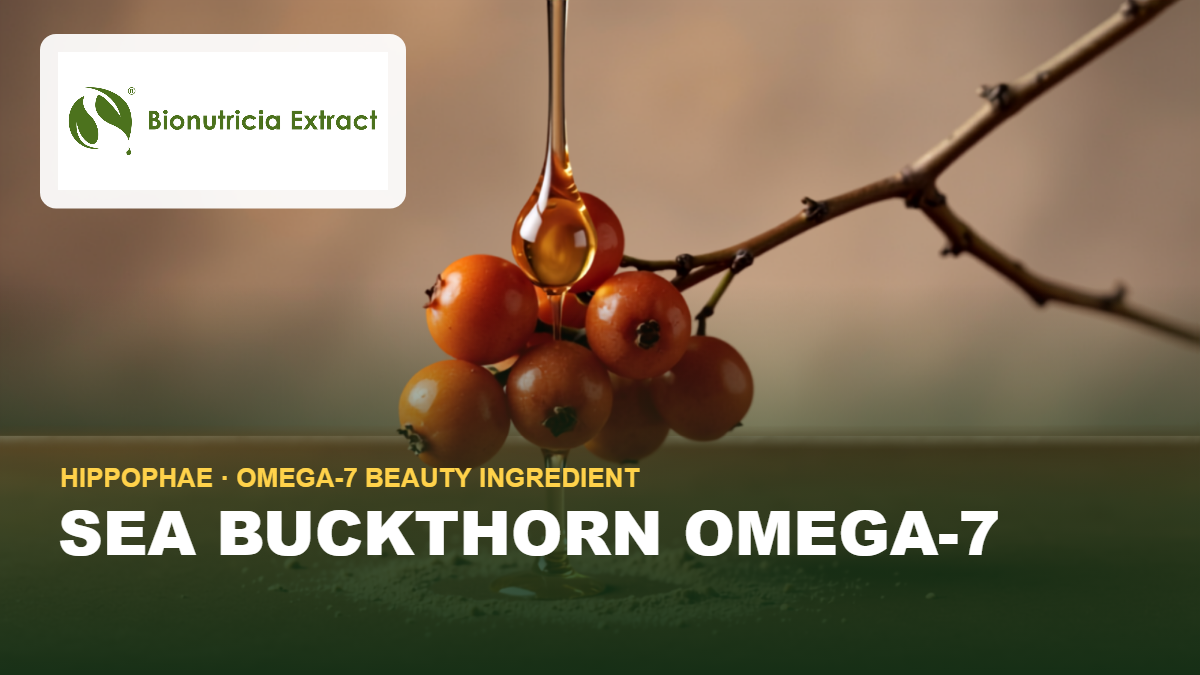
Sea buckthorn (Hippophae rhamnoides) is a berry prized for its unusually rich fatty-acid profile — most notably the monounsaturated omega-7 (palmitoleic acid) concentrated in the pulp oil, alongside omega-3, -6 and -9 in the seed oil. For formulators building “beauty-from-within” and skin-support products, the key sourcing questions are which oil fraction you are buying, its omega-7 level, and how it is stabilised for your format.
Omega-7 has become the headline reason brands reach for sea buckthorn, because palmitoleic acid is relatively rare in the plant kingdom. This guide breaks down the composition, the difference between pulp and seed oil, the powder vs oil format decision, and the specifications a B2B buyer should confirm.
What is sea buckthorn extract?
Sea buckthorn extract refers to material concentrated from the berries of Hippophae rhamnoides — most commonly the fruit (pulp) oil or seed oil, and in powder form, an oil that has been spray-dried onto a carrier. The berry also supplies carotenoids, tocopherols (vitamin E family), sterols and vitamin C, which is why sea buckthorn is often described as a nutrient-dense “beauty” botanical. For ingredient buyers, the fatty-acid fraction is usually the defining specification.
Omega-7 and the fatty-acid profile
Sea buckthorn is unusual because its two oil fractions have very different profiles:
- Pulp (fruit) oil — high in monounsaturated palmitoleic acid (omega-7, 16:1), reported up to roughly 32–43% of the oil. This is the fraction brands mean when they market “omega-7.”
- Seed oil — rich in the essential fatty acids linoleic acid (omega-6) and alpha-linolenic acid (omega-3), each commonly in the ~30–36% range, with a naturally balanced omega-3 to omega-6 ratio.
Both also contain omega-9 (oleic acid) and other minor fatty acids. Because the omega-7 you are paying for sits in the pulp oil, “sea buckthorn oil” alone is not a specification — the fraction and the palmitoleic-acid percentage are.
Sea buckthorn — quick reference for buyers
| Botanical / part | Hippophae rhamnoides — berry (pulp and/or seed) |
| Signature fatty acid | Omega-7 palmitoleic acid (pulp oil), up to ~32–43% |
| Seed-oil profile | Omega-6 (linoleic) & omega-3 (ALA), ~30–36% each |
| Co-actives | Carotenoids, tocopherols/tocotrienols, sterols, vitamin C |
| Formats | Pulp oil, seed oil, CO2 extract, or spray-dried oil powder |
| Finished formats (customer) | Softgels, capsules, beverages, sachets, topical/cosmetic bases |
Pulp oil vs seed oil: choose by claim
If the brand story is omega-7 and beauty-from-within, specify pulp oil with a declared palmitoleic-acid percentage. If the goal is a balanced essential fatty acid profile, seed oil is the fraction to specify. Some suppliers offer a blend; if so, the COA should report the combined fatty-acid breakdown so you know the actual omega-7 level.
Oil vs powder: the format decision
Liquid oils (pulp, seed or CO2 extract) suit softgels and topical/cosmetic bases. For dry formats — capsules, tablets, stick packs, functional beverages and gummies — an oil powder is often preferred because it handles and blends like a dry ingredient.
How an oil powder is emulsified matters. Bionutricia emulsifies every oil powder on arabic gum — never sodium caseinate or other synthetic emulsifiers. That single choice is what lets an oil powder stay dairy-free, vegan-friendly and allergen-clean, because the industry-default sodium caseinate is milk-derived (a declarable allergen that also complicates vegan and halal positioning). For a “clean beauty” ingredient, an arabic-gum-emulsified powder keeps the label as clean as the story.
Applications and finished formats
Sea buckthorn is a bulk ingredient that brand owners and manufacturers formulate into their chosen finished format. Common applications include:
- Omega-7 beauty softgels and capsules
- Skin, hair and nail “beauty-from-within” blends
- Functional beverages and stick packs (oil-powder form)
- Gummies and functional confectionery
- Topical and cosmetic formulations
Bionutricia supplies the bulk ingredient for B2B formulation; brand owners and manufacturers formulate it into their chosen finished dosage form.
Sourcing questions to ask your supplier
- Is it pulp oil, seed oil, or a blend, and what is the palmitoleic-acid (omega-7) percentage?
- What extraction method is used (cold-press, CO2, solvent), and is a full fatty-acid profile on the COA?
- For powders: what is the oil load, and is the carrier arabic gum (allergen-clean) rather than sodium caseinate?
- What are the peroxide value and oxidative-stability data, given the oil’s unsaturation?
- Are heavy metals and microbial limits tested on the lot?
- Is a facility-level halal certificate available, and what is the shelf-life and storage guidance?
Halal-certified, clean-label sourcing
Bionutricia manufactures standardized botanical extracts and arabic-gum-emulsified oil powders in a JAKIM Halal–certified facility, and also holds FSSC 22000, GMP, HACCP, US FDA registration and MeSTI, plus NanoVerify. Our patented enzymatic and ultrasonic process (MY-188945-A) supports efficient, food-grade production. Bulk ingredients ship in 1 kg, 5 kg and 20 kg packs, with MOQ and pricing on quotation, and we can discuss custom oil-powder formats to your specification.
Frequently asked questions
What is omega-7 and why sea buckthorn?
Omega-7 refers to palmitoleic acid, a monounsaturated fatty acid that is relatively rare in plants. Sea buckthorn pulp oil is one of the richest botanical sources, which is why it anchors “beauty-from-within” and skin-support formulations.
Is the omega-7 in the seed oil or the pulp oil?
Primarily the pulp (fruit) oil. Seed oil is richer in omega-3 and omega-6. If omega-7 is your claim, specify pulp oil with a declared palmitoleic-acid percentage.
Should I use sea buckthorn oil or oil powder?
Oils suit softgels and topical bases; oil powders suit capsules, tablets, beverages and stick packs because they blend as dry ingredients. Confirm the oil load and carrier for powders.
Why does the emulsifier matter?
The common default, sodium caseinate, is milk-derived — a declarable allergen that undermines vegan, dairy-free and halal positioning. Bionutricia emulsifies oil powders on arabic gum to keep them allergen-clean.
Is halal-certified sea buckthorn available?
Verify halal at facility level with a valid certificate. Bionutricia manufactures standardized extracts and arabic-gum oil powders in a JAKIM Halal-certified facility and can discuss custom formats.
Formulating a beauty-from-within or omega-7 product?
Bionutricia manufactures standardized, halal-certified botanical extracts and allergen-clean oil powders to specification. Talk to our team.
This article is B2B ingredient education for formulators and does not constitute medical or health advice, nor a claim that any ingredient diagnoses, treats, cures or prevents any disease. Formulators are responsible for finished-product claims and regulatory compliance in their market.