Mulberry Leaf Extract and 1-DNJ: A Metabolic Ingredient Guide for Formulators
Mulberry leaf extract is a concentrated powder produced from the leaves of the mulberry tree (Morus alba), most often standardized to 1-deoxynojirimycin (1-DNJ) — an iminosugar used as the marker compound for specification-based sourcing. Because 1-DNJ content varies enormously with leaf maturity and variety, the standardized percentage on the certificate of analysis is what separates a reliable metabolic-support ingredient from a commodity leaf powder.
Mulberry leaf has a long history in traditional food and wellness use across Asia, and modern formulators position standardized mulberry leaf extract in metabolic-wellness and carbohydrate-management products. This guide explains what 1-DNJ is, why the standardization number matters so much, and the questions a brand owner or contract manufacturer should ask before sourcing.
What is mulberry leaf extract?
Mulberry leaf extract is made by extracting and concentrating the leaves of Morus alba (white mulberry) into a powder. The leaf naturally contains a family of compounds — including iminosugars, flavonoids and polyphenols — and the extract concentrates them relative to the raw leaf. For metabolic applications, the extract is typically standardized to a declared percentage of 1-DNJ, which acts as the reference marker for potency and consistency.
What is 1-DNJ, and why is it the marker?
1-Deoxynojirimycin (1-DNJ, CAS 19130-96-2) is an iminosugar that occurs naturally in mulberry leaves. In research it is studied for its alpha-glucosidase inhibitory activity — its interaction with the enzymes involved in breaking down dietary carbohydrates — which is why it is of interest to formulators building carbohydrate-management and metabolic-wellness products. Because 1-DNJ is measurable by HPLC and is characteristic of mulberry leaf, it has become the industry-standard marker for specifying and comparing extracts.
Important compliance note for B2B buyers: 1-DNJ’s research context relates to carbohydrate metabolism, but finished-product marketing must stay within structure/function and traditional-use language in the destination market. This ingredient education does not assert that mulberry leaf or 1-DNJ diagnoses, treats, cures or prevents diabetes or any disease — those are finished-product regulatory decisions for the brand owner.
Mulberry leaf extract — quick reference for buyers
| Botanical / part | Morus alba (white mulberry) — leaf |
| Marker compound | 1-Deoxynojirimycin (1-DNJ), CAS 19130-96-2 |
| Common standardization | 1%, 2%, 3% or 5% 1-DNJ (by HPLC) |
| Secondary constituents | Flavonoids and polyphenols (variety-dependent) |
| Positioning | Metabolic-wellness / carbohydrate-management formulations |
| Finished formats (customer) | Capsules, tablets, sachets, beverages, gummies |
Why 1-DNJ content varies so much
Natural 1-DNJ levels in raw mulberry leaf are low and highly variable. Published analyses put mature-leaf 1-DNJ roughly in the range of about 0.13–1.47 mg/g of dry leaf, with younger leaves and shoots containing markedly more than mature leaves (the general order is shoots > young leaves > mature leaves). Variety and growing conditions add further variation. This is precisely why buyers should specify a standardized extract with a declared 1-DNJ percentage rather than a plain leaf powder — the standardization step is what delivers batch-to-batch consistency.
Choosing a standardization level
Standardized mulberry leaf extracts are commonly offered at 1%, 2%, 3% and 5% 1-DNJ. Higher standardization concentrates the marker and lets you hit a target 1-DNJ dose in a smaller fill weight, which is useful for capsule and stick-pack formats where space is limited. The right grade depends on your intended per-serving 1-DNJ level, your format, and your cost target. Always confirm the percentage is verified by HPLC on the finished lot and appears on the COA.
Applications and finished formats
Mulberry leaf extract is a bulk ingredient that brand owners and manufacturers formulate into their chosen finished format. Typical applications include:
- Metabolic-wellness and “carb-support” capsules and tablets
- Meal-time sachets and stick packs
- Functional beverages and blended powders
- Gummies and functional confectionery
- Multi-botanical metabolic blends (with cinnamon, chromium sources, etc.)
Bionutricia supplies the bulk ingredient for B2B formulation; brand owners and manufacturers formulate it into their chosen finished dosage form.
Sourcing questions to ask your supplier
- What is the standardized 1-DNJ percentage, and is it verified by HPLC on the finished lot?
- Is the marker 1-DNJ specifically (not just “total iminosugars” or a generic extract ratio)?
- What is the botanical identity confirmation for Morus alba leaf?
- Are heavy metals, pesticide residues and microbial limits tested on the lot?
- Is a facility-level halal certificate available for export markets?
- What documentation pack ships with each lot (spec, COA, SDS, allergen, halal)?
Halal-certified, standardized sourcing
Bionutricia manufactures standardized botanical extracts in a JAKIM Halal–certified facility and additionally holds FSSC 22000, GMP, HACCP, US FDA registration and MeSTI, plus NanoVerify. Our patented enzymatic and ultrasonic extraction process (MY-188945-A) is designed to recover target actives efficiently while keeping a clean, food-grade profile. Bulk ingredients ship in 1 kg, 5 kg and 20 kg packs, with MOQ and pricing on quotation, and we can discuss custom standardization to your target marker level.
Frequently asked questions
What does “standardized to 1% 1-DNJ” mean?
It means the extract is manufactured and verified so that 1-deoxynojirimycin makes up a declared 1% of the powder by weight, measured by HPLC. Standardization delivers batch-to-batch consistency that a plain leaf powder cannot.
Which 1-DNJ percentage should I choose?
It depends on your target per-serving 1-DNJ level and format. Higher grades (e.g. 3–5%) let you reach a target dose in a smaller fill weight, useful for capsules and sachets; lower grades may suit beverages or cost-sensitive blends. Confirm the figure is on the finished-lot COA.
Is mulberry leaf extract the same as mulberry fruit extract?
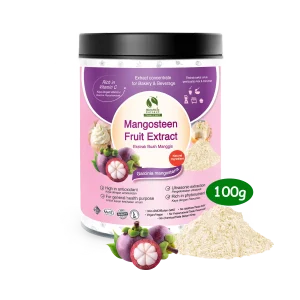
No. Leaf extract standardized to 1-DNJ is used for metabolic positioning, while fruit extracts are used mainly for their anthocyanin/antioxidant and flavour profile. Specify the plant part explicitly.
Can I make metabolic or blood-sugar claims on the finished product?
Finished-product claims are the brand owner’s regulatory responsibility and must comply with the destination market’s rules, using structure/function or permitted wording only. This ingredient education makes no disease claim.
Is halal-certified mulberry leaf extract available?
Verify halal at facility level with a valid certificate. Bionutricia manufactures standardized botanical extracts in a JAKIM Halal-certified facility and can discuss custom 1-DNJ standardization.
Building a metabolic-wellness formula?
Bionutricia manufactures standardized, halal-certified botanical extracts to specification. Talk to our team about mulberry leaf sourcing and custom standardization.
This article is B2B ingredient education for formulators and does not constitute medical or health advice, nor a claim that any ingredient diagnoses, treats, cures or prevents any disease, including diabetes. Formulators are responsible for finished-product claims and regulatory compliance in their market.