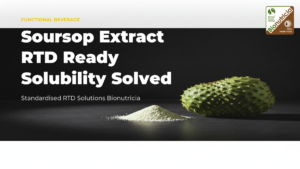
A botanical extract can be labelled “water-soluble” and still cloud, haze or sediment once it is in a real beverage. That word is a lab result — measured in plain water, not in a drink with acid, minerals and heat. Below is exactly where the gap opens, and how to close it before a batch clouds after bottling.
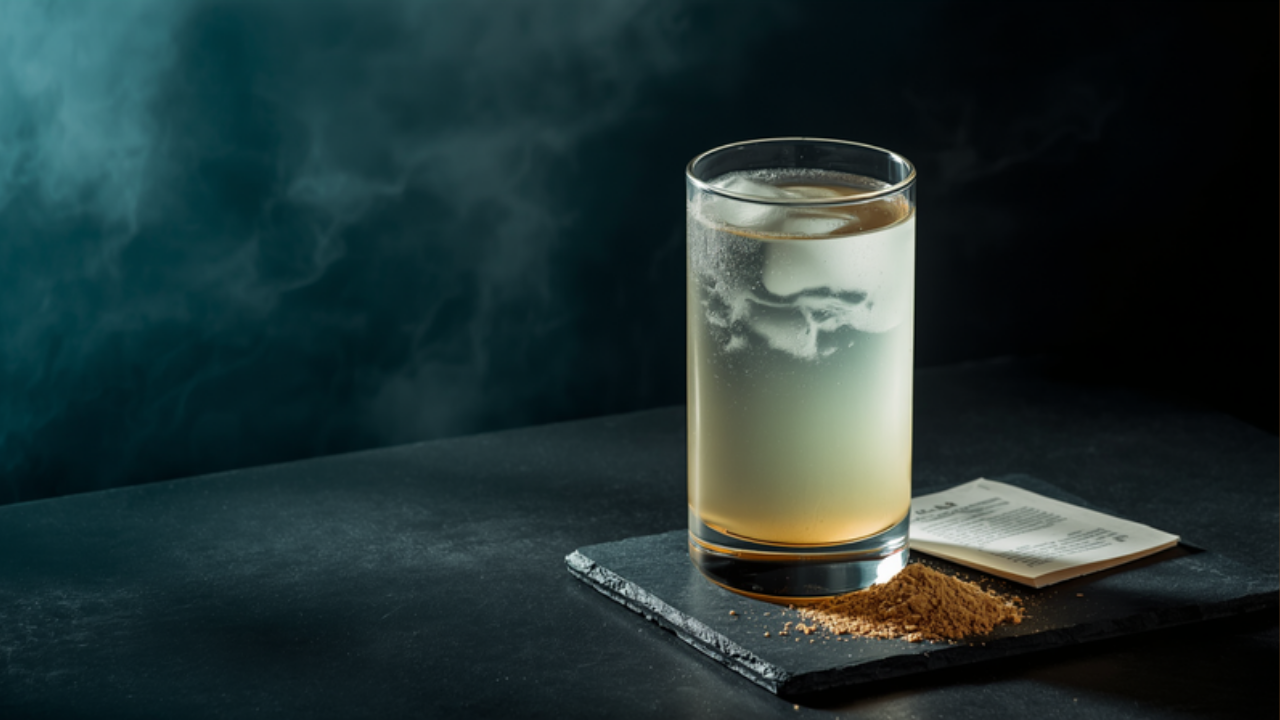


A botanical extract can be labelled “water-soluble” and still turn a finished drink cloudy, with a fine sediment settling at the bottom. The powder looks flawless. The bottled product doesn’t. That gap between the spec sheet and the bottle is what this walkthrough is about.
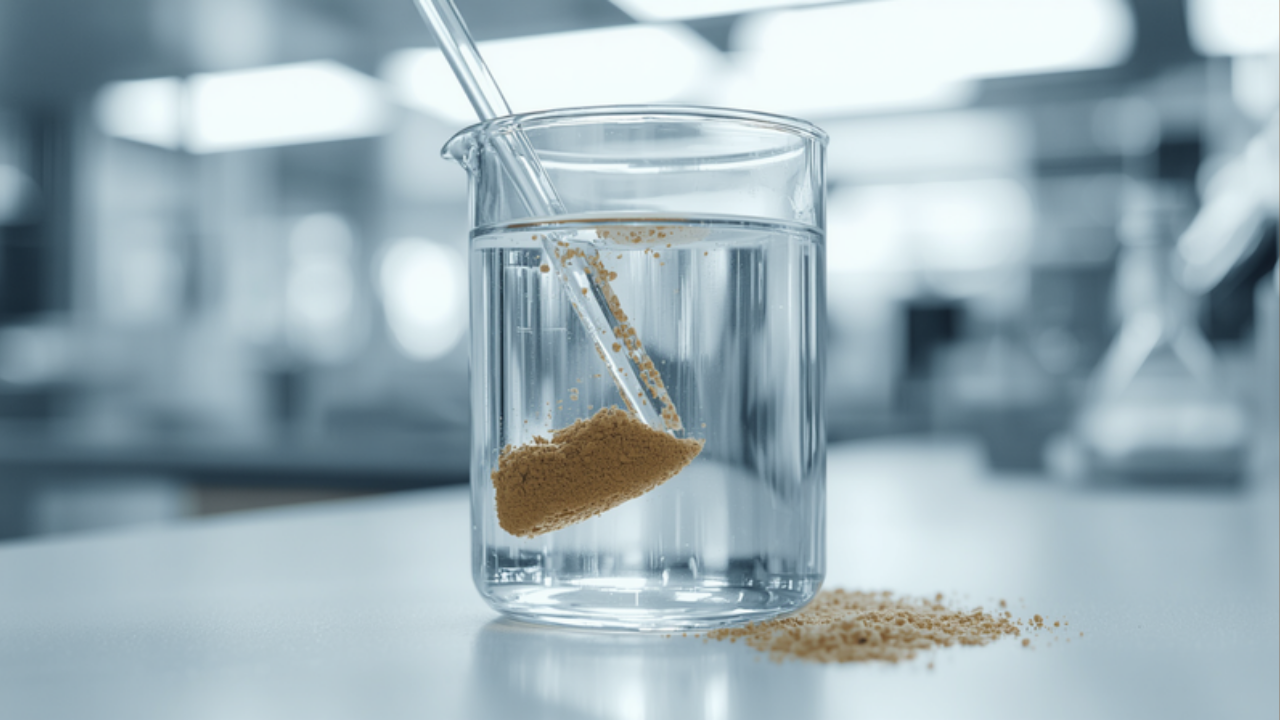
Here’s the catch buried in that one word: solubility is tested in plain water, in a lab. Drop the powder into clean, neutral, room-temperature water and it disperses beautifully. That is the condition the “water-soluble” claim is measured under — and it is the easiest condition there is.
But your beverage isn’t plain water. It carries acid (for tang and shelf-life), sugar or sweeteners, mineral salts, flavours and often other actives. Every one of those changes the chemistry the extract has to survive in. The lab water test never saw any of them.
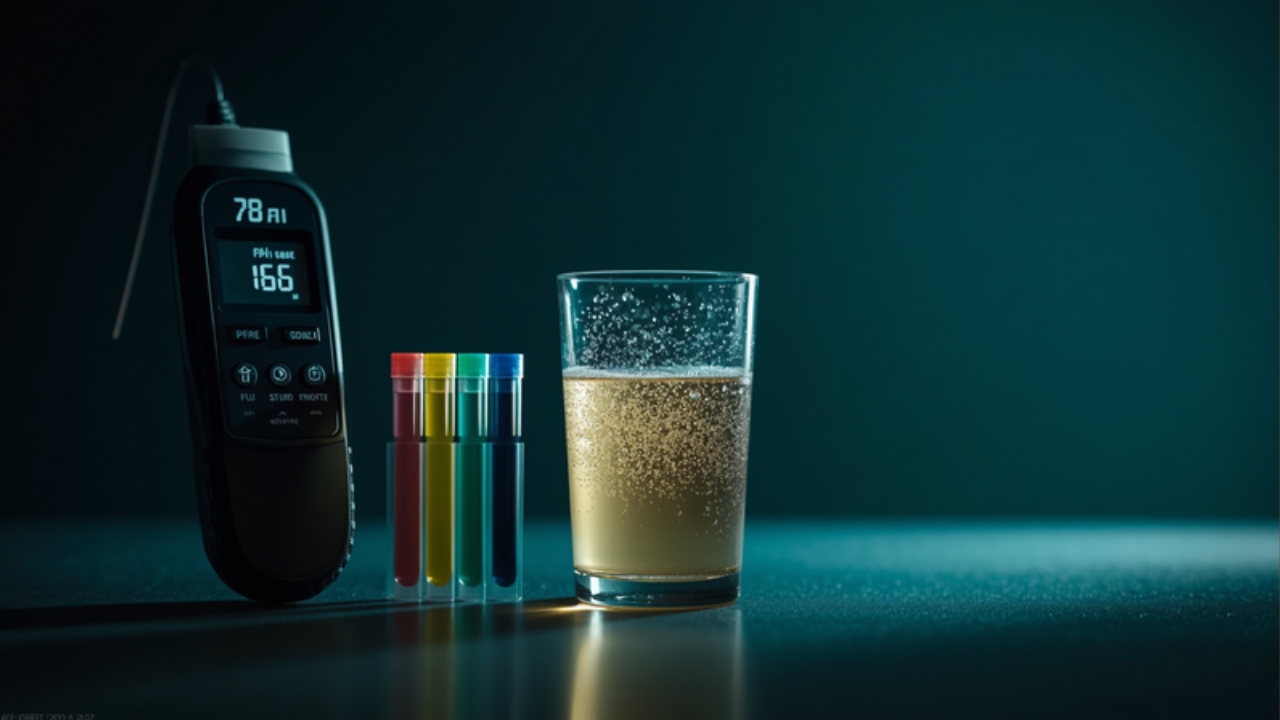
Shift the pH — which almost every functional drink does to stay tart and stable — and a solubilised extract can drop straight out of solution. What dissolved perfectly at neutral pH can precipitate as fine particles the moment the formula turns acidic. The spec sheet gave you no warning.
Add calcium, magnesium or phosphate — from mineral blends, fortification, or even hard process water — and the extract can bind with them and throw a haze. The drink goes from clear to milky, scattering light. Nothing was wrong with the powder; the matrix simply changed the outcome.
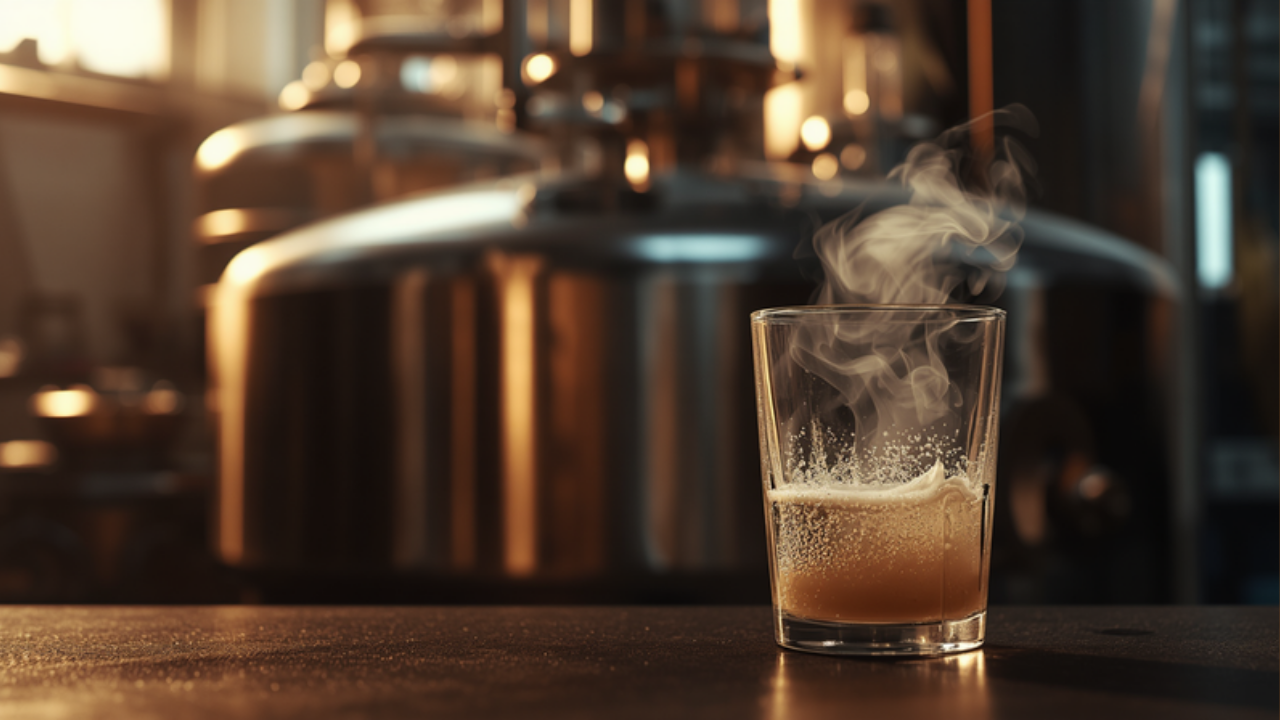
Then comes heat. Pasteurisation or hot-fill pushes the product through a thermal step, and some fractions that were happily in solution fall out as sediment on cooling. The powder passed every visible spec. The finished, heat-treated drink still failed on clarity.
So the fix isn’t chasing a “more soluble” powder. It is proving solubility in your actual formula — at your pH, your temperature, and your full ingredient deck. Test the extract in the real matrix it will live in, not in lab water, and you find the problem before the bottling line does.
That is how a clear label claim actually survives the bottle. At Bionutricia Extract, standardized botanical extracts are specified and checked for solubility behaviour in real formula conditions — not just plain water — and ship with a Certificate of Analysis. So ask any extract supplier one question: “Will this stay in solution in my formula, and can you show me?”
The one-line takeaway
“Water-soluble” on a spec sheet is a lab result in plain water — not a guarantee in a drink with acid, minerals and heat. The only way to know an extract stays in solution is to test it in your real matrix: your pH, your temperature, your full ingredient deck. No matrix test, no proof.
Bionutricia Extract is a Malaysian standardized-botanical-extract manufacturer (established 2006) producing standardized extracts, active fractions, natural colourants and flavours, and liposomal vitamin systems under FSSC 22000, GMP, HACCP, JAKIM Halal, US FDA and MeSTI systems, plus NanoVerify. Every extract ships with a Certificate of Analysis — so you can ask for the solubility behaviour in your own formula conditions.
What “water-soluble” actually means on a specification
On a botanical extract specification, water-soluble is a laboratory statement, not a promise about your product. It usually means the powder forms a clear or near-clear solution in purified water at a defined concentration and temperature, assessed visually after a defined time. That is a useful, reproducible test — and it is a long way from a carbonated, acidified, mineral-bearing, heat-treated beverage that has to look right for twelve months on a shelf.
The gap between the two is where almost every haze complaint lives. Nothing is wrong with the extract, and nothing is wrong with the test. The test simply answered a narrower question than the one you needed answering.
The five things that push a dissolved extract back out of solution
1. pH
Solubility is pH-dependent for most botanical constituents. Organic acids, polyphenols and protein fragments each have a pH range in which they stay in solution and a range in which they do not. Acidifying a drink to pH 3.2 for microbial stability can take a constituent that was comfortably soluble at neutral pH straight past its isoelectric point, and it precipitates. The reverse happens too: an alkaline mineral water can drop a constituent that was fine in an acidic matrix.
2. Hard-water ions
Calcium and magnesium in treated municipal water form complexes with organic acids and polyphenols that are far less soluble than either component alone. This is the single most common cause of a haze that appeared in the plant and never at the bench, because bench work is so often done in deionised water. The remedy is either treated process water or a sequestrant, and the diagnosis is trivially easy: repeat the trial side by side in deionised and in real process water.
3. Tannin-protein haze
If your formula carries any protein — dairy, plant protein, collagen, even trace protein from a fruit juice — polyphenol-rich extracts will bind to it. The complexes are small and invisible at first, then grow until they scatter light. This is the classic slow haze that develops over weeks, and it is a chemistry problem rather than a dispersion problem: more mixing will not fix it.
4. Thermal history
Heat changes solubility twice. On the way up it helps things dissolve; on the way down it can push them back out, and hot-fill or pasteurisation followed by slow cooling gives constituents time to nucleate and crystallise. Long holds at moderate temperature are often harder on a formula than a short, sharp heat step.
5. Dissolution order and concentration
Adding a powder to a tank that already contains acid, salts and sweetener is not the same as dissolving it in water first. Local over-concentration at the point of addition creates aggregates that never fully redisperse, and those aggregates are the seed for later sediment. Order of addition is a real formulation variable, not a housekeeping detail.
How to test solubility in the formula you are actually making
| Test | What it tells you |
|---|---|
| Dissolution in your process water | Separates an ingredient problem from a water-hardness problem — run deionised and process water side by side. |
| pH sweep | Dissolve at your target concentration and titrate across the pH range you might use. The point at which haze appears is the constraint you have to design around. |
| Full matrix trial | The extract dissolved in the complete formula, in the intended order of addition, at production concentration. |
| Thermal cycle | Put the packed sample through the actual time-temperature profile, including the slow cool, not just the peak temperature. |
| Accelerated stability | Packed product held at elevated temperature, inspected for haze, sediment and colour drift at intervals, with the marker re-assayed at the end. |
Write the outcome into your specification in terms an analyst can act on. State the concentration, the medium, the temperature and the acceptance criterion. “Soluble in water” is not a specification; “clear solution at 1 percent in the finished matrix at 25 °C, no sediment after 72 hours” is.
Fixing haze without losing what you are paying for
The instinct is to filter. Resist it until you have re-assayed, because fine filtration removes the haze and, very often, a measurable share of the actives with it — you end up with a clear drink that no longer meets its own label claim. Work through the cheaper levers first: adjust pH within the range your preservation system allows; treat or sequester the mineral load in the process water; change the order of addition so the extract goes into water rather than into finished syrup; shorten the hot hold; and consider whether a liquid concentrate rather than a spray-dried powder removes the dissolution step altogether.
If haze is unavoidable for a given formula, the honest answer is sometimes to design around it rather than against it — a naturally cloudy or opaque presentation, or a shake-before-use declaration, is a legitimate product decision and a far better outcome than stripping the ingredient out of your own drink.
How Bionutricia can help
Bionutricia manufactures standardised botanical extracts in both powder and liquid concentrate form, using a patented enzymatic and ultrasonic process (MY-188945-A) at our Sungai Buloh, Selangor facility, under FSSC 22000, GMP, HACCP, JAKIM Halal, US FDA registration and MeSTI, together with NanoVerify certification. Where an emulsifier is required we use arabic gum, never sodium caseinate or synthetic emulsifiers.
If you are specifying an extract for a beverage, tell us the pH, the process water profile, the thermal step and the other ingredients at the enquiry stage rather than after the first trial. We can then tell you which form of the material fits, supply the specification and batch COA, and flag the constraints before you book plant time. Bionutricia supplies the bulk ingredient for B2B formulation; brand owners and manufacturers formulate it into their chosen finished format.
Specifying an extract for a beverage? Send us the formula constraints.
Related guides
Frequently asked questions
Does water-soluble mean the extract will be clear in my drink?
No. Water-soluble is a statement about dissolution in plain water at a stated concentration and temperature. Your beverage is not plain water: it has a pH, a mineral profile, other ingredients and a thermal history, any of which can push a dissolved constituent back out of solution as haze or sediment.
Why does haze appear only after a few days?
Because the mechanisms are slow. Fine particles aggregate until they scatter light, tannin-protein complexes grow over time, and supersaturated salts nucleate gradually. This is why a clear bottle at filling tells you very little, and why an accelerated stability study on packed product is the only real test.
Which is more often to blame, the extract or the water?
The water, more often than people expect. Calcium and magnesium in treated municipal supply can complex with organic acids and polyphenols and drop out as a fine haze that never appeared in deionised bench trials. Run the trial in your actual process water before blaming the ingredient.
Can I just filter the haze out?
Sometimes, but be careful what you are removing. Fine filtration can strip the very constituents you are paying for along with the haze, so re-assay the marker compound after filtration. Adjusting pH, sequestering the mineral load or changing the dissolution order is usually a better answer.
How should I write solubility into my specification?
State the concentration, the medium, the temperature and the acceptance criterion, and require the result in your own formula rather than in water. A line reading “soluble in water” is not a specification; “clear solution at 1 percent in the finished matrix at 25 degrees C, no sediment after 72 hours” is.