Standardised Resveratrol Powder: Trans-Resveratrol Marker, HPLC Assay and Batch Consistency
Formulator’s summary: Resveratrol is a stilbenoid (stilbene) polyphenol most famously associated with grape skin, where it occurs naturally at a low and variable concentration. Because grape skin yields too little of the compound for efficient large-scale extraction, bulk commercial resveratrol powder is instead produced from the root of Polygonum cuspidatum (Japanese knotweed), which contains a far higher native resveratrol content and supports a standardised, marker-assayed extract. A standardised resveratrol powder specifies the trans-resveratrol content on the certificate of analysis, confirmed by HPLC assay, so that every batch delivers a known, repeatable dose. Bionutricia’s current resveratrol powder specification on file is a Polygonum cuspidatum-derived extract standardised to trans-resveratrol, supplied in two grades — 50% and 98% trans-resveratrol — with certificate-of-analysis documentation issued per production lot for each grade. The compound is poorly water-soluble in its free form, which is a formulation consideration for beverages and cordials, sachet drink mixes and dry powder blends.
Quick facts for formulators
- Compound class: Stilbenoid (stilbene) polyphenol — 3,5,4′-trihydroxystilbene
- Primary marker compound: Trans-resveratrol (the stable, bioactive isomer; cis-resveratrol is less stable and not the standardisation marker)
- Commercial botanical source: Polygonum cuspidatum (Japanese knotweed) root — grape skin is resveratrol’s best-known natural source but is not the commercial extraction source, as its resveratrol content is low and variable
- Assay method: HPLC (high-performance liquid chromatography)
- Standardised grades on file: 50% and 98% trans-resveratrol, each confirmed by certificate of analysis (COA) issued per production lot
- Solubility: Poorly water-soluble in free (uncomplexed) form; lipophilic
- Form and pack size: Bulk powder; a 1 kg packed format is confirmed on file, with additional bulk pack sizes available on request. Appearance and particle size specification: contact us for the current specification
- Certifications: FSSC 22000, JAKIM Halal (Trans-Resveratrol Powder is named on the current halal certificate schedule), GMP, HACCP, MeSTI, US FDA facility registration
What resveratrol is, and where bulk powder actually comes from
Resveratrol (3,5,4′-trihydroxystilbene) is a stilbenoid — a polyphenol built on the stilbene backbone, two aromatic rings joined by a two-carbon bridge. It exists as two geometric isomers: trans-resveratrol, the stable form and the compound a specification sheet should name, and cis-resveratrol, a less stable isomer that is not used as the standardisation marker. Resveratrol occurs naturally in grape skin, where it is produced as part of the plant’s defence response, and in smaller amounts in some berries and peanuts. Bionutricia’s own Grape Extract Powder is a fruit-only extract in which resveratrol content is typically lower than in seed or skin material — a distinction covered in more detail in the Grape Extract Powder buyer’s guide.
Because grape skin yields comparatively little resveratrol per unit of raw material, the ingredient sold in bulk as a dedicated, marker-assayed resveratrol powder is produced from a different, higher-yielding botanical: the root of Polygonum cuspidatum (Japanese knotweed), a plant unrelated to grapevine. This is the commercial reality behind most bulk resveratrol powder on the market, and it is the sourcing confirmed on Bionutricia’s current resveratrol certificate-of-analysis documentation. A specification sheet for a dedicated resveratrol powder should name both the botanical source and the trans-resveratrol assay percentage — a supplier who cannot state the source plant is not selling a standardised, traceable extract.
The marker: trans-resveratrol
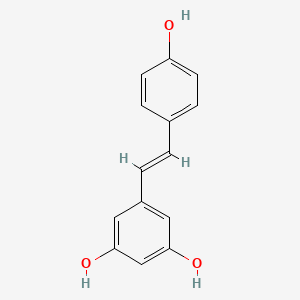
Trans-resveratrol is the geometric isomer in which the two aromatic rings sit on opposite sides of the central double bond. It is more stable than the cis form and is the isomer virtually all published research and commercial specifications refer to when they say “resveratrol.” A specification that does not distinguish trans- from total resveratrol leaves open the possibility that some of the assayed content is the less-studied cis form, which is why the trans-resveratrol percentage — not a generic “resveratrol” figure — is the number to request on a COA.
Assay methods: how trans-resveratrol content is confirmed
High-performance liquid chromatography (HPLC) is the standard analytical method for quantifying trans-resveratrol in a botanical extract. HPLC separates the compounds in the extract by their interaction with a stationary phase and quantifies each eluting peak against a calibrated reference standard, distinguishing trans-resveratrol from the cis isomer and from other co-extracted plant compounds.
What a buyer should look for on the COA:
- Marker compound named: trans-resveratrol specifically, not an undifferentiated “resveratrol” or “total stilbenes” figure
- Assay method stated: HPLC (with the specific method reference where available)
- Assay value reported: the percentage of trans-resveratrol in the batch — 50% or 98%, per the grade ordered
- Botanical source declared: Polygonum cuspidatum root, or the stated source where a supplier uses a different botanical
- Batch identification: lot number linking the COA to the specific production batch
Resveratrol’s biological research literature is extensive and spans cardiovascular, metabolic and longevity-adjacent laboratory and animal studies. A widely cited review of the in vivo evidence for resveratrol was published by Baur & Sinclair (Nature Reviews Drug Discovery, 2006; PMID 16732220). This is a context reference for the ingredient’s evidence base; the article makes no efficacy claim about any commercial product, and the current human clinical evidence for oral resveratrol is limited by the compound’s rapid metabolism and low systemic bioavailability.
Standardised resveratrol powder vs grape skin and crude fruit sources
The difference between a standardised, HPLC-assayed resveratrol powder and grape skin or a crude fruit-derived material is a specification and quality-control difference. A standardised extract has been processed from a high-yielding source to concentrate trans-resveratrol, with the percentage declared and confirmed by HPLC on every batch. Grape skin, by contrast, is not processed as a dedicated resveratrol source commercially — its resveratrol content is low, varies with grape variety, growing conditions and processing, and is not the basis of a marker-assayed specification. A fruit-only grape extract, such as Bionutricia’s own Grape Extract Powder, carries some resveratrol as an incidental constituent of its broader polyphenol profile, but — as its own buyer’s guide states — that content is typically lower than in seed or skin material and is not declared as a specific assayed percentage on that product’s certificate.
For a formulation where a guaranteed, repeatable trans-resveratrol dose per serving is a requirement, a standardised resveratrol powder with a declared assay percentage is the grade to specify, rather than relying on the incidental resveratrol content of a grape-derived ingredient.
| Parameter | Standardised resveratrol powder (Polygonum cuspidatum, 50% or 98% trans-resveratrol) | Grape skin / crude fruit-derived material |
|---|---|---|
| Marker compound | Trans-resveratrol, declared and assayed | Not declared as a specific percentage; incidental constituent |
| Assay method | HPLC, reported on COA | Not reported for resveratrol specifically |
| Resveratrol yield | High — dedicated extraction source | Low and variable — not a dedicated resveratrol source |
| Batch consistency | Verified per lot by COA | Unverified for resveratrol content specifically |
| Formulation dosing | Predictable — trans-resveratrol content known per gram | Unpredictable for resveratrol; suited to broader polyphenol positioning, not a resveratrol dose claim |
Extraction method
Commercial resveratrol powder is generally produced by extracting dried, milled Polygonum cuspidatum root with a solvent system, followed by purification and concentration steps to raise the trans-resveratrol percentage to the declared grade, then drying to a stable powder. The exact solvent system, purification steps and processing parameters used for Bionutricia’s current batches are available on request — contact us for the process documentation alongside the current COA. As with other polyphenols, trans-resveratrol is sensitive to prolonged heat, light and oxidation, so controlled processing and appropriate storage matter for preserving the assayed content between manufacture and use.
Solubility and formulation considerations
Resveratrol in its free (uncomplexed) form is poorly soluble in water and is lipophilic, meaning it disperses more readily in fat- or alcohol-based systems than in plain aqueous ones. In a dry-blend or beverage application, the powder typically needs pre-dispersion — in a small volume of alcohol, glycol or with a solubility-enhancing carrier — before being added to the main aqueous batch, to avoid visible particulate or uneven distribution. Because trans-resveratrol is also light- and oxidation-sensitive, finished products are generally best protected from prolonged light exposure and formulated with this stability profile in mind. These properties make careful formulation guidance relevant for beverages and cordials, ice-cream and frozen desserts, bakery systems, sachet drink mixes, dry powder blends and cosmetic applications, where the pre-dispersion step and packaging choices should be matched to the specific product format.
Supplying resveratrol powder in bulk
Bionutricia Extract supplies resveratrol powder in two standardised grades — 50% and 98% trans-resveratrol — sourced from Polygonum cuspidatum root, in a facility holding FSSC 22000, GMP, HACCP, JAKIM Halal, MeSTI and US FDA facility registration. Every production lot ships with a certificate of analysis confirming the trans-resveratrol content by HPLC, for whichever grade is ordered. A 1 kg packed format is confirmed on file; bulk supply, custom specification, additional pack sizes, documentation and export paperwork are available on request.
Buyers formulating with resveratrol may also want to review Bionutricia’s grape-derived polyphenol ingredients, where resveratrol is present as part of a broader profile rather than as the declared marker: Grape Extract Powder and the Grape Extract Powder buyer’s guide, which explain why a fruit-only grape extract carries lower and more variable resveratrol content than a dedicated, marker-assayed resveratrol powder.
For specifications, samples, and bulk quotations, contact our team or message us via our contact page.
Related ingredient guides
Frequently asked questions
What is the marker compound for a standardised resveratrol powder, and how is it assayed? The marker is trans-resveratrol, the stable, biologically relevant isomer. A standardised extract names trans-resveratrol specifically (not an undifferentiated “resveratrol” figure) and reports its assay percentage by HPLC (high-performance liquid chromatography) on the certificate of analysis for every production lot.
What grades of trans-resveratrol does Bionutricia supply? Two standardised grades are confirmed on file: 50% and 98% trans-resveratrol, both from Polygonum cuspidatum root and both confirmed by HPLC on the certificate of analysis issued per production lot.
Does bulk resveratrol powder actually come from grape skin? Not commercially. Grape skin is resveratrol’s best-known natural source and is where most people first encounter the compound, but its resveratrol content is low and variable, making it impractical as a dedicated extraction source at bulk scale. Commercial resveratrol powder, including Bionutricia’s current specification, is produced from the root of Polygonum cuspidatum (Japanese knotweed), which yields a far higher and more consistent trans-resveratrol content.
What is the difference between this resveratrol powder and Bionutricia’s Grape Extract Powder? They are different products with different roles. Grape Extract Powder is a fruit-only extract standardised to total polyphenols, in which resveratrol is one incidental constituent among several, present at a lower and more variable level than in seed or skin material. This resveratrol powder is a dedicated, marker-assayed extract from Polygonum cuspidatum, standardised specifically to trans-resveratrol content and confirmed by HPLC on every batch.
Is resveratrol powder water-soluble, and what does that mean for formulation? No — resveratrol in its free form is poorly water-soluble and lipophilic. Formulators typically pre-disperse it in a small volume of alcohol, glycol or a solubility-enhancing carrier before adding it to an aqueous batch. This is a relevant consideration for beverages and cordials, sachet drink mixes, dry powder blends, bakery systems, ice-cream and frozen desserts, and cosmetic applications.
Why does the trans/cis distinction matter for a resveratrol specification? Trans-resveratrol is the stable isomer and the one virtually all research and commercial specifications refer to; cis-resveratrol is less stable and is not used as a standardisation marker. A specification or COA that reports only “resveratrol” without confirming it is the trans isomer leaves the actual composition of the batch unclear.