Menthol Crystal Powder: Monoterpene Identity, Purity Assay and Bulk Formulation Guide
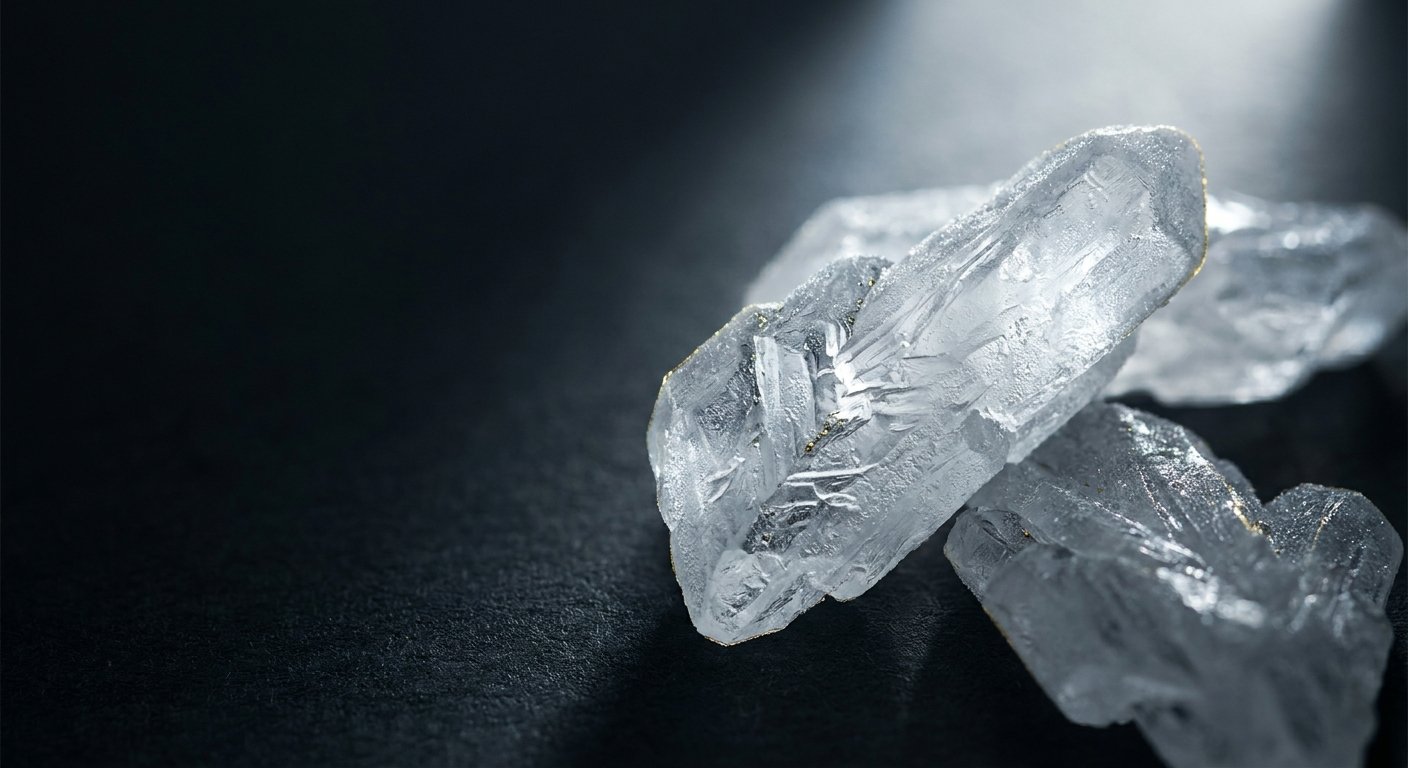
Formulator’s summary: Menthol is a cyclic monoterpene alcohol, most abundant in peppermint oil (Mentha piperita) and also present in spearmint (Mentha spicata), supplied to formulators as white crystals or a stabilised powder valued for its characteristic cooling sensation on the palate and skin. Both natural (plant-derived) and synthetic menthol exist on the market and share the same chemical identity, so purity and source verification on the certificate of analysis matter more than the production route alone. Menthol sublimes readily at room temperature and is only slightly soluble in water while freely soluble in oils and alcohol — the same solubility profile that governs which format (crystal vs stabilised powder) suits a given beverage, bakery or cosmetic application. For exact purity percentage, natural-vs-synthetic sourcing, and crystallisation/stabilisation method, contact us for the current specification and certificate of analysis for the specific lot being quoted.
Quick facts for formulators
- Chemical class: Cyclic monoterpene alcohol
- Natural source: Peppermint oil (Mentha piperita); also present in spearmint (Mentha spicata)
- Sourcing: Natural (plant-derived) or synthetic — both share identical chemical structure; confirm source on the COA
- Physical behaviour: Sublimes at room temperature; supplied as crystals or a stabilised powder to manage this
- Solubility: Only slightly soluble in water; freely soluble in oils, ethanol and other organic solvents
- Sensory property: Characteristic cooling sensation on the palate and skin
- Purity grade: Contact us for the current specification — a product specification, certificate of analysis (COA) and manufacturing SOP are held on file for menthol
- Certifications: GMP, HACCP, JAKIM Halal, FSSC 22000 — confirm current certificate scope for this ingredient specifically
What makes menthol chemically distinct
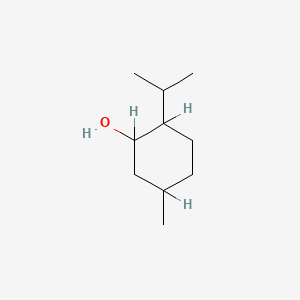
Menthol is a monoterpene built on a cyclohexane ring bearing a hydroxyl group, methyl group and isopropyl group. It occurs naturally as several stereoisomers, of which the levorotatory form (found predominantly in peppermint oil) is responsible for the characteristic cooling effect most formulators are seeking. This cooling sensation arises from menthol’s interaction with cold-sensing receptors on the skin and mucous membranes, independent of any actual temperature change.
Natural vs synthetic sourcing
Because natural and synthetic menthol are chemically identical compounds, a certificate of analysis distinguishing the two typically relies on the production route stated by the supplier rather than a compositional difference alone — natural menthol is extracted and crystallised from mint oil (predominantly Mentha arvensis and Mentha piperita), while synthetic menthol is manufactured chemically. Buyers with a natural-labelling requirement should confirm the sourcing route explicitly on the specification sheet rather than assuming it from the word “menthol” alone.
Purity assay and batch documentation
Menthol purity is confirmed analytically, typically by gas chromatography (GC) against a reference standard, with the certificate of analysis stating the assay percentage, melting point (a useful purity indicator for this crystalline compound) and any residual solvent limits. A buyer should request the marker assay, the melting point range and confirmation of the natural-or-synthetic production route on every batch’s documentation.
Solubility and formulation considerations
Menthol’s tendency to sublime (pass directly from solid to vapour) at room temperature means it can lose potency from an open or poorly sealed container over time, which is a storage and packaging consideration as much as a formulation one. Its limited water solubility means a plain crystal form disperses more readily into oil-based or alcohol-based systems than directly into an aqueous beverage; a stabilised or encapsulated powder form is generally the better fit for water-based drink formulation, while the plain crystal form suits dry powder blends, bakery systems and cosmetic applications where an oil or wax carrier is already present.
Supplying menthol in bulk
Menthol suits beverages and cordials, ice-cream and frozen desserts, bakery systems, sachet drink mixes, dry powder blends and cosmetic applications, with the crystal-vs-stabilised-powder choice driven by which of those systems the buyer is formulating for. For the natural botanical sources that contain menthol, see the related guides below.
Frequently asked questions
Is menthol natural or synthetic? Both exist on the market and are chemically identical; the production route (plant-extracted vs chemically manufactured) should be confirmed explicitly on the supplier’s specification sheet rather than assumed.
Why does menthol crystal sometimes lose potency in storage? Menthol sublimes (passes directly from solid to vapour) at room temperature, so an open or poorly sealed container can lose material over time — airtight packaging and cool storage help preserve potency.
Can menthol crystal be added directly to a water-based beverage? It disperses poorly on its own because of its limited water solubility; a stabilised or encapsulated powder form is generally better suited to aqueous drink formulation than the plain crystal.