\n
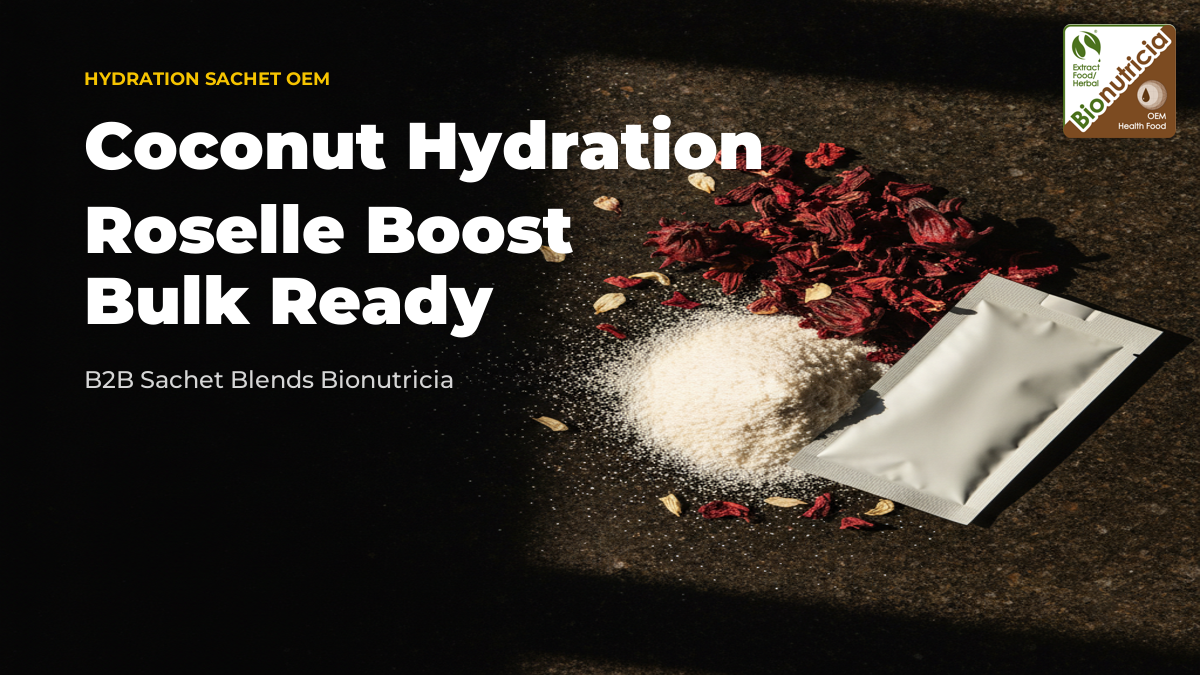
Direct answer: A coconut water powder + roselle extract hydration powder sachet is a single-serve, spray-dried functional-beverage blend that pairs Cocos nucifera coconut water powder — a clean-label carrier of naturally occurring electrolytes including potassium — with a standardized Hibiscus sabdariffa (roselle) calyx extract, valued for its deep-red colour and polyphenol/anthocyanin content. For bulk B2B buyers, this combination is supplied as a powder sachet — one of Bionutricia’s approved OEM formats — rather than a capsule, tablet or stick-pack, so brand owners can position it as a ready-to-mix hydration or functional-refreshment drink. Bionutricia Extract, a Malaysian ingredient supplier with JAKIM Halal, FSSC 22000, GMP, HACCP, MeSTI and US FDA-registered manufacturing behind it, can supply the two actives individually or work with a brand’s own ratio for co-packing into powder sachets. The roselle fraction is processed on Bionutricia’s patented enzymatic ultrasonic extraction (MY-188945-A), a green-biotech-assisted method used to produce standardized botanical fractions. This guide covers what the blend is made of, where its colour and antioxidant character come from, typical formulation considerations, and what to specify when briefing a bulk supplier.
\n\n
\n\n
Quick facts for formulators
\n
- \n
- Format: powder sachet (single-serve, ready-to-mix) — one of Bionutricia’s approved OEM formats, alongside liquid/gel sachets, pouch beverages, chewable tablets and liquid bottles
- Component 1 — coconut water powder: spray-dried Cocos nucifera coconut water, carries naturally occurring electrolytes including potassium, low sodium, water-soluble
- Component 2 — roselle extract: standardized Hibiscus sabdariffa calyx extract, water-soluble, naturally deep red, carries anthocyanins and polyphenols
- Applications: hydration and functional-refreshment drinks, RTD beverage premixes, single-serve powder sachets for retail or foodservice
- Extraction technology: roselle fraction processed via Bionutricia’s patented enzymatic ultrasonic extraction (MY-188945-A)
- Certifications: JAKIM Halal · FSSC 22000 · GMP · HACCP · MeSTI · US FDA registered · NanoVerify
- Supply options: the two actives can be supplied separately for a brand’s own ratio, or briefed for co-packing into a finished powder sachet format
\n
\n
\n
\n
\n
\n
\n
\n
\n\n
What is a coconut water powder + roselle extract hydration powder sachet?
\n
It is a two-active functional-beverage powder designed to be reconstituted in water at the point of use. The base is coconut water powder — coconut water spray-dried into a shelf-stable, free-flowing powder that reconstitutes back into a coconut-water-like drink and carries the electrolytes naturally present in coconut water, including potassium. Into that base, a standardized roselle (Hibiscus sabdariffa) calyx extract is blended in. Roselle calyx is the dried, tart, deep-red flower part used across Southeast Asia, the Middle East and West Africa in teas and cordials, and it is what gives the finished sachet its characteristic ruby colour and tart-sweet flavour profile. Packing the blend as a single-serve powder sachet — rather than a capsule, tablet or stick-pack — keeps the product in a food-format category and lets a brand position it as a hydration drink mix rather than a supplement pill.
\n\n
Why formulators pair these two ingredients together
\n
Coconut water powder on its own is a fairly neutral, pale, mildly sweet electrolyte carrier — useful, but visually and flavour-wise unremarkable once reconstituted. Roselle extract brings colour, tartness and a distinct polyphenol-rich botanical identity to the same sachet, without requiring any artificial colouring or flavouring. For a formulator building a retail or foodservice hydration line, that combination solves two problems in one sachet: an electrolyte-carrying base plus a naturally derived colour and flavour system that reads as “clean label” on a finished pack. Because both components are water-soluble powders, they blend into a single homogeneous sachet fill without needing a separate wet-mix or emulsification step.
\n\n
Where roselle’s colour and antioxidant character come from
\n
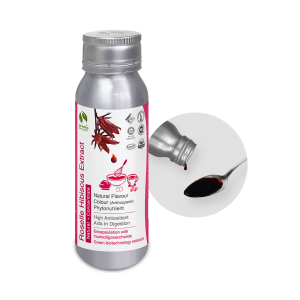
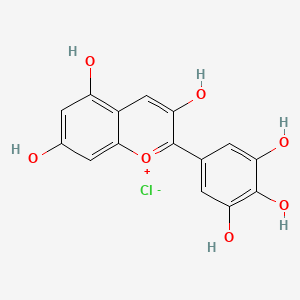
Roselle calyx owes its deep red colour and much of its antioxidant character to anthocyanins — a class of water-soluble plant pigments — alongside other polyphenols concentrated in the dried calyx. The principal anthocyanidin associated with roselle’s red pigmentation is delphinidin, shown below. In its native form in the plant it occurs mostly as glycosides (delphinidin bound to a sugar unit, such as delphinidin-3-sambubioside), which is part of why a standardized calyx extract is typically described by its polyphenol or anthocyanin content rather than by a single isolated molecule.
\n\n
 \n
\n\n\n
For bulk buyers, the practical takeaway is compositional, not clinical: a standardized roselle extract should be specified and accepted on the basis of its polyphenol/anthocyanin assay and colour retention on the supplier’s Certificate of Analysis, not on a single-compound claim.
\n\n
Format, applications and formulation considerations
\n
The blend is supplied as a powder for co-packing into single-serve powder sachets, sized for direct reconstitution in a bottle or glass of water. Typical formulation considerations for a bulk buyer include:
\n
- \n
- Solubility and dispersion — both components are water-soluble; a brief pre-blend or dry-mix step is generally sufficient before sachet filling, though a formulator should still run a dispersion test in the target water hardness/pH.
- Colour stability — anthocyanin colour in roselle extract is sensitive to pH, heat and light; sachets intended for hot-fill or long ambient shelf life should be validated for colour retention over the intended shelf window.
- Flavour balance — roselle’s natural tartness may need a sweetening or flavour-masking strategy depending on the target market; coconut water powder’s mild sweetness partially offsets this but usually is not sufficient on its own.
- Packaging — multi-layer barrier sachet film with adequate moisture protection is recommended, consistent with a hygroscopic powder blend.
- Certificate of Analysis — request electrolyte assay (potassium, sodium) for the coconut water fraction and polyphenol/anthocyanin content for the roselle fraction on the same lot documentation.
\n
\n
\n
\n
\n
\n\n
Manufacturing and technology behind the blend
\n
Bionutricia Extract’s roselle calyx fraction is produced using the company’s patented enzymatic ultrasonic extraction (MY-188945-A) — a green-biotech-assisted extraction process granted under Malaysian patent PI2018700439, used to produce standardized botanical fractions to a consistent quality specification. The coconut water component is separately spray-dried from coconut water into the 20:1 powder used across Bionutricia Extract’s coconut water powder range. Both fractions are produced under the same JAKIM Halal, FSSC 22000, GMP, HACCP, MeSTI and US FDA-registered manufacturing base, with a Certificate of Analysis issued per production lot. Buyers who want to explore an enhanced-absorption delivery format for the polyphenol fraction can also ask about feasibility using Herbosomal® — Bionutricia’s proprietary liposomal encapsulation and sustained-release technology (registered trademark; patent-pending PI2023005773) — as a custom development path separate from the standard powder-sachet format described in this guide.
\n\n
Selected peer-reviewed references
\n
- \n
- Bell, D. et al. (2026). “Rehydration After Exercise-Induced Fluid Losses: Comparing Flavored Water, Coconut Water, and Carbohydrate-Electrolyte Sports Beverage.” Journal of Strength and Conditioning Research. Randomized controlled trial in humans comparing coconut water with other rehydration beverages after exercise-induced fluid loss. PubMed PMID: 41359932.
- Saat, M. et al. (2002). “Rehydration after exercise with fresh young coconut water, carbohydrate-electrolyte beverage and plain water.” Journal of Physiological Anthropology and Applied Human Science. Randomized controlled trial in humans comparing coconut water to a carbohydrate-electrolyte beverage and plain water following exercise. PubMed PMID: 12056182.
- De, S. et al. (2025). “Oral Rehydration Beverages for Treating Exercise-Associated Dehydration: A Systematic Review, Part II. The Effectiveness of Alternatives to Carbohydrate-Electrolyte Drinks.” Journal of Athletic Training. Systematic review evaluating alternative oral rehydration beverages, including coconut water, against conventional carbohydrate-electrolyte drinks. PubMed PMID: 38116818.
- “Coconut Water: A Sports Drink Alternative?” (2023). Sports (Basel, Switzerland). Narrative review of coconut water’s electrolyte composition and its potential as an alternative to conventional sports drinks for rehydration. PMC10534364.
- Hadi, A. et al. (2017). “The Effect of Green Tea and Sour Tea (Hibiscus sabdariffa L.) Supplementation on Oxidative Stress and Muscle Damage in Athletes.” Journal of Dietary Supplements. Randomized controlled trial in athletes examining Hibiscus sabdariffa supplementation and oxidative-stress markers. PubMed PMID: 27736246.
- Frank, T. et al. (2012). “Consumption of Hibiscus sabdariffa L. aqueous extract and its impact on systemic antioxidant potential in healthy subjects.” Journal of the Science of Food and Agriculture. Randomized controlled trial in healthy human subjects examining Hibiscus sabdariffa aqueous extract and systemic antioxidant potential. PubMed PMID: 22331521.
\n
\n
\n
\n
\n
\n
\n
These references describe research on the individual ingredients, not on Bionutricia’s finished sachet blend. Use them for background only, and rely on your own formulation testing and the supplier’s Certificate of Analysis for finished-product specification.
\n\n
- \n
- Coconut Water Powder (Cocos nucifera) — Bulk B2B Supplier
- Blackcurrant (Ribes nigrum) Extract Powder — Bulk B2B Supplier
- Bionutricia’s Liposomal Encapsulation Technology (Herbosomal®): A Technical Overview
\n
\n
\n
\n
\n\n
Frequently asked questions
\n
What is a coconut water powder + roselle extract hydration powder sachet, and who is it for? It is a two-active, water-soluble powder blend of coconut water powder and standardized roselle (Hibiscus sabdariffa) calyx extract, supplied in bulk for brand owners and beverage formulators who want to co-pack it into single-serve hydration powder sachets rather than build the blend from raw materials themselves.
\n
Is this combination halal certified and suitable for export? Both components are produced within Bionutricia Extract’s JAKIM Halal, FSSC 22000, GMP, HACCP and MeSTI-certified manufacturing base, which also holds US FDA registration, supporting export documentation for Southeast Asia, the GCC and the United States.
\n
What format is this supplied in — can it be produced as a private-label sachet? The blend is supplied as a powder for filling into powder sachets, one of Bionutricia’s approved OEM formats. Private-label co-packing into a brand’s own sachet format can be discussed with the supplier’s OEM team.
\n
What does “patented enzymatic ultrasonic extraction” mean for the roselle fraction? It refers to Bionutricia’s granted Malaysian patent (MY-188945-A), a green-biotech-assisted enzymatic and ultrasonic process used to produce standardized botanical fractions, including the roselle calyx extract used in this blend, to a consistent specification.
\n
Can the coconut water powder and roselle extract be supplied separately for a custom ratio? Yes. Both components are available individually so a formulator can set their own blend ratio, alongside the option of briefing Bionutricia for a pre-blended, co-packed powder sachet.
\n
\n\n
\n\n
\n\n\n