Choosing a halal botanical extract manufacturer in Malaysia for your supplement, nutraceutical or functional-food brand is one of the highest-stakes sourcing decisions you will make. Get it right and you inherit two decades of R&D, halal compliance, regulatory documentation and supply stability — making your roadmap predictable for years. Get it wrong and you absorb the manufacturer’s failed batches, halal slips, customs issues, and customer complaints. This R&D Folio post is a 2026 evaluation guide written from inside the manufacturing side of the table.
For a worked example of halal batch documentation on a botanical, see our Centella asiatica (gotu kola) extract — halal supplier spec sheet.
1. The five non-negotiables for 2026
Buyer expectations in 2026 are different from 2020. The five things every B2B buyer should now treat as non-negotiable in a Malaysian halal botanical extract supplier:
- Facility-level JAKIM HALAL certification, not paperwork-only. JAKIM (Department of Islamic Development Malaysia) is internationally recognised across the GCC, ASEAN and most halal-import markets.
- FSSC 22000 food safety system certification, not just HACCP. FSSC 22000 is GFSI-recognised and required by most multinational buyers.
- In-house extraction equipment, not subcontracted. If the manufacturer doesn’t own its own reactors, spray-dryers and encapsulation lines, every batch carries supply-chain risk.
- COA per lot with stability data on request, not just one-off testing. Real manufacturers issue a Certificate of Analysis every shipment.
- Demonstrable R&D output — patents, peer-reviewed studies, or third-party lab reports. Without IP, the supplier is a trading shop.
Bionutricia Manufacturing Sdn Bhd was founded in 2006 in Sungai Buloh, Selangor and meets all five. We are JAKIM HALAL, FSSC 22000, GMP, HACCP, hold a Malaysian patent on ultrasonic extraction, and issue COA on every production lot. Our full evaluation rubric is laid out on the Why Bionutricia evaluation page.
2. Choosing the right standardisation
For most botanical extracts, “standardised to X% of active marker Y” is the spec line that determines both efficacy and price. Three common Malaysian heritage botanicals as examples:
- Tongkat Ali (Eurycoma longifolia) — most-requested standardisations are 1%, 2%, 4% or 10% eurycomanone, or 50% / 100:1 glycosaponin. Eurycomanone standardisation is the marker most buyers ask for in 2026 because it correlates with the most-studied effects. Full spec range at our Tongkat Ali manufacturer hub. For what JAKIM certification actually controls at the supplier level, see our halal Tongkat Ali sourcing guide.
- Misai Kucing (Orthosiphon aristatus) — typically standardised on rosmarinic acid (1%, 2% or 5%) or sinensetin (0.1%, 0.5%). Full-spectrum is also common. See Misai Kucing supplier page.
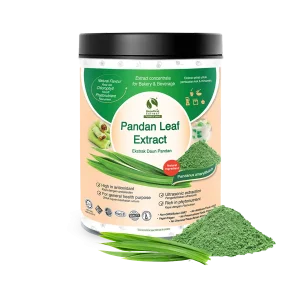
- Pandan (Pandanus amaryllifolius) — aroma-standardised on the 2-acetyl-1-pyrroline marker (the characteristic aroma compound) or full-spectrum. See Pandan leaf extract bulk page.
3. When to use liposomal encapsulation
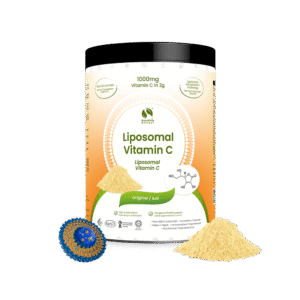
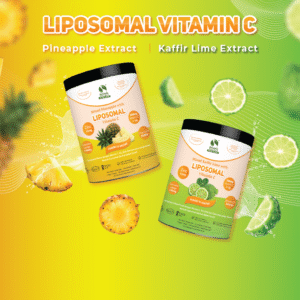
Liposomal encapsulation wraps the active inside a phospholipid bilayer that mimics human cell membranes. The benefit is higher bioavailability — more of the active dose reaches the bloodstream because the liposome protects the active through the digestive tract. Use liposomal when:
- The active has known absorption issues (e.g., Vitamin C at high doses, certain plant polyphenols).
- The active is light-sensitive, oxygen-sensitive or heat-sensitive — the liposome extends shelf life.
- You need a premium pricing tier — liposomal supports a 2–3× retail price multiple vs. standard extract.
Bionutricia holds a Malaysian patent on its liposomal technology (MyIPO registered) and provides SIRIM-tested formulations with NanoVerify DLS reports per batch. Full details on the patent-pending liposomal technology page.
4. Halal nutraceutical OEM vs. botanical extract supply
Two different services often confused:
- Botanical extract supply — you receive the bulk extract powder or liquid and use it in your own downstream process.
- Nutraceutical OEM — you provide a brief, Bionutricia formulates, manufactures, packages and delivers a finished branded product ready for retail.
For finished supplement OEM under one JAKIM HALAL certificate, see our halal nutraceutical OEM page. For toll-manufacturing and contract extraction without finishing, see the contract manufacturing services page.
5. The natural-colour opportunity for halal F&B
Synthetic food colours face increasing regulatory and consumer pressure across ASEAN and the Middle East. Halal-certified natural colours from Malaysian sources offer JAKIM-recognised halal documentation, cleaner label compliance and traceable plant sourcing. Common Malaysian plant pigments:
- Butterfly Pea (Clitoria ternatea) — brilliant blue from ternatins. pH-sensitive (blue at 5.5–6.5, purple in mild acid, pink below 4).
- Roselle (Hibiscus sabdariffa) — vibrant red/pink from delphinidin-3-sambubioside.
- Pandan — soft green from chlorophyll, especially good in dairy and bakery.
Full portfolio at the natural food colour supplier (halal) page.
6. MOQ, lead time and sample policy — what’s normal in 2026
Reasonable B2B norms for a serious Malaysian botanical extract manufacturer in 2026:
- Bulk extract MOQ: 25 kg for spray-dried powder. Liposomal 25–50 kg. Below MOQ should be negotiable for credible startup launches.
- Finished supplement OEM MOQ: 5,000–10,000 finished units depending on format.
- Quote SLA: 24 hours for B2B quotation requests. Anything slower than 48 hours signals a sales bottleneck.
- Free sample: 100 g within 7 days for qualified leads. If a supplier won’t sample, walk away.
- Lead time: 2–4 weeks for standard SKUs, 8–12 weeks for new custom formulations.
7. Regulatory documentation per export market
If you are exporting halal supplements or extracts from Malaysia, your manufacturer should handle (not just hand off) the regulatory documentation. At minimum:
- JAKIM HALAL certificate copy per shipment.
- Country-specific regulatory documents — Indonesia BPOM, Saudi SFDA, UAE ESMA, Singapore HSA, etc.
- COA, MSDS, country-of-origin per consignment.
- Stability data on request (3-month accelerated + 24-month real-time).
Bionutricia exports to Malaysia, Singapore, Indonesia, Thailand, Philippines, Vietnam, Australia, the United States, the European Union, Japan, Korea and the Middle East. Documentation is included with every consignment.
8. The honest test — visit the facility
Before signing a long-term contract, visit. Or arrange a video walkthrough. A real manufacturer will welcome qualified B2B prospects on-site. A trading shop will deflect. The Bionutricia facility in Sungai Buloh, Selangor is open to scheduled visits and remote video audits — email sales@bionutricia.com to arrange.
Where to go from here
Start with the page that matches your immediate sourcing need:
- Tongkat Ali bulk extract → Tongkat Ali manufacturer hub
- Halal Tongkat Ali sourcing (what JAKIM-certified means at supplier level) → Halal Tongkat Ali Sourcing Guide
- Misai Kucing extract → Misai Kucing supplier
- Pandan extract bulk → Pandan leaf extract
- Natural food colour (halal) → Natural food colour supplier (halal)
- Liposomal supplement OEM → Liposomal technology
- Halal supplement OEM → Halal nutraceutical OEM
- Contract / toll manufacturing → Contract manufacturing services
- How to evaluate any manufacturer → Why Bionutricia (rubric)
For a B2B quote, email sales@bionutricia.com with your target spec, monthly volume and country of destination. We reply within 24 hours.
Looking for finished-product nutraceutical OEM & contract manufacturing rather than a bulk extract ingredient? See our sister company bionutricia.com.