Nutraceutical Ingredient Supplier Malaysia: How to Tell a Manufacturer from a Trading Company
Formulator’s summary: A nutraceutical ingredient supplier in Malaysia can be either a genuine in-country manufacturer with its own extraction, drying and packaging facility, or a trading company that buys and resells extracts produced by third parties. The distinction matters at every stage of your supply chain: a manufacturer controls specification, batch consistency and documentation from raw material to finished powder; a trader controls only the commercial transaction and cannot guarantee what happens inside the extraction process. This guide gives procurement teams, formulators and brand owners a practical checklist for telling the two apart — which certifications to verify and how, how to read a Certificate of Analysis, what facility-level JAKIM Halal certification actually means versus a raw-material-only halal claim, and what a transparent order, sample and production-timeline policy looks like. The difference between buying direct from the facility that makes your extract and buying from an intermediary that never touches the process is the difference between a supply chain you can audit and one you cannot. Use this checklist before signing a supply agreement with any Malaysian nutraceutical ingredient supplier.
Quick facts for B2B buyers
- Manufacturer type to verify: in-house extraction, spray-drying, grinding and packing — not resold intermediates
- Certifications to request: FSSC 22000, GMP, HACCP, JAKIM Halal, MeSTI, US FDA facility registration — with certificate numbers and expiry dates, not just logos
- COA requirement: lot-specific Certificate of Analysis for every production batch, not a generic specification sheet
- Halal verification: facility-level JAKIM Halal certification, verifiable on the official JAKIM portal — not a raw-material-only halal claim
- Production timeline: standard 2–4 weeks for catalogue extracts; 8–16 weeks for custom R&D projects
- Sample policy: free 100 g sample within 7 days for qualified B2B leads; 24-hour quotation turnaround
Why the manufacturer-versus-trader distinction matters
When you buy a standardised botanical extract or functional ingredient in bulk, the entity you buy from determines what you can guarantee to your own customers. A manufacturer that owns its extraction, drying, grinding and packaging equipment controls every variable that affects your specification: the extraction method, the standardisation marker, the residual solvent profile, the particle size, the moisture content and the microbiological status. It can issue a lot-specific COA because it tested the batch it produced. It can re-run a failed lot at its own cost because it controls the production line. It can provide stability data because it has the R&D capability to generate it.
A trading company — however well-intentioned — controls none of these things. It buys finished extract from one or more manufacturers, repacks it, and resells it. The COA it hands you may be from the original manufacturer, but the trading company cannot guarantee that the document matches the specific drum you receive, because it did not produce the batch and does not control the chain of custody between the manufacturer’s QC release and your goods-in. If a lot fails, the trader must go back to the manufacturer and negotiate a resolution — a process that can take weeks and may not result in a replacement at the trader’s cost.
For export into regulated markets — the EU, the GCC, the United States — this distinction is not academic. Customs authorities, retailers and private-label partners increasingly demand documentation that traces the ingredient back to the facility that made it. A supply chain that passes through a trading layer adds a documentation gap that auditors flag.
Five signs you are dealing with a trading company, not a manufacturer
| Signal | What a trading company typically does | What a manufacturer typically does |
|---|---|---|
| 1. Equipment ownership | Cannot describe the extraction, drying or grinding equipment because it does not own any. May deflect questions about process parameters. | States the extraction method, drying technology and equipment by name. Can discuss process parameters and how they affect the active marker. |
| 2. COA traceability | Provides a generic or “typical” COA, or a COA from a third party that may not match the specific lot you receive. | Issues a lot-specific COA for every production batch, with the batch number, production date and assay results for that exact lot. |
| 3. Custom specification | Cannot adjust the extract ratio, standardisation percentage or particle size because it does not control the process. Offers only what its supplier already makes. | Can develop a custom specification — a different extract ratio, a tighter standardisation window, a specific particle size — because it controls the extraction and drying parameters. |
| 4. Facility visit | Deflects or declines facility audits. May offer a “partner facility” visit, which is the manufacturer it buys from — not its own. | Welcomes facility audits at its own manufacturing site. Can provide a video walkthrough or remote audit with shared documentation. |
| 5. Patent and IP | Has no patents, no proprietary technology and no R&D team. Competes on price and catalogue breadth, not on process innovation. | Holds granted patents or pending IP for extraction or delivery technology. Has an in-house R&D team with published or verifiable credentials. |
What a genuine in-country manufacturer actually provides
A manufacturer that owns its process from raw material to finished powder offers capabilities a trading company structurally cannot:
- Lot-specific documentation: a COA for every production batch, with the batch number, assay results, heavy-metal limits, microbiology and moisture content for that exact lot — not a representative document from a different batch.
- Custom specification development: the ability to adjust the extract ratio, standardisation marker percentage, particle size or carrier system to meet a buyer’s formulation requirement, because the manufacturer controls the extraction and drying parameters.
- Failed-lot re-run: if a batch fails QC, the manufacturer re-runs the lot at its own cost. The COA ships only when the lot is in-spec. A trading company must negotiate this with its supplier and may pass the cost to the buyer.
- Stability and R&D data: a manufacturer with an in-house R&D team can generate stability data, develop new active fractions and support a buyer’s regulatory dossier with process documentation.
- Transparent production timeline: a manufacturer states a standard production timeline of 2–4 weeks for catalogue extracts and 8–16 weeks for custom R&D projects. A trading company that promises faster delivery may be shipping from existing stock with different specifications.
- Sample policy: a manufacturer provides a free 100 g sample within 7 days for qualified B2B leads and a 24-hour quotation turnaround, because it controls the production schedule.
Bionutricia, founded in 2006 with over 20 years of R&D experience and 15 years of manufacturing, operates a fully integrated facility in Sungai Buloh, Selangor, with in-house extraction, spray-drying, grinding and packing. Its in-house authority team — a registered pharmacist, a nutritionist, a dietitian and a PhD biomedical scientist — supports custom specification development and regulatory documentation. The company has served 239+ brand partners across Southeast Asia, the Middle East, the United States and the European Union, exporting through Port Klang.
Facility-level halal versus raw-material-only halal
For buyers supplying Muslim-majority markets — Malaysia, Indonesia, the GCC — halal verification is not optional, and the level at which halal is certified matters. There are two distinct claims a supplier can make:
Facility-level JAKIM Halal certification means JAKIM (Jabatan Kemajuan Islam Malaysia) has audited and certified the manufacturing facility itself. Every product produced at that site meets halal requirements by default — covering raw material handling, equipment cleaning protocols, solvent use, staff training and documentation. The certification is verifiable on the official JAKIM portal using the certificate number. Bionutricia holds JAKIM Halal certification at the facility level in Sungai Buloh, Selangor.
Raw-material-only halal means the supplier asserts that individual ingredients are halal, but the facility where the extract was produced has not been audited or certified by JAKIM. This is a weaker claim: it does not cover the manufacturing process, equipment cleaning, cross-contamination risk or documentation chain. A trading company that buys from multiple manufacturers may make this claim because it does not control the facility.
For export into Indonesia and the Middle East, facility-level JAKIM Halal is the standard that customs authorities and retailers recognise. A raw-material-only claim may not satisfy halal verification requirements in these markets.
COA verification: what to ask for and what to check
A Certificate of Analysis is the single most important document a bulk ingredient buyer receives. But not every COA is equal, and the difference between a manufacturer’s lot-specific COA and a trader’s forwarded document is the difference between a supply chain you can audit and one you cannot.
A COA for a bulk botanical extract should report, at minimum, the following for the specific lot you are buying:
| COA parameter | What to check |
|---|---|
| Standardised active marker | The actual percentage for this lot, with the assay method stated (HPLC is standard). For a standardised extract, confirm the result is within the committed range. |
| Heavy metals | Arsenic, lead, cadmium and mercury, each within your destination market’s pharmacopoeial or food-safety limits. |
| Microbiology | Aerobic plate count, yeast and mould, coliforms, and E. coli absent — each within specification. |
| Moisture content | Typically 2–8% for spray-dried powders. Higher moisture shortens shelf life and increases caking risk. |
| Pesticide residues | Within the limits set by the destination market’s food-safety authority. |
| Batch number and production date | Must match the specific lot you receive. A COA without a batch number is a generic document, not a lot certificate. |
The distinction between a standardised extract and a crude herbal powder is central to COA verification. A standardised extract commits to a defined active-marker percentage — for example, 95% piperine or 2% eurycomanone — with batch-to-batch consistency on that marker. Every lot assays within a narrow window of the committed percentage, and the COA evidences it. A crude extract carries the active at whatever level the raw material delivered; the COA reports the actual figure for that batch but does not commit to a fixed percentage. Both have legitimate uses, but they are not interchangeable when a formulation depends on a defined active dose. A manufacturer that controls its extraction process can offer both grades and document the difference; a trading company can only forward whatever the original manufacturer produced.
- Request the COA for the actual lot, not a typical or representative document
- Confirm the batch number on the COA matches the batch you receive
- Verify the assay method is stated for the active marker (HPLC is standard)
- Check heavy-metal and microbiology results against your destination market’s limits
- Ask whether a standardised grade is available if your formulation requires a committed marker percentage
- Verify JAKIM Halal on the official JAKIM portal using the certificate number
- Confirm the FSSC 22000 certificate names the specific site and product scope
- Request a sample documentation package for your target export market
Supplying nutraceutical ingredients and related services in bulk
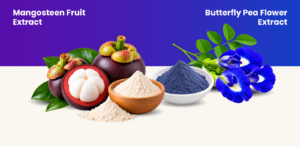
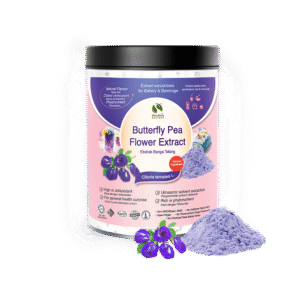
Bionutricia supplies a broad range of standardised botanical extracts, functional ingredients and liposomal delivery systems from its facility in Sungai Buloh, Selangor, Malaysia. Buyers evaluating a Malaysian supplier for bulk nutraceutical ingredients will find published product pages for Tongkat Ali extract powder, butterfly pea natural food colour and black pepper extract powder on this site, each with its own specification, standardisation marker and COA framework. Bulk supply is available in powder form with custom specification and extract ratio on request. Every production lot carries a COA, and documentation includes halal certification, export paperwork and US FDA facility registration. The facility operates under FSSC 22000, GMP, HACCP, JAKIM Halal and MeSTI, with NanoVerify validation for liposomal products. Extraction runs on Bionutricia’s patented enzymatic ultrasonic extraction (MY-188945-A), with Herbosomal® — Bionutricia’s proprietary liposomal encapsulation and sustained-release technology (registered trademark; patent-pending PI2023005773) — available for enhanced-delivery actives. Sample requests can be made through the contact page.
Order sample quantities or bulk standardised ingredients from our eStore at https://bionutriciaextract.com/.
Frequently asked questions
What is the difference between a nutraceutical ingredient manufacturer and a trading company in Malaysia?
A manufacturer owns and operates its own extraction, drying, grinding and packaging equipment and controls the entire production process from raw material to finished extract. A trading company buys finished extracts from one or more manufacturers and resells them, controlling only the commercial transaction — not the production process, specification development or batch consistency.
How do I verify that a Malaysian supplier is JAKIM Halal certified at the facility level?
Ask for the JAKIM Halal certificate number and verify it on the official JAKIM portal. Facility-level certification means every product manufactured at that site meets halal requirements by default — covering raw material handling, equipment cleaning, solvent use and staff training. A raw-material-only halal claim means the supplier asserts that individual ingredients are halal, but the facility itself has not been audited and certified by JAKIM.
What should a Certificate of Analysis include for a bulk nutraceutical ingredient?
A COA should state the standardised active compound percentage with the assay method, heavy metal testing (arsenic, cadmium, lead, mercury), microbial testing (total plate count, yeast, mould, coliforms, E. coli), moisture content and pesticide residue results — all for the specific lot, with a batch number that matches the batch you receive. A manufacturer issues a COA for every production lot; a trading company may only provide a generic specification sheet or a COA from the original manufacturer.
Can a trading company provide the same documentation as a manufacturer?
A trading company can forward documents from the original manufacturer, but it cannot guarantee that the documents match the specific batch you receive, control the production process or re-run a failed lot. A manufacturer can provide lot-specific COAs, stability data, third-party lab reports and re-run a failed batch at its own cost because it controls the production line.
What export documentation should a Malaysian nutraceutical ingredient supplier provide?
For GCC markets: JAKIM Halal certificate, COA and US FDA facility registration letter if required. For EU markets: FSSC 22000 documentation, pesticide MRL compliance and country of origin certificate. For the US market: US FDA facility registration number, COA and supplement fact panel support. A manufacturer that regularly exports will have this documentation workflow established and can provide a sample documentation package on request.
Related guides
- Why Bionutricia — Evaluating a Botanical Extract Manufacturer in Malaysia
- FSSC 22000 vs GMP vs HACCP — Which Certifications Matter Most for Botanical Extract OEM?
- Top 10 Questions B2B Buyers Ask Before Choosing a Botanical Extract Manufacturer in Malaysia