Standardised Roselle Extract for Functional Beverages: Anthocyanin Stability, pH Sensitivity and Colour Retention in RTD and Cordial Applications
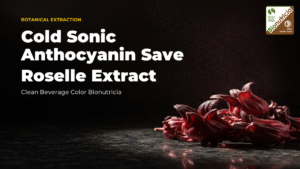
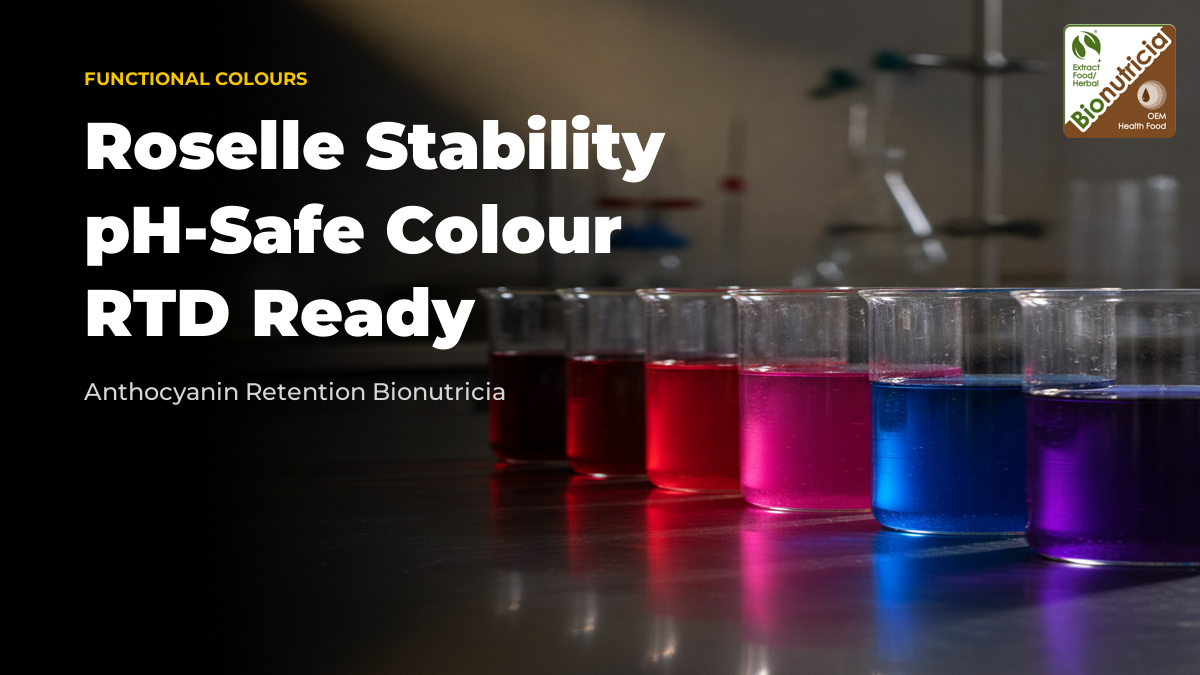
Formulator’s summary: Roselle (Hibiscus sabdariffa) calyx extract is one of the most intense natural red colourants available to beverage formulators, delivering a ruby-red hue from anthocyanin pigments — principally delphinidin-3-sambubioside — concentrated in the dried calyx. Its colour is strongly pH-dependent: at acidic pH (2–4) the extract appears bright red, shifting through magenta and purple toward blue-grey as pH rises above 5. This pH sensitivity is both the ingredient’s greatest formulation challenge and its greatest design opportunity, allowing a formulator to tune colour by adjusting beverage acidity rather than adding synthetic dyes. The extract is water-dispersible and available as both a liquid concentrate and a spray-dried powder, making it suitable for ready-to-drink beverages, cordials, ice-cream and frozen desserts, bakery systems, sachet drink mixes and dry powder blends. A certificate of analysis that names the anthocyanin assay, confirms the extraction method, and reports colour behaviour across a pH range is what separates a formulation-ready standardised extract from a commodity calyx powder with no colour guarantee.
Quick facts for formulators
- Botanical: Hibiscus sabdariffa, dried calyx
- Primary colour marker: Delphinidin-3-sambubioside (anthocyanin)
- Extraction method: Patented enzymatic ultrasonic extraction (MY-188945-A)
- Colour range: Bright red (pH 2–4) → magenta (pH 4–5) → purple-blue (pH 6+)
- Solubility: Water-dispersible; available as both extract powder and liquid concentrate
- Sensory contribution: Deep ruby-red colour, tart-sweet flavour
- Best applications: Ready-to-drink beverages, cordials, ice-cream and frozen desserts, bakery systems, sachet drink mixes, dry powder blends, cosmetic applications
- Certifications: FSSC 22000, JAKIM Halal, GMP, HACCP, MeSTI, US FDA facility registration
Anthocyanin colour chemistry in roselle extract
The deep red colour that makes roselle extract valuable in beverage and food formulation comes from anthocyanins — water-soluble plant pigments concentrated in the dried calyx. The principal anthocyanin in roselle is delphinidin-3-sambubioside, a glycoside of the anthocyanidin delphinidin. A phytochemical analysis of Hibiscus sabdariffa calyces confirmed delphinidin-3-sambubioside as a characteristic anthocyanin pigment present in the calyx material (Anthocyanins of Hibiscus sabdariffa Calyces from Sudan, Natural Product Communications, 2015; https://journals.sagepub.com/doi/pdf/10.1177/1934578X1501000120). This is an in vitro phytochemical characterisation study, not a human clinical trial.
Anthocyanin colour is not fixed — it shifts with pH because the molecule exists in different structural forms depending on the hydrogen ion concentration of the solution. Understanding these forms is the key to predicting and controlling colour in a finished beverage.
The key colour compound: delphinidin
Delphinidin is the anthocyanidin backbone of delphinidin-3-sambubioside. It carries three hydroxyl groups on the B-ring, which makes it one of the most pH-responsive anthocyanidins — its colour shifts across a wider range than anthocyanins with fewer hydroxyl substitutions. In the plant, the attached sugar moiety (sambubioside) provides some stabilisation, but the fundamental pH sensitivity of the delphinidin core remains.
For procurement purposes, delphinidin-3-sambubioside is the marker compound that distinguishes a genuine anthocyanin-standardised roselle extract from a crude calyx powder. A supplier that has invested in low-temperature extraction and anthocyanin preservation should be able to discuss the assay and colour behaviour on the specification sheet.
pH and colour shift: the formulator’s design lever
Anthocyanin colour in roselle extract is governed by four principal molecular forms that exist in equilibrium depending on pH:
| pH range | Dominant form | Visible colour | Beverage context |
|---|---|---|---|
| 2–3 | Flavylium cation (red) | Bright red | Highly acidic RTD beverages, cordials |
| 3–4 | Quinonoidal base | Red to magenta | Standard acidic beverages |
| 4–5 | Carbinol pseudobase (colourless) | Fading / lighter | Weakly acidic — colour loss zone |
| 6–7 | Quinonoidal anhydrobase | Purple to blue | Neutral beverages — colour shift |
| 7+ | Chalcone (degraded) | Brown / colourless | Alkaline — pigment degradation |
For a formulator, this means the finished beverage’s pH is the single most important variable controlling roselle extract colour. A cordial or RTD beverage formulated at pH 2.5–3.5 will display the extract’s characteristic bright red. As pH rises toward 4–5, the colour fades as the flavylium cation converts to the colourless carbinol pseudobase. Above pH 6, the colour shifts to purple and blue, and at alkaline pH the pigment degrades to brown chalcone products. This is not a defect of the extract — it is a fundamental property of anthocyanin chemistry that every formulator working with natural red colourants must design around.
Factors affecting colour stability beyond pH
While pH is the primary driver, four additional factors affect how long roselle anthocyanin colour survives in a finished beverage or food system:
- Heat: Thermal processing — pasteurisation, hot-fill, retort — accelerates anthocyanin degradation. The higher the temperature and the longer the exposure, the greater the colour loss. Low-temperature extraction preserves more anthocyanin content at the starting point, but the finished product’s thermal profile still matters. For a detailed treatment of how low-temperature ultrasonic extraction preserves anthocyanins in the extract itself, see our companion guide on extraction technology and anthocyanin preservation.
- Light: UV and visible light drive photo-oxidation of anthocyanins, causing colour fading over shelf life. Opaque or UV-blocking packaging extends colour retention; clear PET or glass shortens it.
- Oxygen: Dissolved oxygen in the beverage and headspace oxygen in the pack promote oxidative degradation of anthocyanins. Nitrogen flushing, vacuum capping and oxygen-barrier packaging materials all help.
- Co-pigmentation: Certain organic acids, phenolic compounds and metal ions can stabilise or destabilise anthocyanin colour. Ascorbic acid, for example, can accelerate degradation in some anthocyanin systems, while acylation with certain phenolic acids can improve stability.
Formulation strategies for colour retention
A formulator building a roselle-coloured beverage can take several practical steps to maximise colour retention over shelf life:
- Target pH 2.5–3.5 in the finished beverage to keep anthocyanins in their red flavylium form. Adjust with citric acid or malic acid, which are compatible with roselle’s natural tartness.
- Minimise thermal exposure after addition. Where pasteurisation is required, add the roselle extract after the heat step if the process allows, or validate colour retention through the specific time-temperature profile.
- Use UV-blocking or opaque packaging for shelf-stable products. Clear packaging is suitable only for short shelf-life or refrigerated products.
- Reduce headspace oxygen through nitrogen flushing or vacuum capping, and specify oxygen-barrier packaging material.
- Run accelerated shelf-life testing in the actual beverage matrix. Anthocyanin colour behaviour is matrix-dependent — the only reliable way to confirm colour retention over the target shelf life is to test in the finished product.
Standardised extract vs crude calyx powder
The distinction between a standardised roselle extract and a crude ground-calyx powder is a specification and quality-control difference, not a health claim. A standardised extract has been processed to concentrate the anthocyanin pigments — with delphinidin-3-sambubioside as the marker — and the extraction method, concentration ratio, anthocyanin assay and colour specification are documented on the certificate of analysis. Batch-to-batch consistency is verifiable: the COA confirms that each lot meets the same colour and polyphenol specification.
A crude ground-calyx powder is simply dried roselle calyx milled to a fine particle size. It contains whatever anthocyanins survived the drying process, with no concentration step, no marker assay and no batch consistency guarantee. It is cheaper, weaker and less predictable — a formulator using it will find that colour intensity varies between lots and fades faster in storage. For a beverage product where roselle colour is a selling point, a standardised extract produced by low-temperature ultrasonic processing is the grade to specify.
Supplying roselle extract and related ingredients in bulk
Bionutricia Extract supplies standardised roselle (Hibiscus sabdariffa) calyx extract in both powder and liquid concentrate forms, produced under patented enzymatic ultrasonic extraction (MY-188945-A) in a facility holding FSSC 22000, GMP, HACCP, JAKIM Halal, MeSTI and US FDA facility registration. Every batch ships with a certificate of analysis. Bulk supply, custom specification and extract ratio, spray-dried and powder forms, documentation and export paperwork, and packing options are available on request.
Buyers formulating roselle into beverage and food systems may also need companion ingredients from the published range: butterfly pea extract for a complementary blue-to-purple anthocyanin colour system, or coconut water powder + roselle hydration sachet for a pre-blended electrolyte-and-colour system. The natural food colouring guide covers stability and specification considerations across multiple plant-based colour ingredients.
For specifications, samples, and bulk quotations, contact our team or message us on WhatsApp at +60 16-661 8510.
Order sample quantities or bulk standardised roselle extract from our eStore at https://bionutriciaextract.com/product/roselle-hibiscus-sabdariffa-standardized-extract-liquid-concentrate/.
Related ingredient guides
- Preventing Colour Fading in RTD Beverages Using Standardised Butterfly Pea Extract: Anthocyanin Stability and pH Control
- Coconut Water Powder + Roselle Extract Hydration Powder Sachet: A Bulk B2B Buyer’s Guide
- Natural Food Coloring: Sources, Stability and How to Buy in Bulk
Frequently asked questions
How do I maintain anthocyanin colour stability in a standardised roselle extract across pH ranges in RTD beverages and cordials? Target a finished beverage pH of 2.5–3.5 to keep anthocyanins in their red flavylium form. Adjust with citric or malic acid, which are compatible with roselle’s natural tartness. Above pH 4, the colour fades as the pigment converts to a colourless pseudobase; above pH 6, it shifts to purple and blue. Accelerated shelf-life testing in the actual beverage matrix is the only reliable way to confirm colour retention over the target shelf life.
What causes roselle extract colour to fade over shelf life? Four factors beyond pH drive colour loss: heat (thermal processing accelerates degradation), light (UV and visible light cause photo-oxidation), oxygen (dissolved and headspace oxygen promote oxidative degradation), and co-pigmentation interactions with other ingredients. UV-blocking packaging, nitrogen flushing, minimising post-addition thermal exposure, and targeting an acidic pH all help extend colour retention.
Can I use roselle extract as a natural colourant in ice-cream and frozen desserts? Yes. Roselle extract is water-dispersible and suitable for ice-cream and frozen desserts, bakery systems, and cosmetic applications in addition to beverages and cordials. In frozen dessert systems, the low storage temperature helps preserve anthocyanin colour. In bakery systems, the high baking temperature will cause some colour shift, so validate the colour outcome in the specific product.
What is the difference between a standardised roselle extract and a crude calyx powder for colour formulation? A standardised extract has a documented anthocyanin assay, a confirmed extraction method, and batch-to-batch consistency verified on the COA. A crude calyx powder has no concentration step, no marker assay, and no colour guarantee — colour intensity varies between lots and fades faster. For a product where roselle colour is a selling point, a standardised extract is the grade to specify.
How does pH affect the colour of roselle extract in a beverage? At pH 2–3, roselle anthocyanins appear bright red (flavylium cation form). At pH 3–4, the colour shifts to red-magenta. At pH 4–5, colour fades as the pigment converts to a colourless carbinol pseudobase. At pH 6–7, the colour shifts to purple-blue. Above pH 7, the pigment degrades to brown. This pH sensitivity is a formulation design lever — a formulator can tune colour by adjusting beverage acidity.