Pandan powder is the easiest form of pandan to keep in a cupboard and the easiest one to get wrong. Use too little and a cake tastes vaguely of vanilla. Use too much and a drink turns grassy and faintly bitter. The right amount is not only a matter of taste — it depends on which kind of powder you actually bought.
This guide gives working ratios for drinks, baking, rice and kaya, shows how to dissolve pandan powder without clumps, and explains how to convert a recipe written for fresh leaves, paste or liquid extract. If you are still deciding which form to buy, start with pandan powder vs. paste vs. extract. For the wider picture — what it is, what it tastes like, how to choose one and where to buy — see our guide to pandan powder.
First, check which powder you have
Two quite different products are sold as pandan powder, and they are not interchangeable.
- Ground leaf powder. Dried pandan leaf milled whole. Mild, fibrous, and used by the teaspoon.
- Standardised extract powder. The aroma is extracted from the leaf, concentrated, then dried. Much stronger, and used by the pinch to the quarter teaspoon.
If the label says extract, or states a concentration ratio, treat it as the second kind and start at roughly a quarter of any amount a recipe gives you. Our own Pandan Leaf Standardized Extract Powder is the concentrated type.
How much pandan powder to use
| What you are making | Ground leaf powder | Standardised extract powder |
|---|---|---|
| One drink (250 ml) | 1–2 tsp | 1/8–1/4 tsp |
| Cake or chiffon (one 20 cm tin) | 2–3 tbsp | 1–2 tsp |
| Pancake or waffle batter (500 ml) | 1–2 tbsp | 1/2–1 tsp |
| Rice (2 cups uncooked) | 1–2 tsp | a pinch to 1/8 tsp |
| Kaya or custard (500 ml) | 1–2 tbsp | 1/2–1 tsp |
| Cream, icing or glaze (250 ml) | 2 tsp | 1/8–1/4 tsp |
Treat these as starting points rather than rules. Strength varies between brands, and pandan is one of those flavours where the gap between under and over is narrow. The first time you use a new bag, make the smallest batch you reasonably can and taste before you commit a whole cake to it.
Dissolve it before you add it
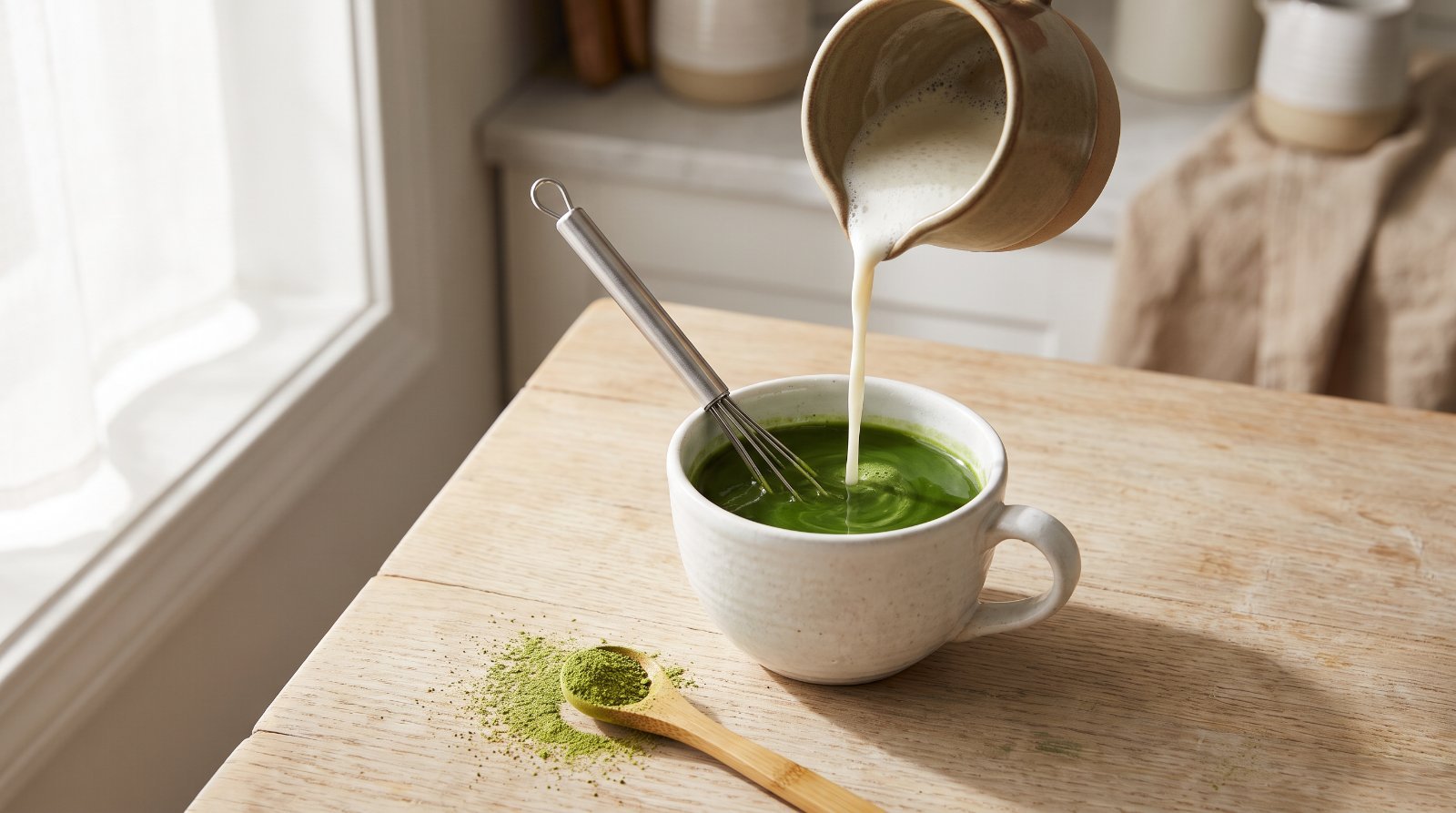
Pandan powder does not disperse well when it lands in a large volume of cold liquid. It floats, then sinks in lumps that never quite break up. Bloom it first:
- Put the powder in a small cup.
- Add two or three tablespoons of warm liquid taken from the recipe — water, milk or coconut milk.
- Stir or whisk to a smooth slurry with no dry pockets.
- Pour the slurry back into the main mixture and combine.
Warm is enough; boiling is not better. Much of pandan aroma sits in volatile compounds, so long, hard heat costs you the smell you paid for. Where a recipe lets you choose, add pandan late rather than early.
In drinks
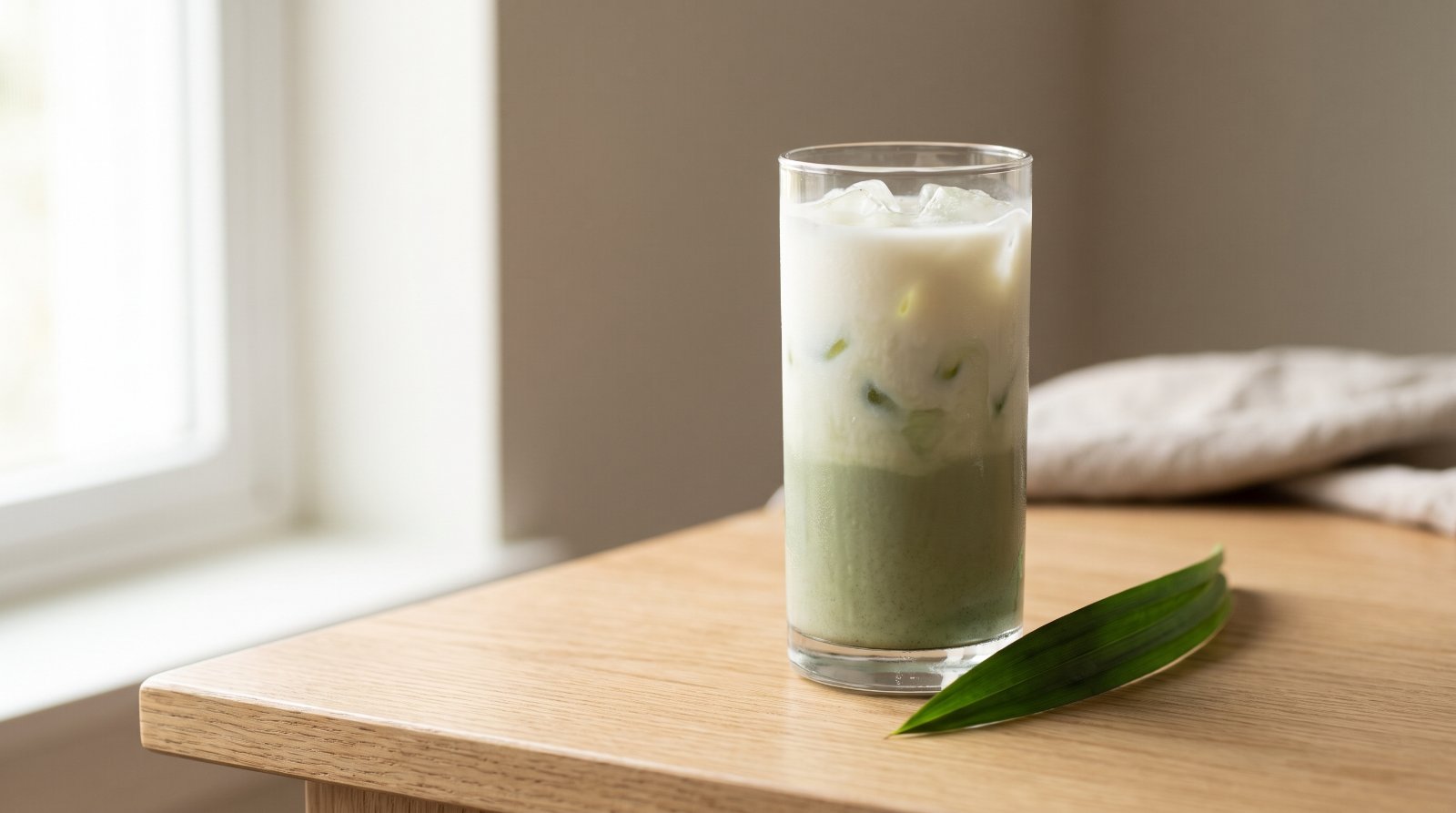
For a hot latte, bloom the powder in a splash of warm milk, then top up. For iced drinks, bloom in warm liquid first and chill the mixture afterwards — going straight into cold milk is the single most common cause of grit at the bottom of the glass. A short blitz in a blender or a milk frother fixes almost any texture problem.
If drinks are most of what you make, a standardised liquid concentrate is the easier tool. It disperses in cold liquid on its own, doses precisely by the drop, and needs no blooming step. Powder is the better choice when you do not want to add any extra liquid to the recipe, and it keeps longer once opened.
For a worked example with quantities, see our iced pandan matcha latte recipe.
In baking
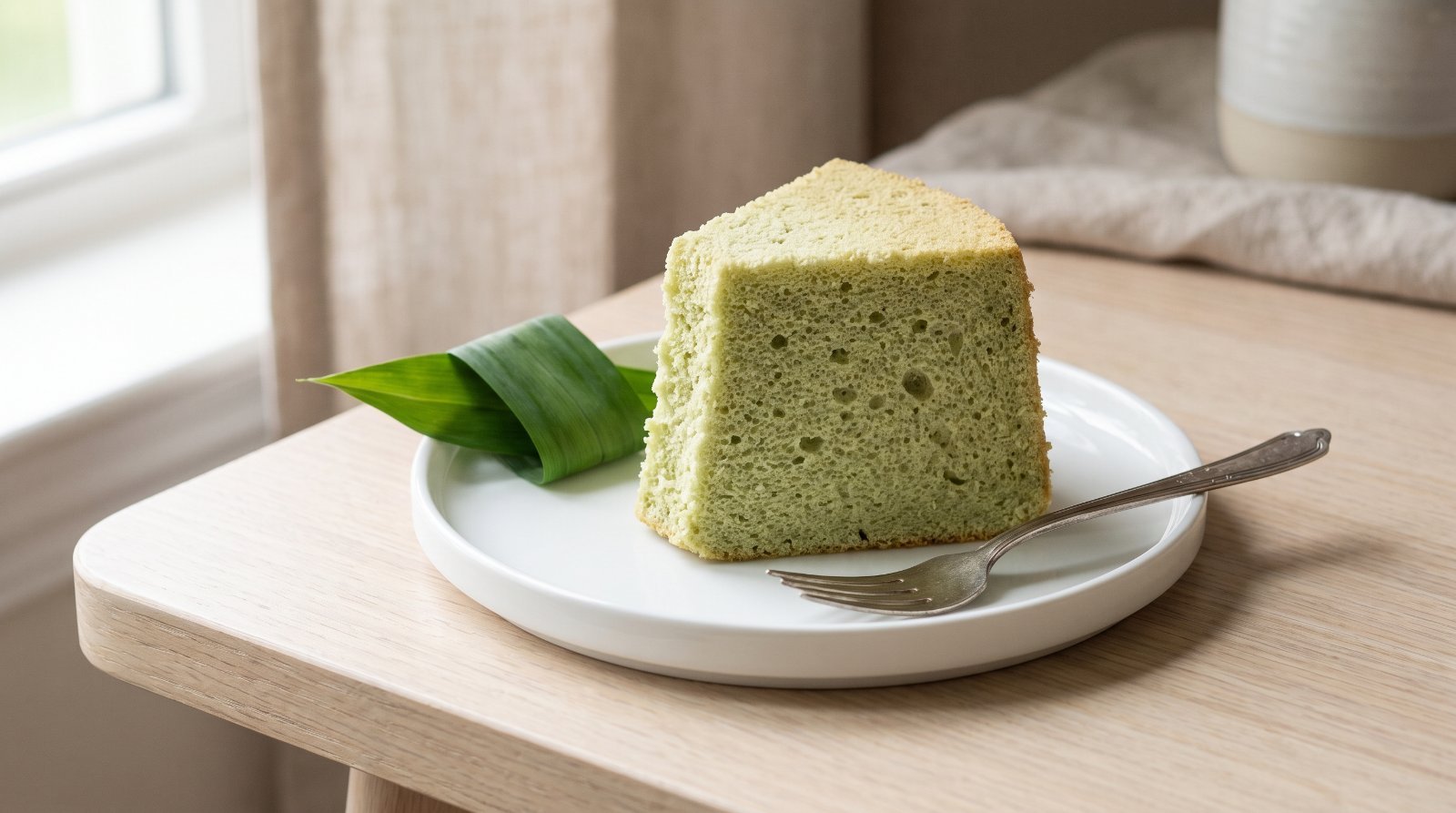
Colour is where most people are disappointed. Pandan green is chlorophyll, and chlorophyll dulls under oven heat and in the presence of acid. A chiffon coloured with pandan alone comes out a soft sage green, not the fluorescent green of shop-bought cakes — that colour comes from added colouring, not from the leaf.
Two ways to add it, depending on the batter. Sift the powder in with the flour and other dry ingredients, or bloom it in the liquid portion of the recipe. What you should not do is beat it into creamed butter and sugar: fat coats the particles and they stay visible as specks.
Adding more powder to chase a deeper colour is a losing trade. Bitterness arrives well before the colour does.
In rice and savoury cooking
Pandan does for Southeast Asian rice roughly what a bay leaf does for a European stock: it sits underneath everything else rather than announcing itself. Stir a small amount into the cooking water before the rice goes on, and use less than feels right. Coconut rice, chicken rice and pilaf all take pandan well, and in all three the aroma should be noticed on the way to the table rather than tasted on the plate.
In kaya, custard and puddings
Custards are the most forgiving use, because there is no oven browning to dull the colour and plenty of fat and sugar to carry the aroma. Bloom the powder in a little of the coconut milk, then temper it into the eggs with the rest.
If you want the flavour without the technique, our Kaya Instant Premix is built for it, and our pandan leaf extract with virgin coconut milk and malt sugar gives you the pandan and coconut together in one step.
Converting from leaves, paste or liquid extract
| Recipe calls for | Ground leaf powder | Standardised extract powder |
|---|---|---|
| 2 fresh pandan leaves | 1–2 tsp | a pinch to 1/8 tsp |
| 1 tsp pandan paste | 1–2 tsp | about 1/8 tsp |
| 1 tsp pandan liquid extract | 1 tsp | about 1/8 tsp |
Two adjustments come with the swap. Powder adds no liquid, so if you are replacing a paste or a liquid extract you may want to put back the teaspoon of moisture it was contributing — in a delicate batter that matters. And sweetened pastes bring sugar and colouring with them; when you switch to powder, the sugar disappears from the recipe and the colour becomes honest.
Mistakes worth avoiding
- Adding it dry to a large cold mixture. Bloom it first, every time.
- Doubling the dose for colour. You reach bitter before you reach green.
- Boiling it hard and long. The aroma is volatile; add late where you can.
- Expecting supermarket green. That shade is dye. Real pandan is muted.
- Storing it open or in the light. Sealed, dark and dry, away from the stove.
Frequently asked questions
How much pandan powder equals two pandan leaves?
Roughly one to two teaspoons of ground leaf powder, or a pinch to an eighth of a teaspoon of a standardised extract powder. Fresh leaves vary a great deal in strength depending on age and variety, so treat any conversion as a starting point and taste as you go.
Why does my pandan powder clump?
Because it was added dry to a large volume of cold liquid. Mix the powder with two or three tablespoons of warm liquid into a smooth slurry first, then stir that back into the main mixture. Clumping is a technique problem rather than a quality problem.
Can I use pandan powder instead of pandan paste?
Yes, and the result is usually cleaner. Replace one teaspoon of paste with one to two teaspoons of ground leaf powder, or about an eighth of a teaspoon of standardised extract powder. Add back a teaspoon of liquid if the batter is delicate, and expect a softer green, since paste normally carries added colouring.
Does pandan powder need to be cooked?
No. It is made from dried leaf and can go into cold or uncooked preparations such as cream, icing and no-bake desserts, as long as you bloom it in a little warm liquid first so it disperses evenly.
How long does pandan powder last?
Sealed, dry and out of the light it keeps well for a long time, and it outlasts every other form of pandan. Aroma fades gradually rather than spoiling, so an old bag will smell flat before it becomes unusable. Store it away from heat and steam.
Buying pandan powder? Three things to check
Pandan products are not standardised, and the label is the only reliable guide. These three checks tell you what is actually in the tin.
Bionutricia Pandan Leaf Extract is a standardised extract of pure Malaysian pandan leaf (Pandanus amaryllifolius), the leaf whose aroma comes from 2-acetyl-1-pyrroline — the same compound found in jasmine rice. It is made in two forms: a powder that adds no liquid and keeps longest, and a liquid concentrate that disperses instantly and doses precisely for drinks and syrups. Neither carries added sugar, maltodextrin or colouring. Both are produced in Malaysia by Bionutricia Manufacturing Sdn. Bhd., a JAKIM Halal, FSSC 22000, GMP and HACCP certified facility operating since 2006.