Reviewed by Dr Yong Yi Yi, Bionutricia
Importing a bulk botanical extract comes down to three things: agreeing an Incoterm that defines who handles each leg and cost of the shipment, receiving the right export documents (commercial invoice, packing list, bill of lading, certificate of origin and the product’s COA and certificates), and confirming the material is packed to survive transit. Get those aligned before the purchase order and the shipment moves smoothly.
Quick facts
- Incoterms 2020 define the buyer/seller split of cost, risk and responsibility (EXW, FOB, CIF, DAP, DDP…)
- Core documents: commercial invoice, packing list, bill of lading / air waybill, certificate of origin, COA
- Export port: Bionutricia ships from Port Klang, Malaysia
- Bulk packs: 1 kg, 5 kg and 20 kg food-grade, moisture-barrier packaging, palletised for freight
What documents ship with a bulk botanical extract?
A compliant export shipment travels with a standard document set. Missing or inconsistent paperwork is the most common cause of customs delay, so confirm the full list before dispatch:
- Commercial invoice — the value, parties, HS code and Incoterm of the sale.
- Packing list — net/gross weights, pack sizes, number of cartons or drums, pallet dimensions.
- Bill of lading (sea) or air waybill (air) — the carrier’s contract and title document.
- Certificate of Origin — where the goods were produced; a preferential form may reduce duty (see below).
- Certificate of Analysis (COA) — the batch-specific quality record for the delivered lot.
- Supporting certificates — halal certificate, and, where the destination requires them, a health/free-sale certificate, phytosanitary certificate or safety data sheet.
For the full quality-and-compliance document set that should accompany the material itself, see our supplier documentation-pack guide, linked below.
Incoterms 2020 — who is responsible for what?
Incoterms are the international rules that set exactly where the seller’s responsibility ends and the buyer’s begins — covering transport cost, risk of loss, and export/import clearance. Choosing the right one is a commercial decision as much as a logistical one. The terms buyers most often use for bulk ingredients are:
| Incoterm | In short | Best when |
|---|---|---|
| EXW (Ex Works) | Buyer collects from the factory and handles everything after | Buyer has a strong freight forwarder in Malaysia |
| FOB (Free On Board) | Seller clears export and loads at Port Klang; buyer owns the sea freight onward | The most common term for sea shipments |
| CIF (Cost, Insurance & Freight) | Seller pays freight and insurance to the destination port | Buyer wants a landed-at-port price |
| DAP / DDP | Seller delivers to the buyer’s address; DDP also covers import duties | Buyer wants a door-to-door price |
A useful rule of thumb: the further right you move (EXW → DDP), the more the seller handles and the simpler it is for the buyer — but the more of the freight cost sits inside the unit price. New importers often start with CIF or DAP for simplicity and move to FOB once they have a trusted forwarder.
How bulk extracts are packed for export
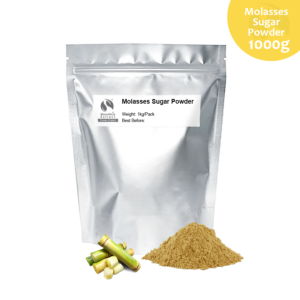
Packaging protects the two things that degrade an extract in transit: moisture and oxygen. Bionutricia ships bulk extracts in 1 kg, 5 kg and 20 kg food-grade formats using moisture-barrier packaging — typically foil-laminate bags or lined containers — sealed against humidity and consolidated onto pallets for container or air freight. Good packing practice includes a clear label with product name, lot number and manufacture/expiry dates, an inner liner, and packaging rated for the transit climate. Because sea freight can expose cargo to heat and humidity for weeks, moisture-barrier integrity is what preserves the shelf life stated on the COA. Our shelf-life and storage guide, linked below, covers how to hold the material correctly after it arrives.
Certificates of origin & preferential trade
A Certificate of Origin states where goods were produced. Beyond the standard (non-preferential) certificate, Malaysia’s trade agreements allow preferential certificates that can reduce or remove import duty in eligible markets — for example Form D under the ASEAN Trade in Goods Agreement, or Form E for the ASEAN–China FTA. Ask early whether your destination qualifies: the right certificate can materially change your landed cost, and it must be arranged at the time of shipment, not retrofitted afterwards.
Planning your first shipment
Before you place a bulk order for export, align on:
| Decide up front | Why it matters |
|---|---|
| Incoterm | Sets who pays and who bears risk on each leg |
| Certificate of origin type | Preferential form can cut import duty — must be issued at shipment |
| Destination import rules | Health/free-sale or phytosanitary certificates may be mandatory |
| Pack size & pallet plan | 1/5/20 kg formats and pallet count drive freight mode and cost |
| Air vs sea | Air for speed and small lots; sea for volume — both need moisture-barrier packing |
Shipping with Bionutricia
Bionutricia is a Malaysian botanical-extract manufacturer founded in 2006, exporting from Port Klang to buyers worldwide. Our food-safety and quality system is certified to FSSC 22000, with GMP, HACCP, JAKIM Halal, US FDA registration, MeSTI and NanoVerify, and every bulk shipment travels with a batch-specific Certificate of Analysis and the required export documentation. Extracts are produced using our patented enzymatic and ultrasonic extraction process (MY-188945-A) and packed in 1 kg, 5 kg and 20 kg moisture-barrier formats. Tell us your destination market and preferred Incoterm and we will confirm the document set, certificate-of-origin options and packing plan for your order.
Planning an export order? Tell us your market and Incoterm.
Related guides
Frequently asked questions
What is the difference between FOB and CIF?
Under FOB the seller clears export and loads the goods at the origin port, and the buyer pays the sea freight and insurance onward. Under CIF the seller pays freight and insurance to the destination port, giving the buyer a landed-at-port price.
What documents do I need to import a botanical extract?
Typically a commercial invoice, packing list, bill of lading or air waybill, certificate of origin and the batch COA, plus a halal certificate and any destination-specific health, free-sale or phytosanitary certificates.
What pack sizes do bulk extracts ship in?
Bionutricia ships bulk extracts in 1 kg, 5 kg and 20 kg food-grade, moisture-barrier formats, palletised for container or air freight. Packaging is sealed against humidity to protect the shelf life stated on the COA.
Can I reduce import duty with a certificate of origin?
Often, yes. Preferential certificates such as Form D (ASEAN) or Form E (ASEAN–China) can reduce or remove duty in eligible markets. Confirm eligibility before shipment, as the certificate must be issued at the time of export.
Which port does Bionutricia export from?
Bionutricia exports from Port Klang, Malaysia, by sea or air, with the full export document set and a batch-specific Certificate of Analysis accompanying every shipment.