What Should Buyers Check in Raspberry Extract Powder for Food and Beverage Formulation?
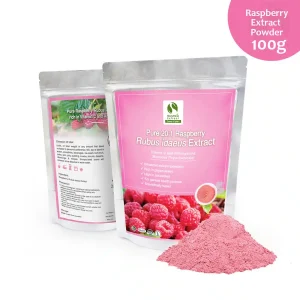
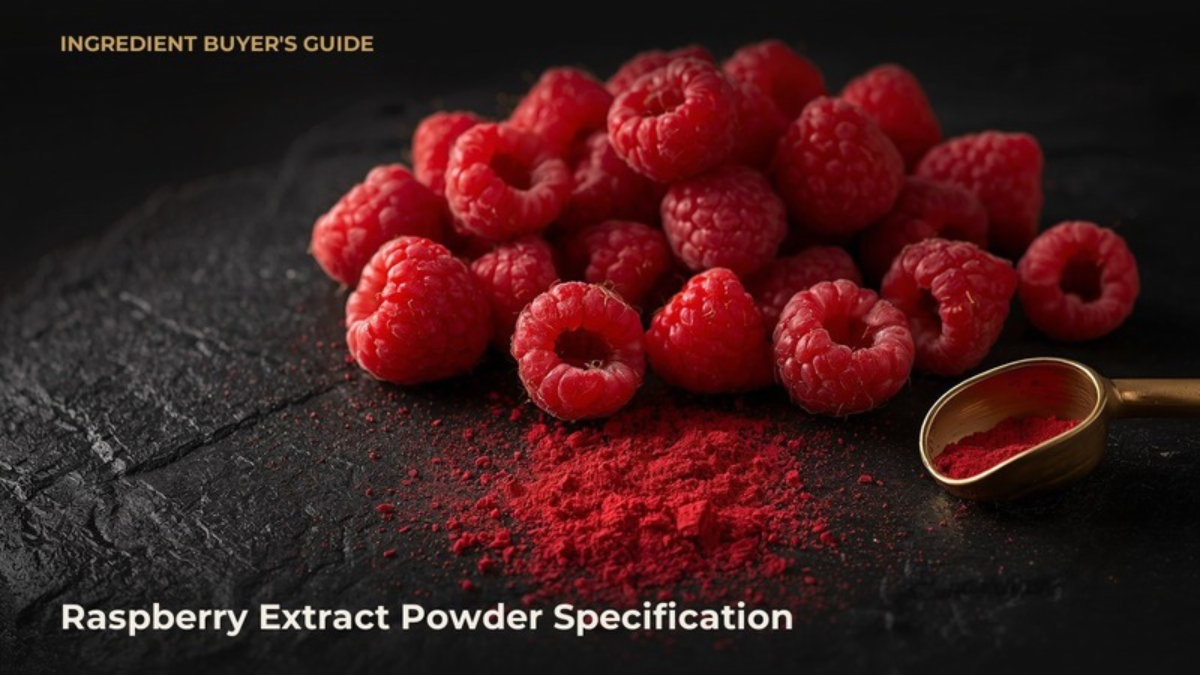
Formulator’s summary: Raspberry (Rubus idaeus) Standardized Extract Powder is a fruit powder listed for water, beverages and food applications. A buyer should confirm its extract ratio, anthocyanin and vitamin C assay methods, moisture, water activity, particle size, microbiological and heavy-metal limits, and dispersion in the target drink. Assess the powder in the customer’s own formulation before setting acceptance criteria.
Quick facts for formulators
- Botanical and plant part: raspberry (Rubus idaeus), fruit.
- Physical format: powder.
- Extraction method: Bionutricia Manufacturing Sdn. Bhd.’s published extraction capability includes patented enzymatic ultrasonic extraction (MY-188945-A).
- Named markers: anthocyanins and vitamin C.
- Solubility and dispersion: the product page lists water and beverages as applications; confirm dispersion in the target matrix.
- Certifications: FSSC 22000, JAKIM Halal, GMP, HACCP, MESTI, and US FDA facility registration.
What should the identity and extraction fields show?
Identify Rubus idaeus, fruit, powder form, and the extract ratio. State how the ratio is defined and keep it distinct from a marker assay: the ratio describes the extract’s material basis, while an assay reports a measured constituent. The supplier should state the extraction method for the grade. Bionutricia’s published capability includes patented enzymatic ultrasonic extraction (MY-188945-A); confirm the product-specific method and controlled specification in the purchase documentation.
How should anthocyanin and vitamin C markers be specified?
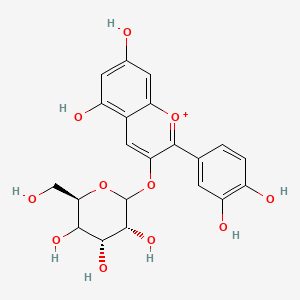
The catalogue description names anthocyanins and vitamin C. A buyer requiring standardisation should set the marker or markers, acceptance range, analytical method, units and lot-level reporting in the approved specification. If both markers are required, treat them as separate tests. Do not infer an assay percentage or method from a general composition statement.
A standardised extract is distinguished from crude fruit powder by its documented marker assay, defined acceptance range and batch-to-batch reporting. Crude powder may be described by botanical identity and physical properties without a marker target. This is a specification and quality-control distinction, not a statement about physiological effect. The certificate of analysis (COA) should match the supplied lot and report the tests agreed for that grade.
How should moisture, water activity and particle size be checked?
Moisture content and water activity are separate measurements. Ask for each value, method and acceptance limit, rather than treating one as a substitute for the other. Specify particle size by a defined method and a distribution or sieve criterion suitable for blending and dispersion. The raspberry product description notes that powder texture may vary and that clumping can occur with heat or moisture, so record the incoming-lot inspection and storage conditions.
For background on the distinction between the two moisture measures, see Water Activity vs Moisture Content: Why Two Extracts at the Same Moisture Behave Differently. For particle-size terminology, consult Particle Size and Mesh in Extract Powders: A Formulator’s Guide.
What microbial and heavy-metal limits should be agreed?
Set limits for the relevant microbial indicators and heavy metals in the approved purchase specification. State test methods, units and the lot-reporting requirement, and review the supplied certificate against those agreed limits. Do not substitute a limit from another berry ingredient or an unrelated supplier’s document.
How should colour, pH and dispersion be evaluated in drinks?
Assess the powder in the intended beverage matrix and record pH, colour appearance, mixing conditions, visible haze or sediment, and changes after the planned processing step. A clear ready-to-drink beverage and an opaque blend may require different acceptance criteria. The product description lists water, beverages and food applications; final dispersion and colour behaviour should be evaluated in the customer’s formulation.
The raspberry product description notes that colour, taste and texture can vary between batches. Use the same documented preparation and observation method for incoming lots. The Berry Powder Bulk Ingredient Comparison Guide compares berry ingredients at a general level, while Blackcurrant Extract in Drinks: A Practical Beverage Trial Plan outlines a controlled beverage evaluation workflow.
How should a buyer distinguish raspberry extract from raspberry ketone?
Raspberry fruit extract is identified by its botanical material and its own extraction or standardisation specification. Raspberry ketone is a separately named compound; it is not a synonym for raspberry fruit extract and should not be assumed to be the extract’s marker. Keep the ingredient identity, plant part and assay declaration consistent across the purchase order, approved specification and lot certificate.
How do lot documents support purchasing decisions?
Review the certificate of analysis for the same lot as the delivered material and match its results to the approved specification. The document set should identify the botanical name and plant part, extraction ratio, marker assays and methods, physical properties, moisture and water activity, particle size, microbial and heavy-metal results, and the applicable certification documentation. Keep the lot certificate and specification together in the incoming-material record.
Supplying raspberry extract powder and related ingredients in bulk
Bionutricia’s catalogue lists Mixed Berries Standardized Extract Powder as a ready blend, alongside Blackcurrant (Ribes nigrum) Standardized Extract Powder and Blueberry (Cyanococcus) Extract Powder. Each is a separate catalogue item with its own product information.
Bulk buyers can request the current specification, a lot-specific certificate of analysis, applicable documentation and export paperwork. Published certifications include FSSC 22000, JAKIM Halal, GMP, HACCP, MESTI and US FDA facility registration. Confirm the relevant grade and packing options against current product documents. The catalogue page lists the raspberry powder for water, beverages and food applications; customer formulations such as powder drink mixes, sachets, chewable tablets or capsules are made by the customer, not supplied as Bionutricia formats.
Frequently asked questions
Which markers should a raspberry extract specification name? The catalogue description names anthocyanins and vitamin C. The buyer’s specification should state the controlled marker or markers, method, units, acceptance range and lot result.
Should moisture and water activity both be checked? They are distinct measurements. Specify their methods and acceptance limits separately when both are part of the buyer’s quality requirements.
Is raspberry fruit extract the same ingredient as raspberry ketone? No. Keep the fruit extract’s botanical identity and specification separate from the compound name raspberry ketone.
Request the certificate of analysis, specification sheet and a sample of Raspberry (Rubus idaeus) Standardized Extract Powder.