Direct answer: a brand no longer needs to own a factory to compete in supplements or functional food — contract manufacturing, fulfilment and social storefronts can all be rented on demand. What cannot be rented is a defensible ingredient specification. Creator-led and no-factory brands that last are built on a named, standardized active with published human evidence and complete lot-level documents; the ones that fade are white-label copies of a formula dozens of other brands also sell. This guide walks through the no-factory wave, the sameness trap inside it, and the four ingredient questions that separate the two.

Your next competitor has no factory

US$45.6 billion in one region, one platform, one year

Everything can be rented — except the recipe

Same lab. Same formula. Different sticker.

Your spec sheet is your moat

Four questions before you brief any manufacturer

Build on ingredients that can defend themselves
The wave: brands without factories are outgrowing brands with them
The most important shift in the supplement and functional-food market this decade is not an ingredient. It is a business model. Social commerce collapsed the distance between an audience and a checkout, and a generation of creator-led brands walked through the gap: launch with content, sell through a storefront that lives inside the feed, and rent everything else — manufacturing, filling, fulfilment — from specialists.
The scale is no longer arguable. TikTok Shop’s gross merchandise value in Southeast Asia grew from about US$4.4 billion in 2022 to US$16.3 billion in 2023 (Momentum Works, via The Register), to an estimated US$25–30 billion in 2024, and to US$45.6 billion in 2025 — roughly doubling year on year — with Malaysia repeatedly cited among the fastest-growing markets in the region (TechNode Global, February 2026). Wellness and supplement products sit inside the platform’s largest category cluster alongside beauty and personal care.

The template case is well documented in the United States: Bloom Nutrition, co-founded in 2019 by a fitness creator, bootstrapped a greens-powder brand to roughly US$175 million in annual revenue within four years, reached Target and Walmart shelves, and reportedly projected US$350–400 million for 2025 — all without owning the factories that make its products (Inc.; 42signals). The same playbook is now running across Southeast Asia at TikTok Shop speed. If you are an established brand owner, this is who you now share a shelf — and a feed — with. If you are the founder, this is the proof that the door is open.
Everything is rentable except the recipe
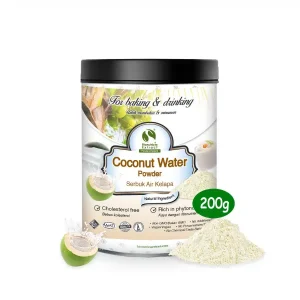
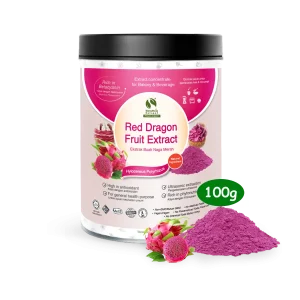
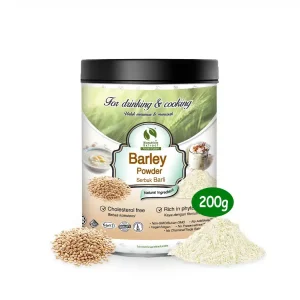
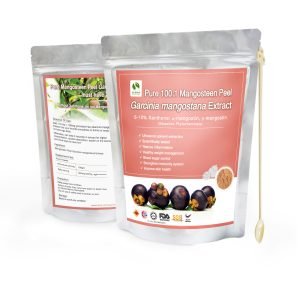
What makes the no-factory model work is that manufacturing became a service. Contract manufacturers and OEM partners formulate, fill and pack; third-party logistics moves stock; the platform brings the buyers. Bionutricia supplies the bulk ingredient for B2B formulation; brand owners and manufacturers formulate it into their chosen finished format — capsules, tablets, gummies, sachets, stick-packs, ready-to-drink beverages, bakery and confectionery applications alike. Which model fits which founder is a separate decision, and our guides to private label vs OEM vs contract manufacturing and the OEM vs private label decision walk that end to end.
But notice what is missing from the rentable stack: the recipe itself. Every service in the chain is available to your competitor on the same day, at the same price. The only layer where a no-factory brand can build something another brand cannot copy by Friday is the ingredient specification — what is actually in the product, at what strength, with what evidence behind it.
The sameness trap: when dozens of brands sell the same jar
Here is the failure mode the gold rush hides. The lowest-friction way to launch is a white-label catalogue product: a ready-made formula that a manufacturer sells to any brand willing to put a sticker on it. Industry coverage of the white-label boom is blunt about the consequence — a growing number of influencer products are “the output of the same few labs,” with brands beginning not with bespoke development but with identical stock formulas, which limits differentiation and threatens long-term brand equity (BeautyMatter and supplement trade coverage of the private-label market). When followers discover the same product under another label at a lower price, the trust the creator spent years building erodes — and trust is the entire asset.
Why evidence attaches to a spec — not a story
The reason a defined ingredient is a moat comes down to how clinical evidence works. A published human study is performed on a specific material: a named species and plant part, extracted to a standardized content of a named active compound, given at a defined dose. The result belongs to that specification. A brand using the same defined spec at the same dose can point to the study; a brand using an undisclosed “proprietary blend” cannot borrow it, because nothing connects the blend to the material that was tested.

A concrete example: piperine, the named alkaloid marker of black pepper (Piper nigrum) extract. In a published human pharmacokinetic study, 20 mg of piperine co-administered with curcumin increased curcumin’s bioavailability roughly twenty-fold (Shoba et al., Planta Medica 1998). That finding is usable precisely because the compound, the dose and the material are defined — it belongs to the study, not to any brand. The same logic runs through every credible hero ingredient: the specification is what the evidence, the certificate and the repeat purchase all attach to. Our guides on extract ratios vs standardization and black pepper extract go deeper on marker chemistry.
The four-question ingredient brief
Whether you are a founder writing your first brief or an established brand answering a new competitor, the same four questions separate a defensible product from a sticker on a catalogue jar.
1 — Which named active, at what marker percentage? “Ginger extract” is a description; “Zingiber officinale rhizome extract standardized to a stated six-gingerol range, verified by a validated assay” is a specification. If the answer is a trade name with no chemistry behind it, you do not own your formula — a problem we unpack in Who owns your formula?
2 — Which published human studies used that spec and dose? Ask for the citations, then check that the studied material and dose match what will go in your product. Evidence that does not match your spec is marketing, not substantiation.
3 — Which documents arrive with every lot? A specification sheet, a certificate of analysis for the actual lot, and ingredient-level halal certification are what platform audits, retail buyers and regulators ask for — and what a viral spike gives you no time to assemble retroactively. Documentation speed is also what decides whether a trend finds you ready, as we showed in the pistachio supply lesson.
4 — Can the spec travel with you? A portable, chemistry-based specification lets you qualify a second source and scale into new markets — including certification-gated ones like Indonesia, where mandatory halal certification makes ingredient-level documents a market-access issue, not a paperwork one.
Build the hero first — then let the range work
The strongest no-factory brands are built around one defensible hero ingredient, then extended with supporting lines that share its documentation standard. That is exactly how a bulk-ingredient portfolio is meant to be used: a standardized botanical extract as the hero active; natural colourants such as butterfly pea blue or roselle red to own a shelf-visible identity without synthetic dyes; natural flavour systems such as pandan to localize for Southeast Asian buyers; and liposomal vitamin systems where a premium delivery format justifies a premium price point. Each arrives as a bulk ingredient with the same spec-and-documents discipline, so the brand’s second, third and fourth products inherit the moat the first one built.
Related guides
Private Label vs OEM vs Contract Manufacturing for Botanical Extracts · Who Owns Your Formula? The Captive-Spec Trap · One Viral Video Emptied the Pistachio Shelf · Extract Ratio vs Standardization, Explained · Indonesia’s Mandatory Halal Certification (BPJPH)
References
1. TechNode Global (Feb 2026). TikTok’s Southeast Asia GMV doubles year-on-year to US$45.6B in 2025. https://technode.global/2026/02/11/tiktoks-southeast-asia-doubles-gmv-year-on-year-to-45-6b-in-2025/
2. The Register (Jul 2024), reporting Momentum Works, Ecommerce in Southeast Asia 2024: TikTok Shop SEA GMV US$4.4B (2022) → US$16.3B (2023). https://www.theregister.com/2024/07/17/tiktok_as_ecommerce_giant/
3. Inc. — Bloom Nutrition revenue trajectory and 2025 projection. https://www.inc.com/ali-donaldson/want-to-score-more-than-2-million-in-sales-in-two-weeks-make-these-hires/91227046
4. 42signals — The Bloom Nutrition Success Story: From Zero to $170M. https://www.42signals.com/blog/bloom-nutrition-marketing-strategy/
5. BeautyMatter — Inside Beauty’s White Label Boom: the fight for brand differentiation. https://beautymatter.com/articles/inside-the-business-of-white-labeling
6. Shoba G, et al. Influence of piperine on the pharmacokinetics of curcumin in animals and human volunteers. Planta Medica 1998;64(4):353–356.
7. Contentgrip — TikTok Shop SEA: what brands need to know in 2026. https://www.contentgrip.com/tiktok-shop-strategy-southeast-asia/
Frequently asked questions
Can I really launch a supplement or functional-food brand without owning a factory?
Yes — contract manufacturers and OEM partners handle formulation, filling and packing, while fulfilment and social storefronts cover logistics and sales. The brand’s job shifts to positioning, audience and — most critically — the ingredient specification it chooses to build on.
What is the difference between white label and a brand-owned specification?
White label means putting your name on a ready-made formula that other brands can also sell. A brand-owned specification defines the species, plant part, standardized active and marker range, and assay method — chemistry any qualified factory can quote against, which you can move to a second source at any time.
Why do creator-led brands fail even with large audiences?
An audience drives first purchases, but repeat purchase decides survival — and repeat purchase depends on the product itself. Brands built on undifferentiated catalogue formulas also risk being visibly identical to cheaper competitors, which erodes the trust the audience was built on.
What documents should every ingredient lot come with?
A specification sheet, a lot-specific certificate of analysis against that specification, and ingredient-level halal certification where the market requires it. These are the documents platform audits, retail listings and regulators request.
What makes an ingredient claim defensible?
A defensible claim traces to a published human study performed on the same defined specification and dose used in the product, and stays within permitted structure-function and traditional-use wording for the market where the product is sold.
Does a no-factory brand still need a second source for its hero ingredient?
Yes. A portable, chemistry-based specification allows a second qualified source to be approved before it is needed — protecting the brand against supplier discontinuation and demand spikes that a single source cannot absorb.