Food & Herbal Plant Extract Ingredient Manufacturer Malaysia.
Brand founder reading a document at a dark desk under a warm lamp — who owns your formula

Who Owns Your Formula? The Captive-Spec Trap in Botanical Extract Sourcing

Short answer: You own your formula only if your specification names the chemistry — genus and species, plant part, extract ratio, marker compound with a range, and the test method — on a certificate you receive every lot. If the spec holds a supplier product code instead, that supplier controls whether your product survives. The fix is a portable spec plus a second source qualified before you need it.


Brand founder reading a document at a dark desk under a warm lamp
The uncomfortable question
Who owns your formula?
Ask most brand owners who controls their bestselling product and they will say “we do — it’s our formula.” Then look at the document that actually defines the key ingredient. If the line for the botanical extract reads like a supplier catalogue entry — a product name and a code — the honest answer changes. What you own is a recipe that points at one company’s shelf. What that company owns is the ability to make, change, or stop the ingredient behind it.
Hands at a laptop at night holding a blank letter — a discontinuation email
The scenario
One email. Three years of work.
A brand spends three years building a bestseller around a single botanical extract. The taste is dialled in, the colour is on target, the stability data is signed off, and reorders run like clockwork. Then an email arrives: that ingredient is discontinued, effective next quarter. It happens for ordinary reasons — a crop fails, a plant is retired, a factory changes owners, a minimum order climbs. The brand isn’t worried yet: we’ll just buy it somewhere else. So they open their own specification sheet — and that is where the trouble starts.
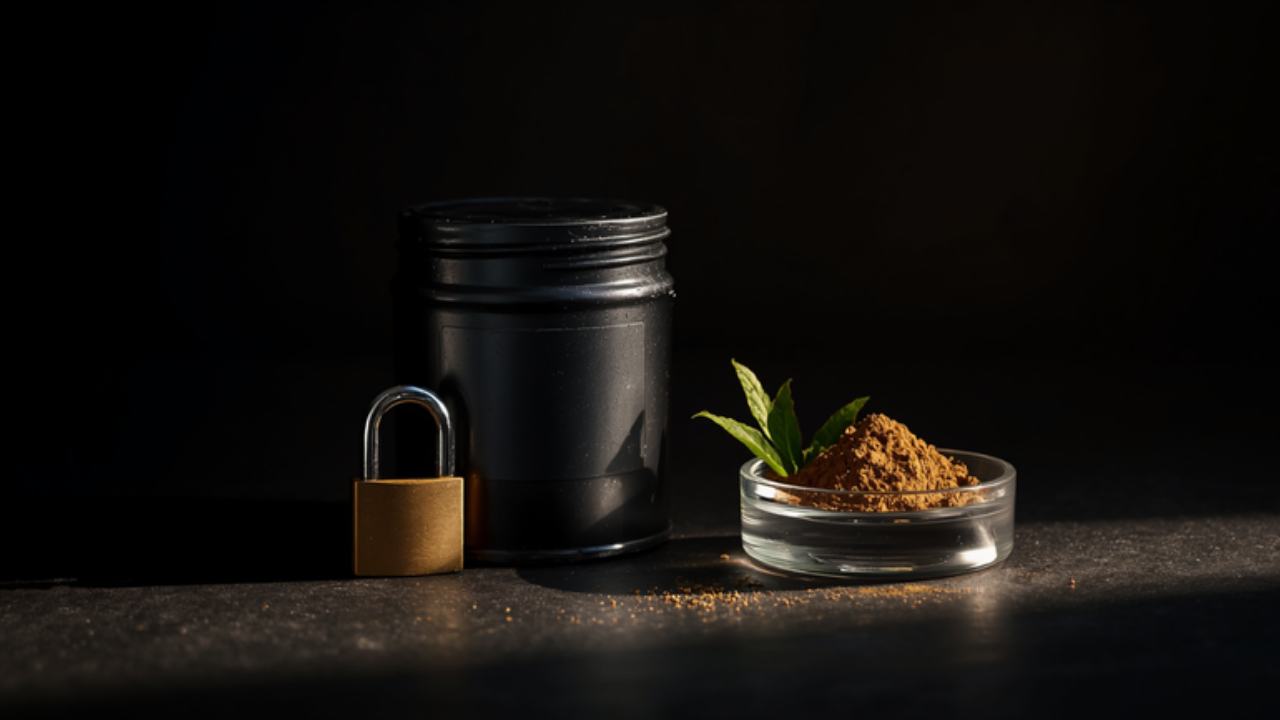
Sealed canister with a padlock beside a dish of tan-brown extract powder
The reveal
A code, not chemistry.
The spec sheet names the ingredient the way the supplier named it: a brand-style product title and an internal code. What it does not name is everything a different factory would need to reproduce it — no botanical genus and species, no plant part, no extract ratio, no marker compound and no guaranteed range, no test method. A product code is a pointer, not a formula. Hand it to any other qualified manufacturer and they cannot quote it, because it describes an item on a menu you can no longer order from.
Supermarket supplement shelf with an empty gap where a product is missing
Why it can’t be re-sourced
Only one company can decode it.
Without the underlying chemistry, an alternative supplier can only offer something that sounds similar. Same common plant name, perhaps — but a different part of the plant, a different extraction ratio, a different solvent, a different marker level. Any of those can move the taste, the colour, the solubility and the potency of the finished product. So the brand is left comparing black boxes, and the one company that could remove the uncertainty is the one that just walked away.
QC analyst annotating a specification sheet beside amber vials and extract powder
The real cost
A relaunch, not a reorder.
Re-qualifying an unknown ingredient isn’t a purchasing task; it is a product-development cycle. New sensory work, new colour matching, a fresh stability programme that by definition takes real time to run, new documentation for retailers and regulators. While that runs, the bestseller is off-shelf or shipping at risk. Listings lapse and competitors fill the gap. A captive spec doesn’t look expensive until it is catastrophically expensive, all at once.
Analyst handing an open document folder to a buyer in warm window light
The turn
The exit was never the failure.
Suppliers come and go — that is normal, and no sourcing strategy should assume otherwise. The vulnerability was never the supplier leaving. It was that the brand’s own specification couldn’t survive without that one supplier standing behind it. Reframed that way, the problem is fixable and entirely in the brand’s hands: you can’t stop a supplier from exiting, but you can make sure the exit is a purchasing inconvenience instead of a product emergency.
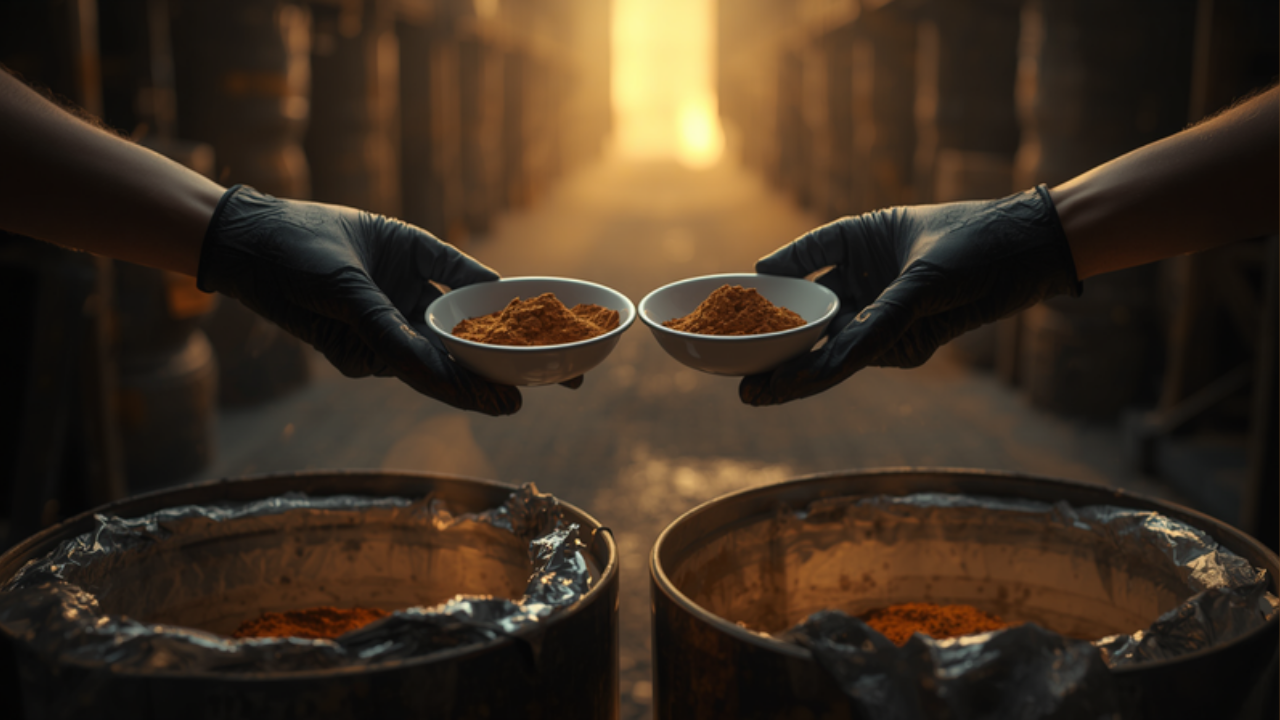
Two gloved hands each holding a dish of tan-brown extract powder over open drums
The fix
Chemistry you can read.
A portable specification describes the material, not a supplier’s catalogue item. At minimum it names the plant (botanical genus and species, plus the exact plant part), the extract (extraction ratio and carrier where relevant), the strength (marker compound, its guaranteed range, and the verification method — for many actives, high-performance liquid chromatography, HPLC), and the proof (a Certificate of Analysis issued on every production lot). With that single page, any competent manufacturer can tell you whether they can make it and what it will cost.
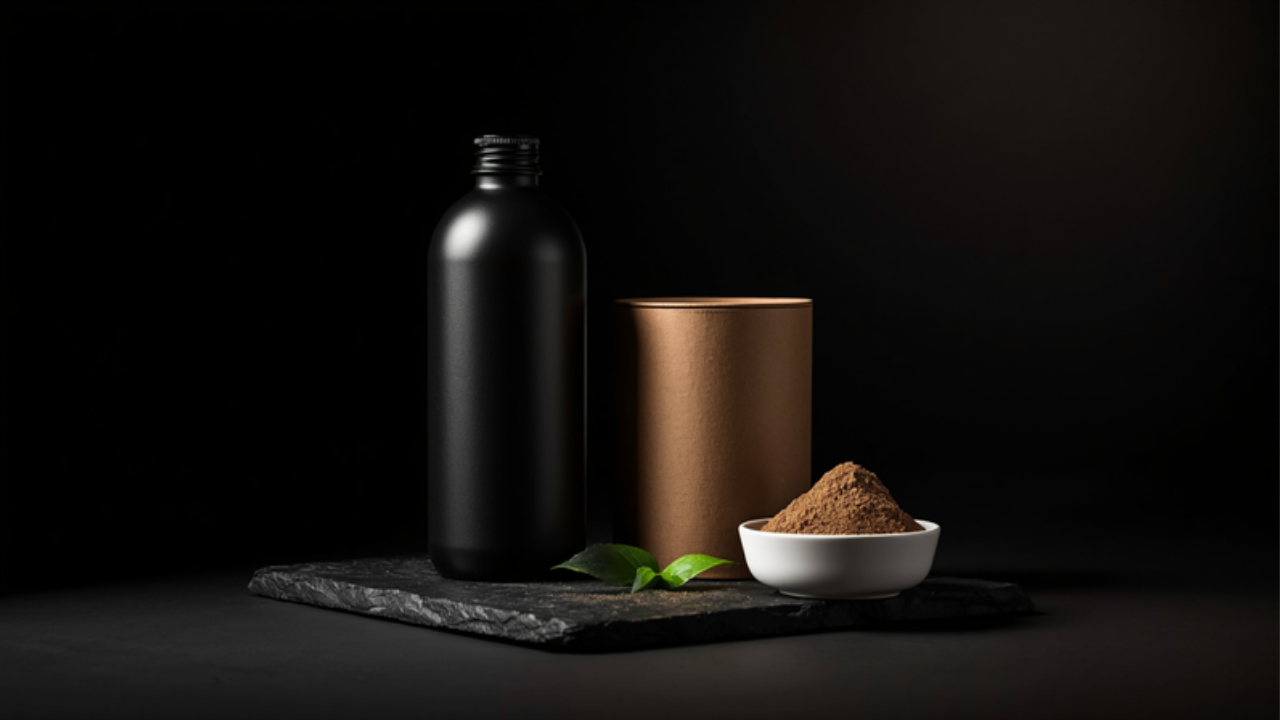
Plain unlabelled black bottle and kraft canister with a dish of tan-brown extract powder
Two moves tonight
Chemistry — or just a code?
First, read your bestseller’s spec before you ever need to. If the key ingredient is described by a code rather than chemistry, ask your supplier to restate it as species, plant part, ratio, marker range and method — on the CoA, every lot. Second, qualify a second source while everything is calm, not during the fire. A qualified backup turns a discontinuation email from an emergency into a phone call.

The captive-spec trap, in one page

Every brand owner believes they own their formula. In botanical sourcing, ownership is decided by one document: the ingredient specification. If that spec describes the chemistry of the extract, you can rebuy the material from any qualified manufacturer and your product survives a supplier change. If it describes a supplier’s product code, your product line quietly belongs to that supplier — and a single discontinuation email can turn a routine reorder into a full relaunch, with months of lost shelf time.

Why a product code can’t be re-sourced

A product code is an internal pointer that means something in exactly one company’s system. It doesn’t state the botanical genus and species, the plant part, the extract ratio, the marker compound, its range, or the test method — so no other factory can reproduce the material from it.

What a portable specification must name

A portable spec describes the material rather than a catalogue item: botanical genus and species; the exact plant part; the extraction ratio; the marker compound with a guaranteed range; the verification method (frequently HPLC); and a Certificate of Analysis on every production lot. With that page, any qualified manufacturer can quote the ingredient — which is the definition of owning your own formula.

Two moves that protect a product line

First, read your bestseller’s spec before you need it, and if it is a code, ask your supplier to restate it as chemistry on every CoA. Second, qualify a second source while conditions are calm, so an unexpected discontinuation becomes a phone call rather than an emergency. Neither move requires changing your current supplier — only removing your dependence on them being the only one who can make your ingredient.

Frequently asked questions

What does it mean to own your formula’s specification?

It means your specification describes the ingredient in terms any qualified manufacturer can act on — botanical genus and species, plant part, extract ratio, marker compound and range, and test method — rather than a supplier’s internal product code. When the spec is portable you can re-source the material and your product survives a supplier change. When it is a code, only the original supplier can fulfil it, so they effectively control the product’s continuity.

What should a portable botanical extract specification include?

At minimum: the botanical genus and species; the exact plant part used; the extraction ratio and carrier where relevant; the marker compound with a guaranteed range; the verification method, which for many actives is high-performance liquid chromatography (HPLC); and a Certificate of Analysis issued on every production lot rather than only on the qualification sample.

Why can’t I just buy an equivalent extract if my supplier discontinues?

Because ‘equivalent’ is only meaningful against defined chemistry. Two extracts sharing a common plant name can differ in plant part, extraction ratio, solvent and marker level, and those differences move taste, colour, solubility and potency. Without your original spec’s chemistry, every alternative is an approximation that must be formulated and stability-tested from scratch.

How do I qualify a second source without disrupting my current product?

Start from a portable specification, send it to one or two additional qualified manufacturers, and run a normal qualification — sample evaluation, formulation trial, sensory and colour check, and a stability run — while there is no supply pressure. You don’t need to switch suppliers; you only need proof that an alternative can meet the same chemistry.

Does standardization alone guarantee I can re-source an ingredient?

Only if the standardization is expressed portably. ‘Standardized’ is meaningful when it names the marker compound, a guaranteed range and the test method — for example a whole-plant extract standardized to a stated percentage of a named marker by HPLC, documented on every lot’s CoA. A brand-name claim of ‘standardized’ without those specifics is still a code in disguise.

Bionutricia Extract supplies standardized botanical extracts, active fractions, natural colours and flavours, and liposomal vitamin systems for B2B formulation. Manufacturing since 2006. Certifications: FSSC 22000, GMP, HACCP, JAKIM Halal, US FDA, MeSTI, plus NanoVerify. Bionutricia supplies the bulk ingredient for B2B formulation; brand owners and manufacturers formulate it into their chosen finished format. Educational content on sourcing governance; this article makes no health, disease or treatment claims.
Bionutricia Manufacturing Sdn Bhd (201001031866 / 915789-W) © 2026. All Rights Reserved.

Shopping cart

0
image/svg+xml

No products in the cart.

Continue Shopping