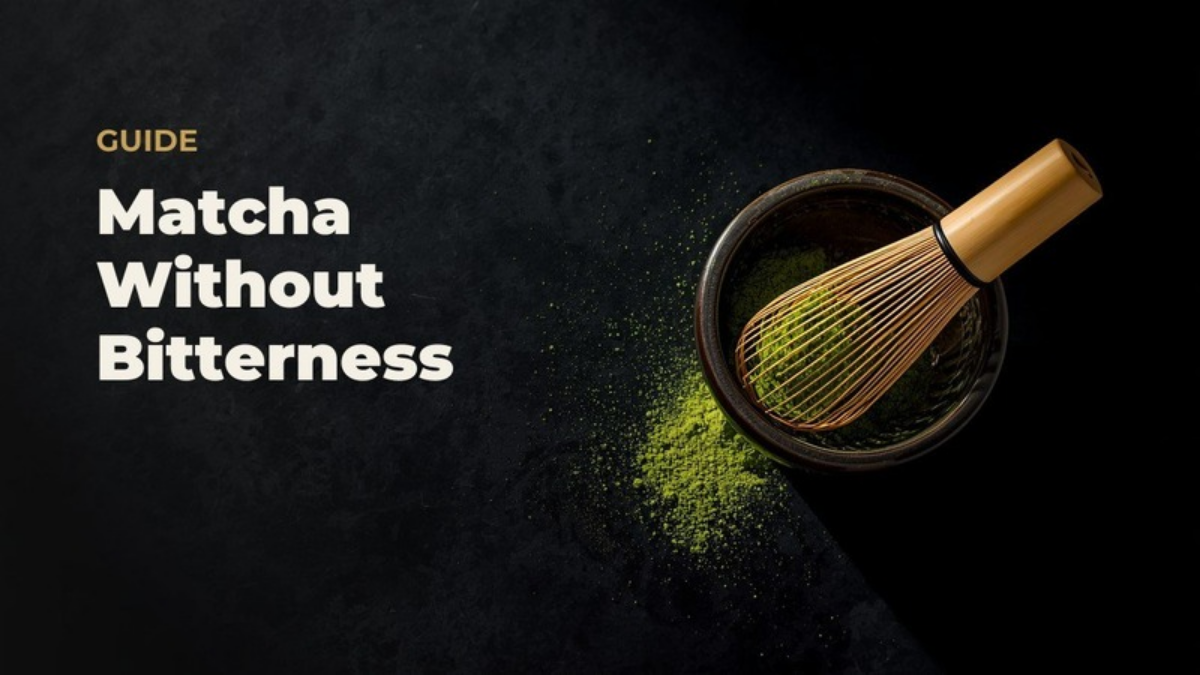
How to Make Matcha Without Bitterness
Six fixes, starting with the one that solves it for most people in about ten seconds.
Most bitter matcha is not bad matcha — it is matcha made with water that was too hot. Boiling water pulls the harsh catechins out fast. Drop to around 70–80°C and the same powder tastes completely different. If that alone does not fix it, the problem is usually grade, freshness, or ratio.
Here is the full list, in the order worth trying.
Why matcha tastes bitter in the first place
The bitterness comes from catechins — the same antioxidant compounds, including EGCG, that people drink matcha for. They are not a flaw. The question is how many of them you pull into the cup and how fast.
Hot water extracts catechins aggressively. Cooler water extracts them slowly, while still releasing the amino acids — chiefly L-theanine — that give good matcha its sweetness and umami. Same powder, same amount, completely different balance in the cup.
That is why water temperature is almost always the first thing to fix, and why so many people conclude they dislike matcha after making it with water straight off the boil.
The six fixes
| Problem | Fix | Effort |
|---|---|---|
| Water too hot | Boil, then wait 2–3 minutes, or add a splash of cold water | Free |
| Too much powder | Start at 1 tsp per 200–250 ml, adjust down | Free |
| Clumping | Sift through a fine strainer before adding water | 10 seconds |
| Stale powder | Airtight, in the fridge, used within a few weeks of opening | Storage habit |
| Low grade | Move up a grade — more leaf, fewer stems and veins | Costs more |
| Still too sharp | Add fat (milk, oat, coconut) or an aromatic that offsets it | Easy |
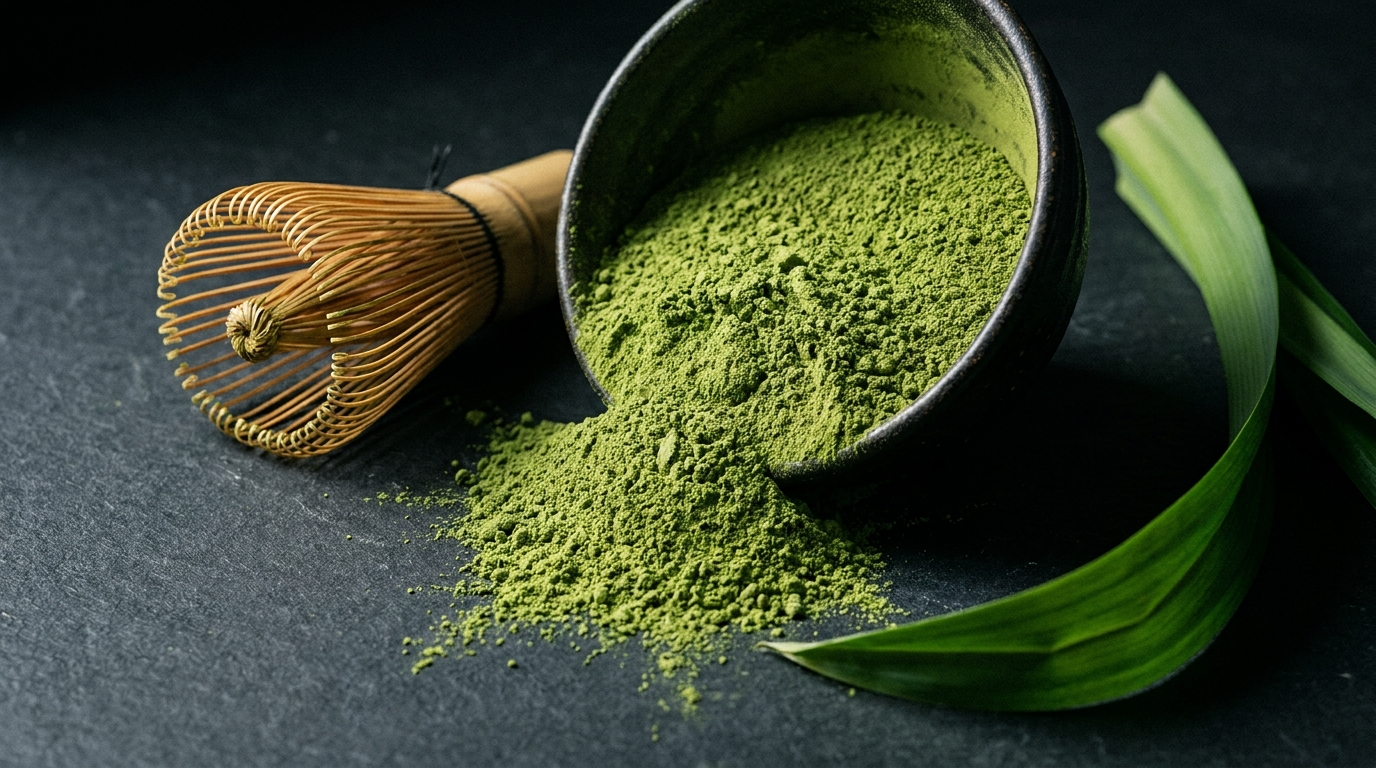
Vivid green and no visible clumps — the two things worth checking before you blame the recipe.
1. Get the water temperature right
Boil the kettle, then leave it for two to three minutes before pouring. If you are in a hurry, pour about 80 % boiling water and top up with cold. You do not need a thermometer — you need to not use water that is still bubbling.
2. Use less powder than you think
A heaped spoon does not make matcha taste stronger in a good way. It makes it taste chalky and bitter. One level teaspoon to 200–250 ml is a sensible starting point.
3. Sift it
Matcha clumps because it is milled extremely fine. An unsifted clump does not dissolve evenly — it sits there as a concentrated pocket of powder, and when you hit one it is unpleasant. A cheap tea strainer solves this permanently.
4. Check whether it is stale
Matcha oxidises. Fresh powder is vivid, almost fluorescent green. As it ages it turns dull, then yellowish-olive, and the flavour goes flat and bitter at the same time. Keep it sealed, keep it cold, and treat an open tin as a few-week item rather than a pantry staple.
5. Consider the grade
Culinary grade is milled from later harvests and includes more stem and vein material. It is designed to hold its own inside a cake, not to be drunk straight. If you are drinking matcha neat and it tastes rough, the grade may simply be wrong for the job.
6. Add fat, or add aroma
Milk proteins and fats bind to polyphenols, which is why a matcha latte reads as smoother than the same matcha in water. Oat and coconut milk do a similar job, and coconut brings its own sweetness.
Iced drinks are the easiest place to test this, because cold milk and ice already blunt the sharpness — our iced pandan matcha latte recipe is built around exactly that.
The other route is aroma. Bitterness is partly perceptual — a strong sweet smell shifts how the same liquid tastes. This is why vanilla is such a common addition, and why sugar works even in quantities too small to make the drink properly sweet.
If you have tried all six and still find it bitter
At that point the honest answer is that you may simply be sensitive to catechins, and there is nothing wrong with that. Two options remain that do not involve sugar.
The first is to drink less matcha per cup and treat it as a lighter drink. The second is to pair it with an aromatic that covers the bitter finish without sweetening it — which is exactly what pandan does. Its vanilla-coconut aroma rounds off the sharp edge using a second plant rather than a spoonful of sugar, and the result still contains real matcha rather than a flavoured substitute.
If you want the full comparison of the two leaves and why they work together, we covered that in pandan vs. matcha.
Frequently asked questions
Why is my matcha bitter but the café version is not?
Usually two reasons: cafés control water temperature carefully, and most café matcha drinks contain milk and some sweetener. Fix your water temperature first before assuming the powder is the problem.
Does adding sugar ruin matcha?
No, but it is worth knowing that sugar masks bitterness rather than removing it. If you are adding sugar mainly to make matcha drinkable, the underlying issue is probably temperature, grade or freshness.
Is bitter matcha bad matcha?
Not necessarily. Even excellent matcha turns harsh in boiling water. Bitterness that survives correct preparation, however, usually points to a lower grade or an old tin.
Should I use cold water instead?
Cold-whisked matcha is genuinely less bitter and works well over ice. The trade-off is a thinner body and less aroma, so it suits iced drinks better than a hot cup.
Buying pandan matcha? Three things to check
Most powders sold as flavoured matcha are mostly sugar. These three checks separate the real thing from the rest.
Bionutricia Extract Pandan Matcha Powder is a 50/50 blend of Japanese matcha (Camellia sinensis) and pure Malaysian pandan (Pandanus amaryllifolius). Two ingredients, no added sugar, no maltodextrin and no colouring. One 200 g pack holds about 100 servings at 1 teaspoon each, and a teaspoon carries roughly 20–45 mg of caffeine — about a third of a cup of coffee. It is produced in Malaysia by Bionutricia Manufacturing Sdn. Bhd., a JAKIM Halal, FSSC 22000, GMP and HACCP certified facility operating since 2006.