Lauric Acid Powder: C12 Saturated Fatty Acid Composition, Sourcing and Bulk Supply for Formulators
Formulator’s summary: Lauric acid is a C12 saturated fatty acid — the fatty acid present in the highest proportion in coconut oil and palm kernel oil, typically around 45–53% of total fatty acids in coconut oil and 45–55% in palm kernel oil. It is solid at room temperature (melting point approximately 44–46°C) and, in its free-fatty-acid form, is not water-soluble, which is why formulators who need to dose it into a dry-format product typically specify a powder rather than the crude oil or free fatty acid. Bionutricia Extract (Bionutricia Manufacturing Sdn Bhd) is a JAKIM Halal, FSSC 22000, GMP, HACCP and MeSTI facility in Malaysia that has manufactured spray-dried and encapsulated functional powders since 2006, including its own coconut-derived Virgin Coconut Oil (VCO) Powder, which is naturally rich in lauric acid. For purity, encapsulation method and certificate coverage for this product, contact us for the current specification.
Quick facts for formulators
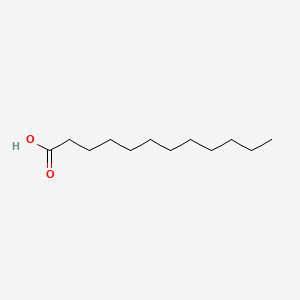
- Chemical identity: Lauric acid (C12:0) — a 12-carbon saturated fatty acid, molecular formula C12H24O2, also named dodecanoic acid
- Natural source: the principal fatty acid in coconut oil (~45–53% of total fatty acids) and palm kernel oil (~45–55%); also the signature component of Bionutricia’s own Virgin Coconut Oil (VCO) Powder at a compositional 25–35% lauric acid
- Physical state: solid at room temperature; melting point approximately 44–46°C
- Water solubility: not water-soluble in its free-fatty-acid form — this is why a bulk powder format is specified for dry-blend handling
- Powder format: typically produced via encapsulation or spray-drying onto a carrier for free-handling dry-blend use; for the specific carrier and encapsulation method, contact us for the current specification
- Purity / assay: Contact us for the current specification — a safety data sheet (MSDS) and a JAKIM halal certificate naming lauric acid are held on file
- Facility certifications: JAKIM Halal, FSSC 22000, GMP, HACCP, MeSTI (facility-wide); for certificate coverage specific to this product line item, contact us for the current specification
- Pack sizes: Contact us for the current specification — available on request
What is lauric acid?
Lauric acid is a saturated fatty acid with a 12-carbon chain, systematically named dodecanoic acid and carrying the shorthand C12:0 (12 carbons, zero carbon-carbon double bonds). Like all saturated fatty acids, its carbon chain carries no double bonds, which gives it a relatively high melting point for its chain length — approximately 44–46°C — so it is solid, not liquid, at typical room temperature. This is a basic, well-established point of lipid chemistry rather than a claim specific to any supplier or product.
Where lauric acid comes from: coconut and palm kernel oil
Lauric acid occurs naturally as a component of triglycerides in a small number of plant oils, most notably coconut oil and palm kernel oil, where it is the single largest fatty acid by proportion. In coconut oil it typically makes up roughly 45–53% of total fatty acids; in palm kernel oil the proportion is similar, around 45–55%. This is why coconut oil and palm kernel oil are sometimes described in the literature as “lauric oils” — a term that refers to their fatty-acid composition, not to any added ingredient. Bionutricia’s own Virgin Coconut Oil (VCO) Powder is a spray-dried form of this same coconut oil, carrying a compositional 25–35% lauric acid on its house specification.
Lauric acid sits at the boundary of two different classification systems formulators may encounter. Some lipid-chemistry references group it with the medium-chain fatty acids (C6–C12); others reserve the term “medium-chain triglyceride (MCT)” specifically for the shorter C8 (caprylic) and C10 (capric) fatty acids and treat lauric acid (C12) separately because it behaves more like a long-chain fatty acid metabolically. A specification sheet or ingredient declaration should state which convention it is using rather than assuming lauric acid is automatically included under an “MCT” heading.
From fatty acid to bulk powder: why a powder format
Lauric acid in its free-fatty-acid or crude-oil form is difficult to dose into a dry product: it is solid but waxy at room temperature, it does not measure or flow like a free-flowing powder, and it is not water-soluble, so it cannot simply be stirred into an aqueous premix. Formulators who need a consistent, weighable, dry-blend-ready ingredient typically specify a powder form instead, produced by encapsulating or spray-drying the fatty acid (or a lauric-acid-rich oil) onto a food-grade carrier. Bionutricia uses this approach across its existing oil-powder range — for example, spray-drying virgin coconut oil onto an arabic gum carrier for its VCO Powder. For the specific carrier, encapsulation method and process parameters for a standalone lauric acid powder line item, contact us for the current specification before finalising a formulation.
Solubility and formulation considerations
Lauric acid is a saturated fatty acid and, like other free fatty acids, is not water-soluble — encapsulating or spray-drying it onto a carrier changes its handling properties (making it free-flowing and dry-blendable) but does not make the underlying fatty acid dissolve in water. Formulators should treat a lauric acid powder as a dry-blend ingredient rather than a directly water-soluble one, and plan for even dispersion — pre-blending with other dry components, or using an appropriate carrier/emulsifier system — before it reaches a wet or aqueous stage of a process.
Within that constraint, a lauric-acid-rich powder is formulated into beverages and cordials (via a pre-dispersed premix rather than direct addition), ice-cream and frozen desserts (as a fat-phase component contributing to mouthfeel and hardness), bakery systems (as a functional fat input), sachet drink mixes and dry powder blends (its most straightforward use case, since these are dry-format products by definition), and cosmetic applications, where lauric acid is a long-established fatty-acid input to surfactant and emollient chemistry. This is a description of formulation use cases, not a claim of any specific finished-product performance.
Supplying lauric acid powder in bulk
Bionutricia Extract has manufactured spray-dried and encapsulated functional powders in Malaysia since 2006, in a facility holding JAKIM Halal, FSSC 22000, GMP, HACCP and MeSTI certification. For the current bulk lauric acid powder specification — covering purity/assay, encapsulation method, particle size, moisture, microbial limits and certificate-of-analysis coverage — contact us for the current specification. Bulk supply, custom specification, and packing options are handled on a request basis in the same way as Bionutricia’s published oil-powder range.
Buyers formulating with lauric acid may also want to review Bionutricia’s Virgin Coconut Oil (VCO) Powder, which is naturally rich in lauric acid (25–35% compositional) and already carries a full house specification and Certificate of Analysis per lot, or its Coconut Water Powder for a lauric-acid-adjacent, water-derived coconut ingredient.
For specifications, samples, and bulk quotations, contact our team.
Related ingredient guides
Frequently asked questions
What is lauric acid? Lauric acid is a 12-carbon saturated fatty acid (C12:0, dodecanoic acid). It is solid at room temperature, with a melting point of approximately 44–46°C, and is not water-soluble in its free form.
Is lauric acid the same as coconut oil? No — lauric acid is one fatty-acid component of coconut oil, typically the largest single component at roughly 45–53% of total fatty acids. Coconut oil is a mixture of several fatty acids; lauric acid powder is the isolated/concentrated fatty acid supplied as a bulk raw ingredient.
Is lauric acid an MCT (medium-chain triglyceride)? Definitions vary. Some references include C12 (lauric acid) within the medium-chain fatty-acid range (C6–C12); others define “MCT” more narrowly as C8 (caprylic) and C10 (capric) only, and treat lauric acid separately because it behaves more like a long-chain fatty acid in the body. Check which convention a given specification or study uses.
Is this powder halal certified? Bionutricia’s manufacturing facility holds JAKIM Halal certification alongside FSSC 22000, GMP, HACCP and MeSTI, and a JAKIM halal certificate naming lauric acid is held on file. For certificate coverage specific to this standalone lauric acid powder line item, contact us for the current specification.
What applications is lauric acid powder used in? Approved use cases include dry powder blends and sachet drink mixes, bakery systems, ice-cream and frozen desserts, beverages and cordials (via a pre-dispersed premix), and cosmetic applications.
How does this differ from your VCO Powder? Virgin Coconut Oil (VCO) Powder is the whole spray-dried coconut oil, naturally containing 25–35% lauric acid compositionally alongside its other fatty acids. A standalone lauric acid powder is intended to supply the fatty acid itself at a specified purity, for formulators who need to dose lauric acid content precisely rather than via a whole-oil powder.
Do you offer bulk quotes and samples? Yes — bulk ingredient supply and paid samples are available for serious B2B enquiries. Contact our team for the current specification sheet and quotation.