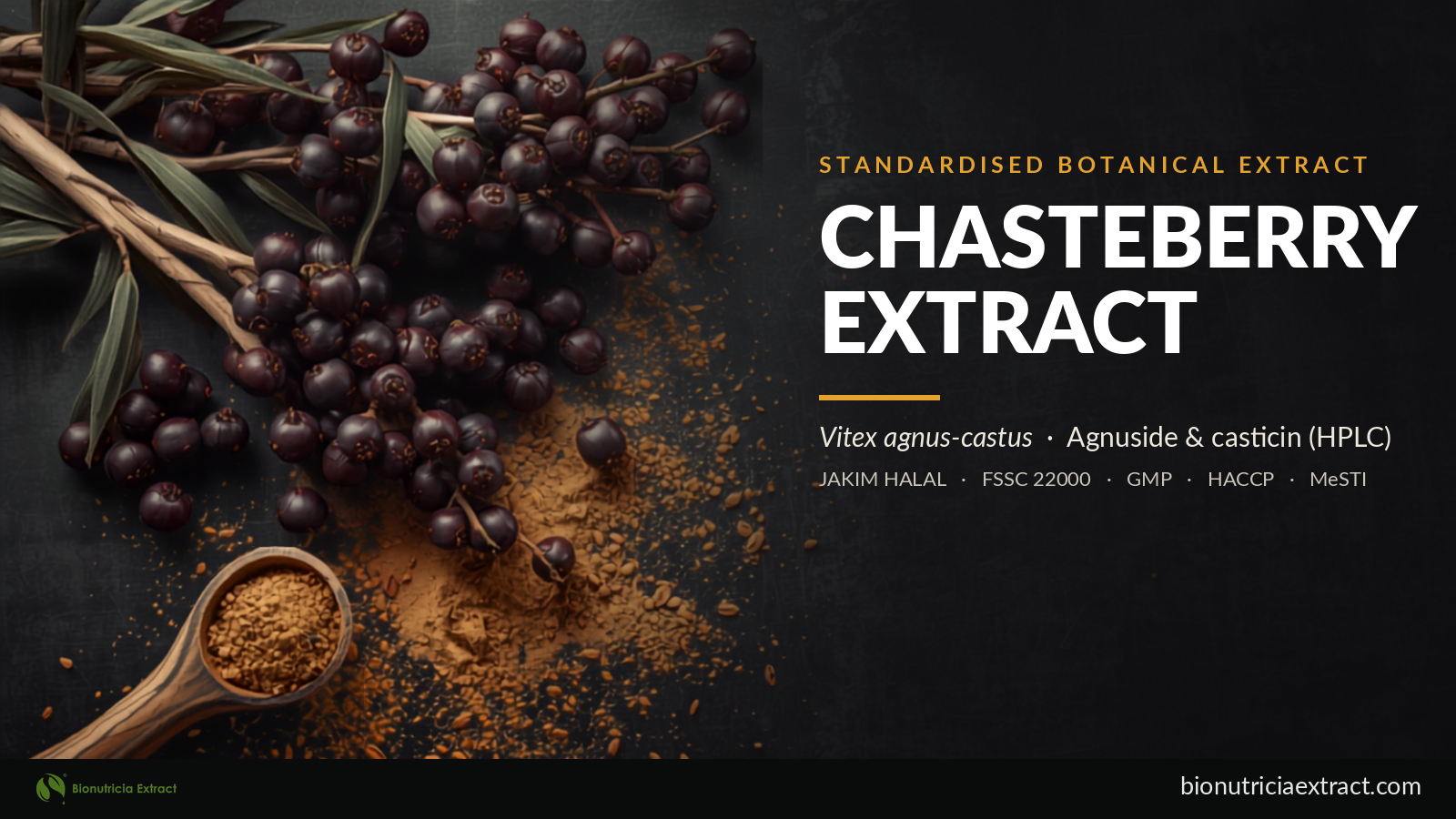
Chasteberry (Vitex agnus-castus) is a Mediterranean shrub whose dried fruit is one of the best-evidenced botanicals for premenstrual syndrome. Its marker compound is the flavonoid casticin; it works by a dopaminergic, prolactin-lowering mechanism; and it has a landmark placebo-controlled trial behind it. This guide explains the active compound, the mechanism, the clinical evidence and how a brand can source a chasteberry ingredient for B2B formulation.
Active compound & standardisation
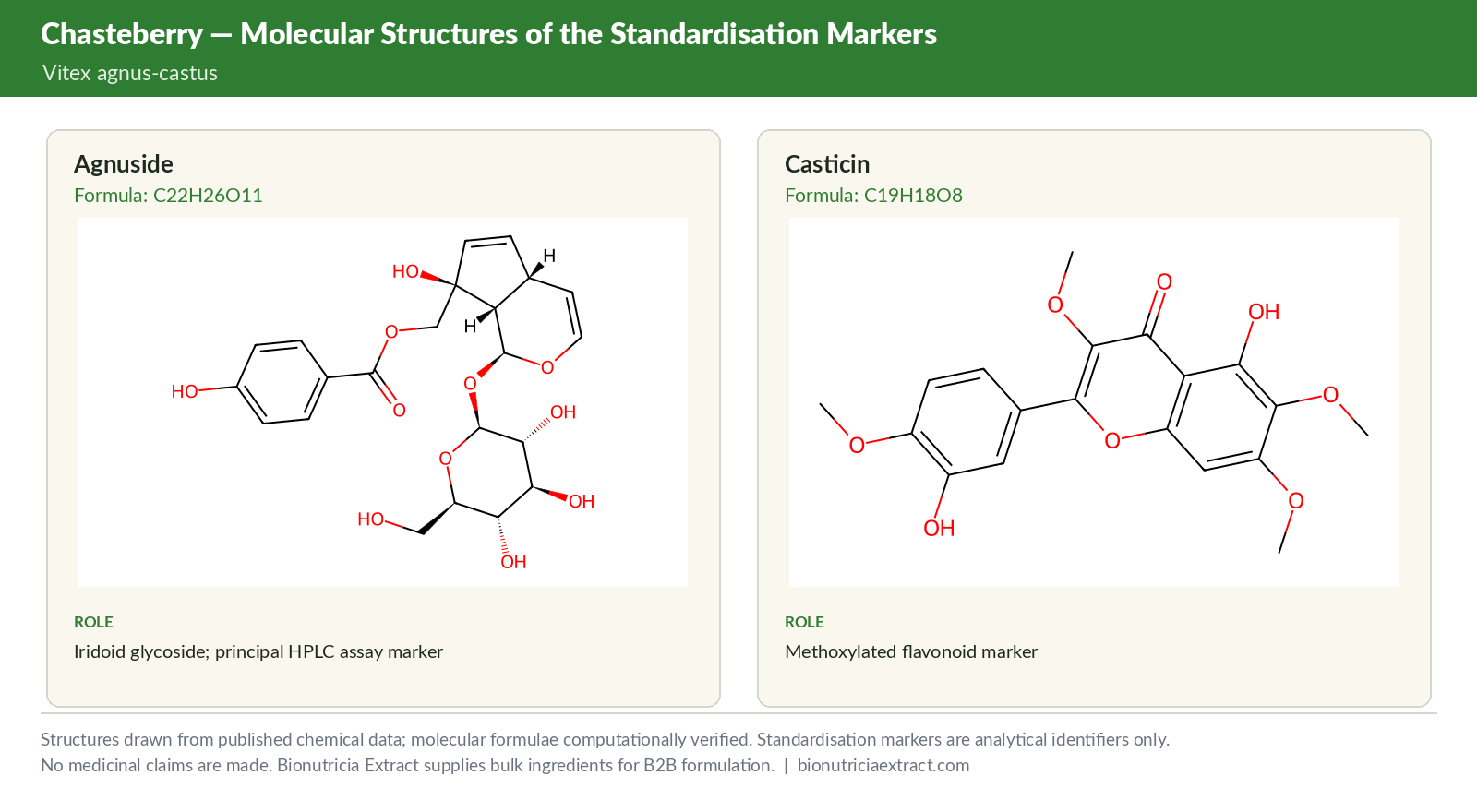
Chasteberry is characterised by the flavonoid casticin and the iridoid glycoside agnuside, with diterpenes and essential-oil components also present. A quality chasteberry ingredient is standardised on casticin (and often agnuside) by HPLC, which serves as the identity-and-consistency marker for each batch. “Contains Vitex” without a marker figure is not enough for a documented finished product.
How chasteberry works (mechanism)
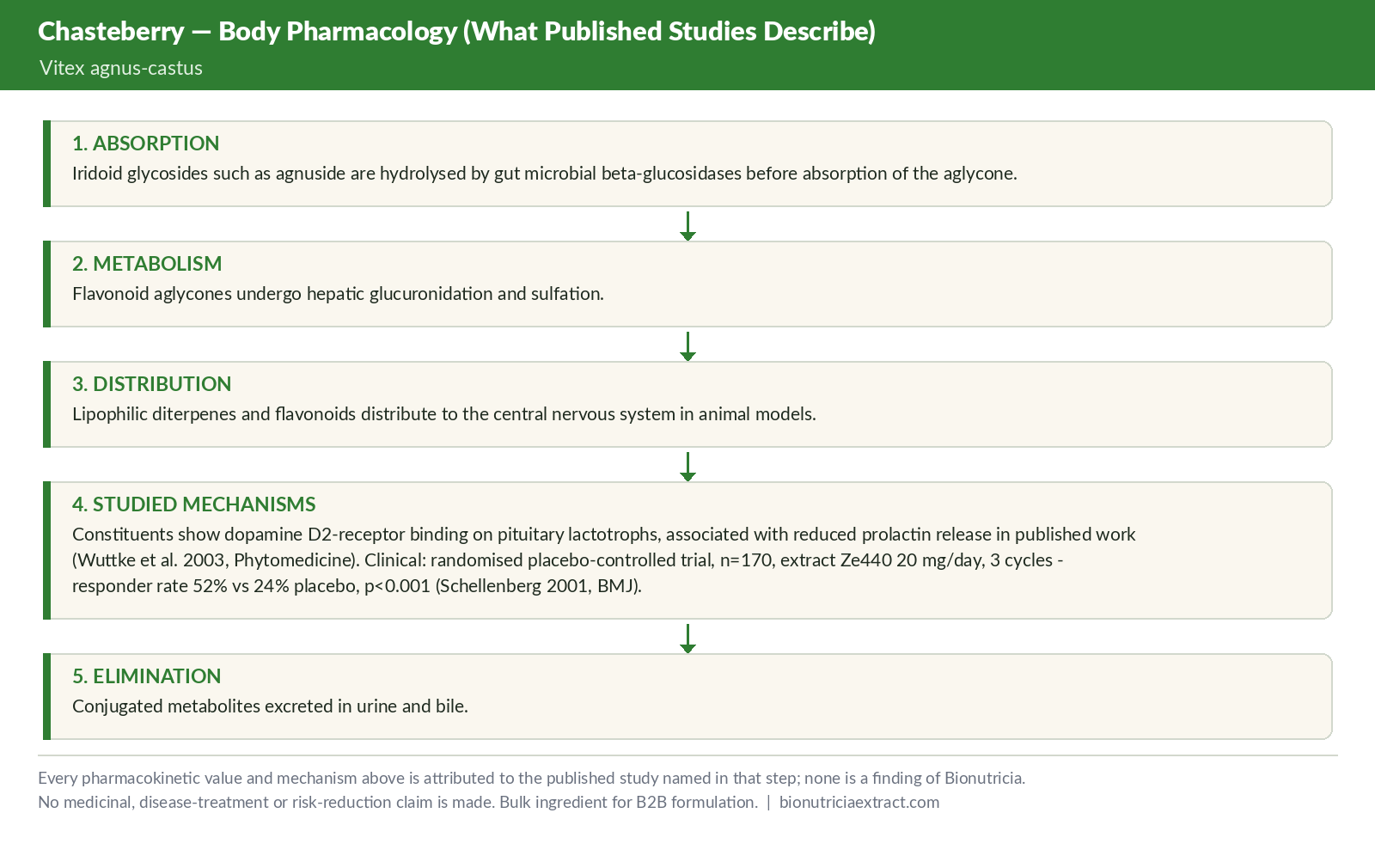
Chasteberry’s constituents bind dopamine D2 receptors on lactotroph cells of the anterior pituitary. Activating these receptors suppresses prolactin secretion; lower prolactin in turn shifts the balance of luteinising hormone (LH) and follicle-stimulating hormone (FSH) and supports the luteal phase. This dopaminergic, prolactin-modulating action is the accepted pharmacological rationale for chasteberry’s traditional and clinical use in cyclical female complaints. Mechanism is provided as scientific background on the botanical; it is not a claim that any finished product treats, cures or prevents a condition.
Clinical evidence
Chasteberry has the strongest clinical file of the classic women’s-health botanicals. The evidence below is attributed to the cited studies.
| Study | Design | Result (attributed to the study) |
|---|---|---|
| Schellenberg 2001, BMJ | Placebo-controlled RCT, n=170, extract Ze 440 20 mg/day, 3 cycles | 52% responders on chasteberry vs 24% on placebo for premenstrual syndrome (p<0.001) |
| Meta-analyses 2017 / 2019 | Pooled RCTs of Vitex for PMS | Generally supported a benefit for premenstrual symptoms vs placebo |
Trials use specific standardised extracts (e.g. Ze 440); results describe those preparations, not any particular finished product. Effect depends on a defined casticin-standardised extract.
Sourcing chasteberry as a B2B ingredient
Chasteberry is not a current Bionutricia catalogue SKU. However, Bionutricia is a JAKIM Halal-certified botanical extract manufacturer (also FSSC 22000, US FDA-registered, GMP, HACCP, MeSTI) that develops standardised extracts for brand owners. A company wanting a halal, casticin-standardised chasteberry ingredient can enquire about custom development and OEM manufacturing, including target marker levels and finished-format support.
Frequently asked questions
What is the active compound? The flavonoid casticin (with agnuside), by HPLC.
How does it work? Dopamine D2 agonism lowers prolactin, modulating reproductive-hormone balance.
What does the evidence show? Schellenberg 2001 (BMJ, n=170): 52% vs 24% responders for PMS; meta-analyses broadly supportive.
Does Bionutricia sell it? Not a catalogue SKU; custom halal OEM development can be enquired about.
Safety? Avoid in pregnancy/breastfeeding and with dopaminergic or hormonal medication without professional advice; follow local claim rules.
Enquire about custom botanical extract development →