Blue Spirulina (Phycocyanin) Powder: Sourcing, Specifications & Applications for Manufacturers
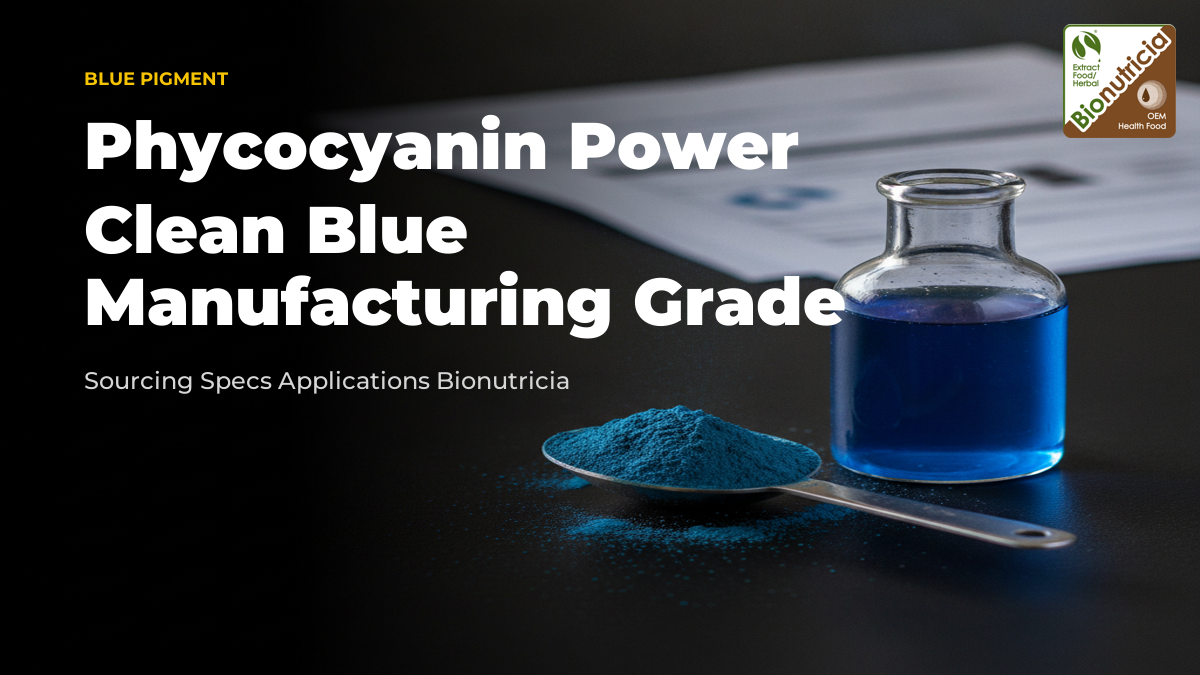
Direct answer: Blue spirulina powder is a commercial phycocyanin-rich extract produced from dried Arthrospira (spirulina) biomass and supplied as a water-soluble pigment ingredient for food, beverage and nutraceutical manufacturing. It is manufactured by extracting and concentrating the phycocyanin pigment fraction, then drying to a powder carrier for bulk supply. Key specification parameters to review with suppliers are phycocyanin purity (%), moisture, particle size, colour strength (absorbance at 620 nm) and microbial and heavy‑metal limits. The ingredient suits applications that require a natural blue colour in aqueous and powdered systems; this guide covers what blue spirulina is, the pigment chemistry, typical specification parameters, formulation use-cases, packaging and storage, supplier qualification and a B2B FAQ.
GMP
HACCP
JAKIM Halal
US FDA
MeSTI
NanoVerify
What Is Blue Spirulina (Phycocyanin)?
Blue spirulina powder is the phycocyanin pigment fraction isolated from Arthrospira biomass. Production typically involves aqueous extraction of spirulina, clarification to remove bulk solids and chlorophyll, concentration of the pigment fraction, and drying (spray‑dry or freeze‑dry) to produce a stable powder or concentrate. The resulting product is formulated for use as a natural blue colourant and is analytically described by its phycocyanin content and purity, water solubility, and residual carrier/excipient profile.
How it differs from whole spirulina powder:
- Whole spirulina powder is the dried whole biomass (green, chlorophyll-rich) used where the nutritional matrix is required.
- Blue spirulina (phycocyanin) is a concentrated pigment extract with most chlorophyll and bulk biomass removed, optimised for visual colour performance rather than biomass composition.
The Chemistry of Phycocyanin: Why It’s Blue
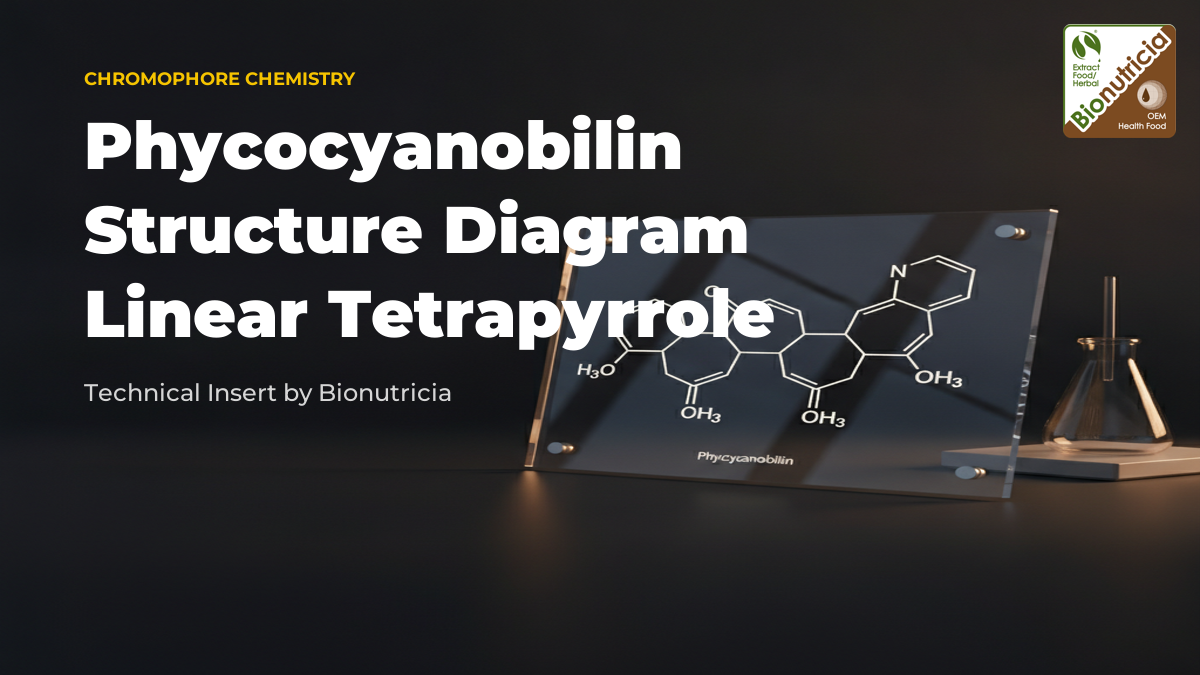
Phycocyanin is a pigment–protein complex consisting of phycobiliprotein subunits that bind linear tetrapyrrole chromophores (phycocyanobilin). The chromophore absorbs light in the orange-red region and transmits blue, producing the vivid blue appearance when dissolved. The protein environment, chromophore conjugation and aggregation state determine absorbance maxima and colour intensity. For a molecular reference, consult the PubChem entries for related chromophores (search PubChem for phycocyanobilin and phycocyanin-related records for structural and spectral data).
Typical Specification Parameters to Confirm With a Supplier
| Parameter | Why It Matters to a Buyer |
|---|---|
| Phycocyanin purity (%) | Determines colour intensity per kg and dosing; affects cost-in-use and comparability between lots. |
| Moisture content | Impacts shelf life, caking risk and microbial stability; affects packing and transport weight. |
| Particle size / mesh | Affects dispersibility in powders and mouthfeel in finished products; fine powders blend more uniformly in premixes. |
| Heavy metals (Pb, Cd, As, Hg) | Required for regulatory compliance and export; limits may restrict use in some markets or product categories. |
| Microbial limits (TPC, yeast & mould, E. coli, Salmonella) | Critical for food-safety acceptance; influences whether ingredient can be used in low‑moisture or heat‑sensitive processes without additional processing. |
| Solubility / dispersibility | Determines ease of incorporation in RTD systems, premixes and instant blends; poor solubility can cause speckling or sedimentation. |
| Colour strength (absorbance at 620 nm) | Standardised measure of colour potency used to calculate inclusion rates and ensure batch-to-batch consistency. |
| pH sensitivity | Phycocyanin colour varies with pH; important for beverage and acidified product formulation and stability predictions. |
| Ash content | Indicates inorganic residue and carrier levels; used in specification acceptance and processing considerations. |
Where Food Manufacturers Use Blue Spirulina
- Natural blue colourant for confectionery, icings and bakery applications
- Powdered beverage mixes, instant premixes and RTD functional drinks
- Nutraceutical sachets, powdered supplement blends and capsule filling where a blue tone is required
- Dairy analogues, gelled desserts and ice-cream where a blue visual effect is desired
- Used in combination with stabilisers and pH management systems to retain colour during processing and shelf life
Format, Packaging and Storage
- Typical formats: spray‑dried or freeze‑dried phycocyanin powder; may be supplied with a carrier or as a concentrated pigment powder.
- Packing: vacuum‑sealed kraft bags for small R&D, foil‑lined drums with inner liners for bulk, and palletised container loads for large orders; moisture‑barrier packaging recommended.
- Storage: keep sealed in a cool, dry place away from direct sunlight. Refrigeration can extend colour stability for long-term storage.
- Shelf life: depends on moisture, carrier and storage; verify shelf-life data on the specification sheet and COA.
- Handling notes: protect from high heat, direct UV/visible light exposure and high humidity to minimise colour degradation.
Quick Facts for Formulators
- Base ingredient: Phycocyanin pigment extracted from Arthrospira (spirulina) biomass
- Format supplied: spray‑dried or freeze‑dried powder (carrier levels variable)
- Colour driver: phycocyanin purity and colour strength (absorbance at 620 nm)
- Common applications: confectionery, beverages, premixes, nutraceutical sachets, dairy analogues
- Storage: cool, dry, moisture‑protected packaging; avoid direct light and heat
- Certifications: Halal, GMP, HACCP, FSSC 22000 commonly available on request
How to Qualify a Blue Spirulina Supplier
Checklist to request before issuing a PO:
- Lot‑specific Certificate of Analysis (COA) showing phycocyanin assay/purity (%) and colour-strength data
- Method statements for phycocyanin assay and spectrophotometric method used (e.g. absorbance at 620 nm)
- Heavy‑metals certificate and microbial screening report (TPC, yeast & mould, E. coli, Salmonella)
- Copies of facility certifications where applicable (FSSC 22000, GMP, HACCP, JAKIM Halal)
- Packaging specification, recommended storage conditions and shelf‑life data
- Declaration of carriers, excipients, anti‑caking agents or processing aids used in the powder
- Sample availability for application testing and stability trials
Frequently Asked Questions
- Q: What is phycocyanin purity and how is it measured?
- A: Phycocyanin purity is expressed as a percentage of the active pigment in the extract and is typically determined by spectrophotometric assay. Suppliers report assay methods and provide COA data for confirmation.
- Q: Is blue spirulina stable in acidic beverages?
- A: Phycocyanin is pH‑sensitive and colour performance can diminish in strongly acidic conditions. Suppliers should provide stability guidance and formulators often use stabilisers or pH‑adjustment strategies to retain colour.
- Q: How does blue spirulina differ from regular spirulina powder?
- A: Regular spirulina is whole dried biomass (green); blue spirulina is a concentrated pigment extract (phycocyanin) with reduced chlorophyll content and optimised for colour performance.
- Q: What format does Bionutricia supply blue spirulina in?
- A: Bionutricia supplies blue spirulina as a phycocyanin‑rich powder in standard bulk formats (R&D packs, 25 kg vacuum‑sealed bags, foil‑lined drums) with COA and specification sheets available on request.
- Q: What certifications should I ask for?
- A: Ask for facility and product certifications relevant to your market: FSSC 22000, GMP, HACCP, JAKIM Halal, and any specific export/import documentation required by the destination market.
- Q: Can you support private‑label or OEM projects?
- A: Yes. Many ingredient suppliers, including Bionutricia, provide private‑label packing, co‑packing and finished‑product OEM services; discuss packaging and labelling requirements with sales.
Supply Blue Spirulina in Bulk With Bionutricia
Bionutricia supplies bulk blue spirulina (phycocyanin) powder to food, beverage and supplement manufacturers as part of its ingredient range. For full specifications, certification documentation and a formal quotation, visit the blue spirulina product page or request a bulk quotation directly.
Request a Bulk Quotation for Blue Spirulina
Request a bulk quotation — Blue Spirulina Powder (Phycocyanin) product page