Introduction
This buyer’s guide explains what caramel powder is, how it is made, which caramel colour classes (E150a–E150d) suit different applications, and the practical checks a food or beverage manufacturer should make when qualifying a supplier. It is written for formulators, procurement and quality teams evaluating caramel powder for bakery, beverage, dairy and confectionery uses.
What caramel powder is and how it’s produced
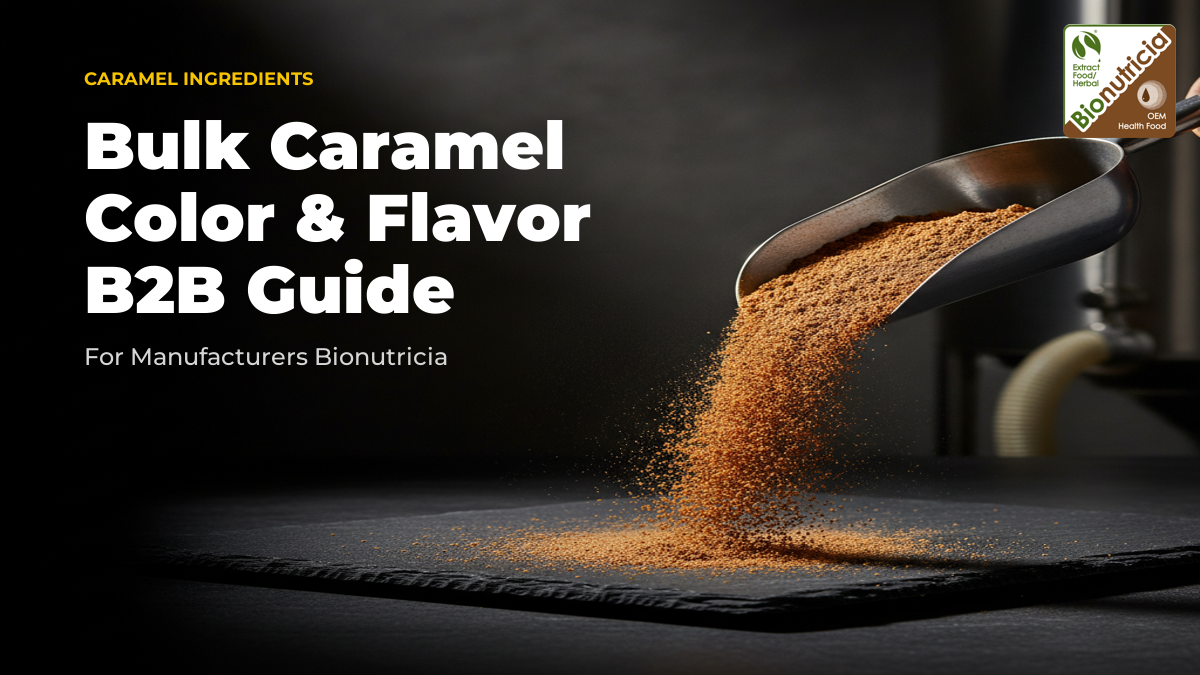
Caramel powder is a dried form of caramel colour or caramel-flavoured concentrate used to impart colour and sometimes flavour. It is produced by controlled heating of carbohydrates; the resulting liquid caramel may be neutralised or adjusted, then dried (spray- or drum-drying) often with carriers/anti-caking agents to produce a free-flowing powder suitable for dry-mix handling.
Applications and how to select the right caramel
Choose the grade by matching colour class, physical form and stability to your application:
- Colour classes (E150a–E150d): E150a (plain) is neutral in flavour; E150b (caustic) gives darker shades; E150c (ammonia) and E150d (sulphite-ammonia) provide intense, stable dark colours commonly used in beverages and sauces. Select E150a/b for flavour-sensitive dairy and bakery; E150d is typical for cola-type beverages. Always request the supplier’s declared class and residual reagent limits on the CoA.
- Powder vs liquid: Powder is convenient for dry mixes and bakery premixes but may require anti-caking treatment and re-dispersion validation in beverages. Liquid grades offer immediate solubility and are often preferred for clear beverages.
- Stability considerations: Confirm colour retention across your process pH, heat treatments and light exposure. Test for thermal stability in baking or cooking steps and for photostability in clear-packaged products.
- Usage planning: Usage rates vary by desired shade and matrix—start with small pilot trials and instrumentally measure colour (spectrophotometry, Delta E). Never assume a single % will suit all applications without trials.
Specification & buyer checklist (what to request from suppliers)
When qualifying a caramel powder supplier, request these minimum items and data on the CoA or specification sheet:
- Full product specification (declared class E150a–d, carrier, particle/bulk properties, recommended handling)
- Certificate of Analysis showing colour measurement method (APHA/EBC/spectrophotometer), moisture, ash, residual reagents (sulfite, ammonium where applicable), microbial limits and heavy-metal screen
- Solubility/reconstitution data for powder grades and recommended dosing instructions
- Storage, shelf-life and anti-caking agent information; recommended temperature/humidity limits
- Allergen declaration and cross-contact controls; GMO status where relevant
- Declared analytical methods used on the CoA so you can compare across suppliers
- Copies of requested certifications (Halal, Kosher) including certifier scope and validity dates—do not accept verbal claims
What we need from you to finalise a buyer-ready spec: desired class (E150a–d), preferred form (powder or liquid), any required certifications (Halal/Kosher), preferred analytic colour method, and target storage or shelf-life constraints.
Internal links: product page — Caramel Powder product page; background knowledge — Knowledge: Caramel (post 15120).
FAQs
Is caramel powder suitable for clear beverages?
For clear beverages, choose a grade and formulation designed for solubility and clarity—liquid E150d grades are commonly used in cola-style drinks. Powdered grades require validated re-dispersion and filtration protocols.
Can caramel powder be used in dairy products without causing precipitation?
Compatibility depends on pH and interactions with milk proteins. Request supplier compatibility data and run heat/pH challenge tests to confirm no sedimentation or protein binding under your processing conditions.
What shelf-life can I expect after adding caramel powder?
Shelf-life depends on the grade, carrier, storage conditions and the finished product matrix. Request accelerated shelf-life data from the supplier and conduct product-specific trials.
Do I need to worry about regulatory limits for caramel compounds?
Some jurisdictions require specific labelling or set limits for process-related constituents; check local food regulations and request the supplier’s regulatory compliance statement.