Direct answer: A drink labelled “non-alcoholic” is not automatically alcohol-free. In several major markets the label legally allows up to 0.5% ABV, ethanol can ride into the recipe inside flavourings and botanical extracts, and trace ethanol even forms naturally in fruit juice. For brands selling into halal-certified retail — Malaysia, Indonesia, the GCC — that gap between the label and the liquid decides whether the product can be certified at all. The fix is made at the ingredient level: know what extracted every botanical in the formula, know what carries it, and buy ingredients whose halal certification is documented on the spec, not assumed from the label.
‘Alcohol-free’ isn’t always 0.0
Alcohol-free is the fastest-growing drinks category. Much of it isn’t alcohol-free.
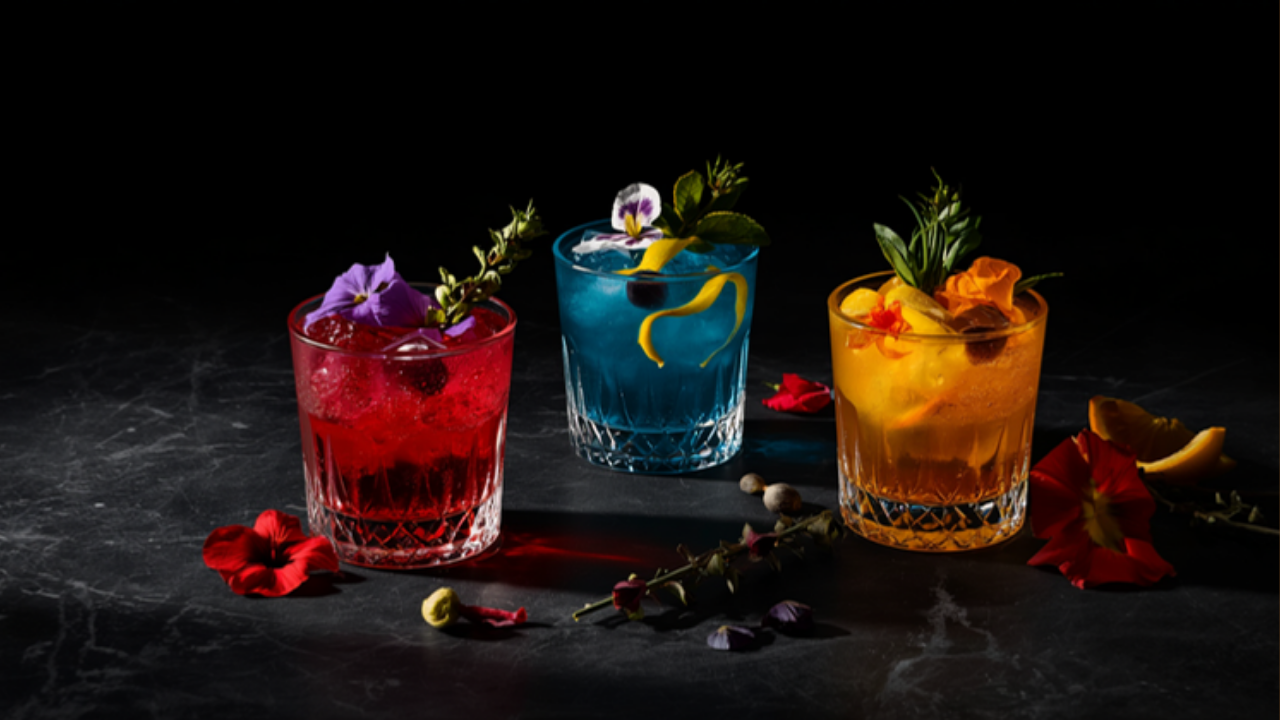
61 million new buyers. Zero proof.
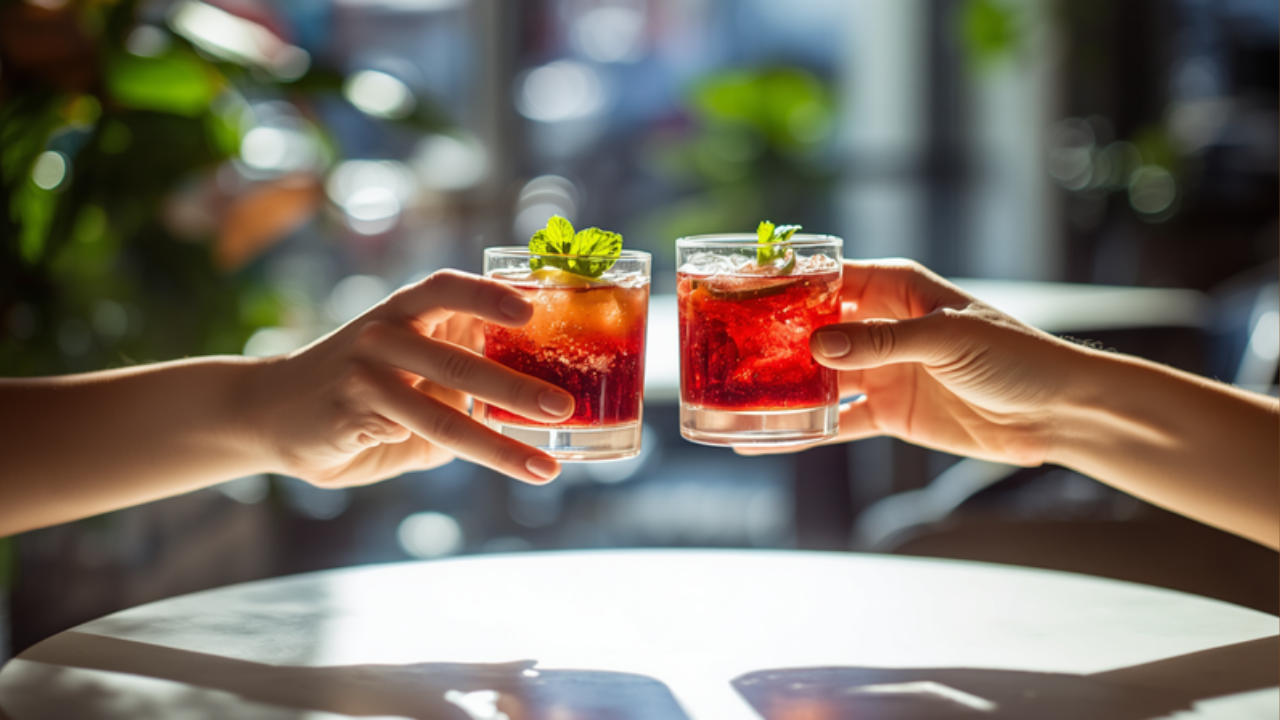
IWSR forecasts no-alcohol volumes growing ~7% a year to 2028 — the US segment alone approaching US$5 billion. Health-motivated and faith-based consumers lead it.
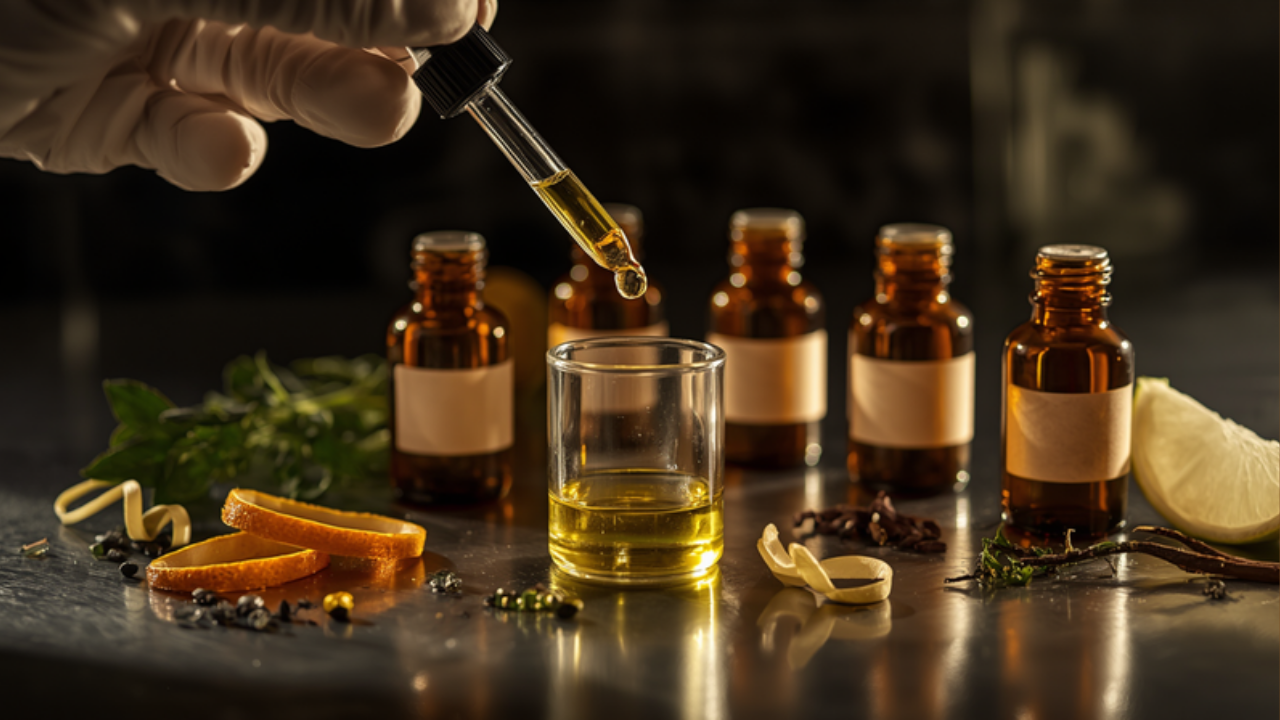
Ethanol rides in with the flavour
Many botanical flavourings and extracts arrive carried in ethanol. A drink that never saw fermentation can still dose alcohol in — one flavour addition at a time.
‘Non-alcoholic’ ≠ ‘alcohol-free’
In several markets, ‘non-alcoholic’ legally allows up to 0.5% ABV. ‘Alcohol-free’ means 0.0. Two different claims share one shelf.
One ingredient can lock out a market
Halal certifiers audit at ingredient level — solvent source, carrier, residuals. In Indonesia, certification under BPJPH is becoming mandatory: market access, not marketing.
Be 0.0 by design
Ask three questions on every spec: What extracted this? What carries it? Is the halal certificate at ingredient level — with numbers per lot?
Formulate the certified way
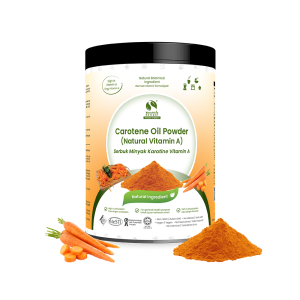
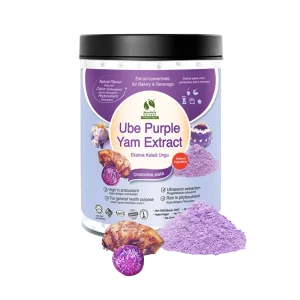
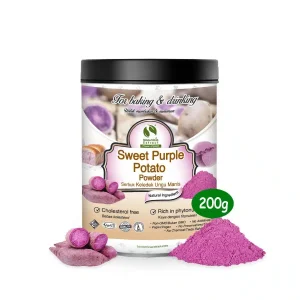
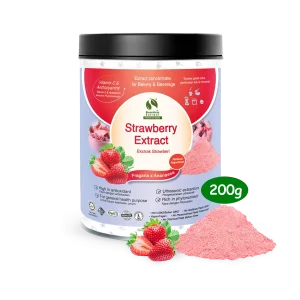
Standardized botanical extracts, natural colourants and flavour ingredients from Malaysia — water-based ultrasonic-and-enzyme extraction, halal-certified, documented per lot. bionutriciaextract.com
The boom is real — and it is being led by people who read labels
The no-and-low alcohol category has become one of the fastest-growing corners of the global drinks industry. IWSR, the drinks-industry data house, forecasts no-alcohol volumes growing at roughly +7% a year through 2028, with the US no-alcohol segment alone approaching US$5 billion by 2028 on an 18% volume growth rate. Across key markets, an estimated 61 million people entered the no-alcohol category between 2022 and 2024, and no-alcohol products are expected to deliver more than 90% of the category’s total growth.
Two buyer groups drive it. The first is the health-motivated moderator — roughly 4 in 10 no-alcohol buyers cite a healthy lifestyle choice. The second is the faith-based consumer, for whom “no alcohol” is not a preference but a requirement. That second group is concentrated in exactly the markets where Southeast Asian ingredient suppliers already operate: Malaysia, Indonesia — where halal certification is becoming mandatory for food and beverage under BPJPH — and the Gulf. A zero-proof product that can carry a recognised halal certificate walks into that demand. One that cannot is locked out of the fastest-growing shelf it could have owned.
Where alcohol hides in an “alcohol-free” drink
Ethanol enters a no-alcohol formulation through three doors, and only one of them is on the label.
Door one: the de-alcoholised base. Many no-alcohol beers, wines and “spirit alternatives” are brewed, fermented or distilled conventionally and then have the alcohol stripped out. Removal is never total. That is why US labelling rules allow “non-alcoholic” on anything under 0.5% ABV, and reserve “alcohol-free” for genuine 0.0%. Two products can sit side by side on the same shelf, wear near-identical claims, and contain measurably different amounts of ethanol.
Door two: the flavour system. Ethanol is one of the food industry’s standard flavour carriers and extraction solvents. It dissolves the terpenes, aldehydes and aromatic oils that water cannot, which is why many botanical flavourings, tinctures and distillates arrive at the beverage plant already carried in ethanol. A formulator can build a “0.0” drink from a fermented-nothing base and still dose ethanol into it, one flavour addition at a time.
Door three: nature. Ethanol forms wherever sugar and yeast meet. Published analytical work has measured naturally occurring ethanol in ordinary packaged fruit juices at up to about 0.66 g/L — in products no one would ever think to question. Trace ethanol is a fact of food chemistry; what matters is whether anyone has measured it and where it came from.
What the published data shows
The gap between label and liquid has been measured directly. In a study published in the Canadian Journal of Clinical Pharmacology, researchers ran 45 commercial beverages declaring no or low alcohol content through gas chromatography. Thirteen of the 45 — 29% — contained more ethanol than the label declared. Six products claiming to contain no alcohol at all measured above 1% ABV.
The study’s concern was pregnancy exposure, but the commercial reading for a beverage brand is the same: a “no alcohol” claim that has never been verified analytically is a liability wearing a marketing message. For a brand courting halal certification, it is disqualifying.
Why the halal shelf raises the stakes
Halal certification bodies do not treat all ethanol alike, and they do not stop at the finished product. Three principles recur across the major standards:
Source matters more than concentration. Ethanol originating from the drinks industry (khamr) is not acceptable in halal production regardless of the amount. Industrially fermented or synthetic ethanol is treated differently — Indonesia’s MUI, under Fatwa No. 10 of 2018, tolerates residual ethanol in a final beverage below 0.5% only when it is not sourced from khamr and is medically harmless. Other certifiers apply stricter product-category limits.
Certification is examined at ingredient level. A halal audit traces every input: the extract, the flavour, the carrier the flavour arrived in, and the solvent that touched the botanical at the extraction plant. One undocumented ethanol-carried flavour in the recipe can stall certification of the entire SKU.
The market is regulatory, not optional. Indonesia’s BPJPH regime is phasing in mandatory halal certification for food and beverage products sold in the country — the world’s largest Muslim consumer market. Brands that treat halal documentation as an afterthought are not losing a marketing badge; they are losing market access.
This is the quiet commercial insight of the zero-proof boom: the categories are converging. The same consumer wave lifting no-alcohol drinks in London and New York is, in Kuala Lumpur, Jakarta, Dubai and Riyadh, a certified-halal wave. The brands that win both shelves will be the ones whose formulations are 0.0 by design, not 0.0 by rounding.
The chemistry: why ethanol is the default carrier — and what replaces it
Flavour and active molecules in botanicals span a wide polarity range. Water, a highly polar solvent, extracts sugars, acids and many polyphenols well, but leaves much of a plant’s aromatic character — terpenes, essential-oil fractions, resinous compounds — behind. Ethanol sits in the amphiphilic middle: its hydroxyl end hydrogen-bonds with water-loving molecules while its ethyl end dissolves oil-loving ones. That versatility, plus low cost and easy evaporation, made it the industry’s default extraction solvent and flavour carrier.
But ethanol is not the only route to a full-flavoured botanical ingredient. Modern water-based extraction uses physics and biology to do what solvent polarity otherwise does: high-intensity ultrasonic cavitation ruptures plant cell walls so intracellular compounds release into a water phase, while food-grade enzymes (such as cellulase) digest the cellulose matrix to free bound actives and aromatics. The resulting extract can then be spray-dried to a stable powder or concentrated as a liquid — delivering colour, flavour and standardized actives with no drinks-industry solvent anywhere in the chain of custody. For beverage formulators, glycerine and propylene glycol likewise serve as established non-ethanol flavour carriers, and powdered flavour-and-colour systems remove the carrier question entirely.
For a zero-proof formulation, that changes the risk profile at the root. A butterfly pea blue, a pandan flavour note, a roselle red or a yuzu citrus profile built on a water-based extraction route never brings ethanol to the plant in the first place — there is nothing to strip out, dilute down or explain to an auditor.
The three questions that protect a zero-proof launch
1. “What extracted this ingredient — and what carries it now?” Ask for the solvent system and the carrier on the specification, in writing. A serious supplier can name both without a follow-up meeting. If the answer to either is ethanol, ask for the source classification and the residual level, per lot.
2. “Is the halal certification at ingredient level, and who issued it?” A halal-certified factory is not the same thing as a halal-certified ingredient with traceable inputs. For Malaysia-bound and Indonesia-bound products, certification recognised by JAKIM or BPJPH at the ingredient level is what the downstream audit will actually ask for.
3. “Can you show the numbers?” A certificate of analysis per lot, with residual solvent data where relevant, turns a label claim into a measured fact. The published beverage-testing data above is the argument: 29% of tested products drifted above their own declaration. Brands that measure do not end up in that 29%.
Bionutricia supplies the bulk ingredient for B2B formulation; brand owners and manufacturers formulate it into their chosen finished format — ready-to-drink beverages, sachets, stick packs, syrups, bakery, dairy and confectionery applications. Its standardized botanical extracts, natural colourants and flavour ingredients are produced in Malaysia under a water-based ultrasonic-and-enzyme extraction platform, with halal certification and lot-level documentation available for buyer audits.
Related guides
- Formulating Botanical Extracts into Functional Beverages
- JAKIM Halal Certification: How the Malaysian Process Works
- Indonesia’s Mandatory Halal Certification (BPJPH): What Ingredient Exporters Need to Know
- Residual Solvent Limits in Botanical Extracts (ICH Q3C)
- Butterfly Pea: Natural Blue Food Colour for Drinks & Mocktails
References
- IWSR Drinks Market Analysis — no-alcohol category forecasts 2024–2028 (volume CAGR +7%; US no-alcohol approaching US$5bn by 2028; 61m consumers recruited 2022–2024; 90%+ of category growth). theiwsr.com.
- The Spirits Business (Jan 2026): “IWSR: no-alcohol and functional drinks poised for rapid growth.”
- Goh Y.I. et al. Alcohol content in declared non- or low alcoholic beverages: implications to pregnancy. Canadian Journal of Clinical Pharmacology 2010;17(1):e47–e50. PMID 20051610. (45 beverages, gas chromatography; 13/45 above declared content; 6 “no alcohol” products >1% ABV.)
- Gorgus E., Hittinger M., Schrenk D. Estimates of ethanol exposure in children from food not labeled as alcohol-containing. Journal of Analytical Toxicology 2016;40(7):537–542. (Naturally occurring ethanol in packaged juices, up to ~0.66 g/L.)
- US labelling practice: “non-alcoholic” permitted below 0.5% ABV; “alcohol-free” reserved for 0.0% ABV.
- LPPOM MUI: “Understanding MUI Fatwa on Ethanol Levels in Food and Beverage Products” (Fatwa No. 10 of 2018 — final-product ethanol <0.5%, non-khamr source, medically harmless). halalmui.org.
- Majlis Ugama Islam Singapura (MUIS) fatwa guidance on ethanol in food and beverage. muis.gov.sg.
This article discusses ingredient sourcing, labelling and certification practice for beverage formulation. It does not provide religious rulings; certification requirements are set by the recognised halal authorities in each market. It makes no claim that any product treats, cures or prevents any disease.
Frequently asked questions
Is a “non-alcoholic” drink always 0.0% alcohol?
No. In several markets, including the United States, “non-alcoholic” may legally be used on beverages containing up to 0.5% ABV. “Alcohol-free” is the stricter claim, reserved for 0.0%. Published testing has also found commercial products exceeding their own declared levels, so the only reliable answer is analytical verification.
How does alcohol get into a drink that was never fermented?
Mainly through the flavour system. Ethanol is a standard carrier and extraction solvent for botanical flavourings, so each flavour addition can dose trace ethanol into the recipe. Trace ethanol also forms naturally wherever sugars and ambient yeasts meet, which is why it has been measured in ordinary packaged fruit juices.
What do halal certifiers require for ethanol in beverages?
Requirements differ by authority, but two principles recur: ethanol sourced from the drinks industry (khamr) is not acceptable, and residual ethanol in the final product must sit under the certifier’s threshold — Indonesia’s MUI, for example, tolerates under 0.5% only from non-khamr sources. Certification is assessed at ingredient level, so carriers and extraction solvents are audited too.
How can a brand build a genuinely 0.0 formulation?
Start at the ingredient level: choose botanical extracts, colours and flavours produced on water-based extraction routes (for example ultrasonic-and-enzyme extraction), specify non-ethanol carriers such as glycerine or powder formats, and require the solvent system, carrier and halal documentation on every specification, with certificate-of-analysis data per lot.
Why does this matter commercially and not just for compliance?
Because the two fastest-growing buyer groups for zero-proof drinks — health-motivated moderators and faith-based consumers — overlap in the markets where halal certification governs shelf access, including Indonesia, where certification is becoming mandatory under BPJPH. A formulation that is 0.0 by design can be certified and sold into all of those markets; one that is 0.0 by rounding cannot.
Does Bionutricia supply finished zero-proof drinks?
No. Bionutricia supplies the bulk ingredient for B2B formulation — standardized botanical extracts, natural colourants and flavour ingredients — and brand owners and manufacturers formulate them into their chosen finished beverage format. Documentation for halal and quality audits is provided at ingredient level.