Preventing Colour Fading in RTD Beverages Using Standardised Butterfly Pea Extract: Anthocyanin Stability and pH Control
Formulator’s summary: Standardised butterfly pea (Clitoria ternatea) flower extract is a water-soluble natural blue colourant whose hue derives from polyacylated anthocyanins called ternatins. In ready-to-drink beverages it delivers a vivid blue at neutral pH, shifting through violet to pink as acidity rises — a sensory and visual signature that no synthetic blue can replicate on a clean label. The single greatest threat to that colour across shelf life is pH drift, followed by heat exposure during pasteurisation, dissolved oxygen, and UV light in clear packaging. A standardised 5:1 extract with a consistent anthocyanin assay per batch gives the formulator a predictable starting colour and a known pigment load to engineer against, which a crude dried-flower powder cannot. Best applications include ready-to-drink beverages, cordials, functional coffee and instant beverage premixes, and dairy systems where pH can be controlled.
Quick facts for formulators
- Botanical / part: Clitoria ternatea, flower
- Physical format: spray-dried powder (liquid concentrate also available)
- Extraction method: patented enzymatic ultrasonic extraction (MY-188945-A)
- Standardisation marker: anthocyanins (ternatins & delphinidin glycosides), 20–40 mg/100 g; total phenolics 170–190 mg/100 g
- Solubility: water-soluble
- pH behaviour: blue at pH 6–7, violet at pH 4–5, pink at pH 2–3
- Certifications: JAKIM Halal, FSSC 22000, GMP, HACCP, MeSTI
What makes butterfly pea blue: the ternatin anthocyanins
The deep blue of butterfly pea flower is carried by a group of polyacylated anthocyanins known collectively as ternatins. Unlike the simpler anthocyanins found in berries and red cabbage, ternatins carry multiple acyl groups (aromatic and aliphatic acids) attached to their sugar moieties. This structural complexity is directly responsible for the pigment’s blue hue at near-neutral pH and its relatively higher stability compared with non-acylated anthocyanins — a comprehensive review by Vidana et al. (2021, Frontiers in Plant Science, PMID 34975979) covers the biosynthesis, extraction, stability and applications of Clitoria ternatea anthocyanins, noting that the polyacylation pattern is central to both the blue colour expression and the pigment’s resistance to degradation.
Escher et al. (2020, Food Chemistry, PMID 32569972) characterised the phenolic composition of Clitoria ternatea blue petals by UHPLC-Q-TOF-MS/MS, confirming ternatins and delphinidin glycosides as the dominant pigment fraction. The total phenolic content of Bionutricia’s standardised 5:1 extract is specified at 170–190 mg/100 g, with anthocyanins at 20–40 mg/100 g — confirmed on each batch Certificate of Analysis.
Why butterfly pea colour fades in RTD beverages
Anthocyanin colour fading in a ready-to-drink beverage is rarely caused by a single factor. It is the combined effect of pH shift, thermal stress during pasteurisation or hot-fill, dissolved oxygen introduced during mixing and filling, and UV exposure through clear packaging. Each degrades the anthocyanin chromophore or shifts its equilibrium form, and together they compound across shelf life.
Marpaung et al. (2017, Natural Product Research, PMID 28301948) investigated the colour degradation of anthocyanin-rich extract from butterfly pea petals at pH 7, documenting the rate at which the blue pigment degrades under near-neutral conditions in various solvent systems. The practical takeaway for a formulator: even at the pH where butterfly pea is bluest, the pigment is not inert — it degrades over time, and the rate accelerates with heat and oxygen.
pH control: the single most important variable
Butterfly pea anthocyanins exist in different structural forms depending on pH: the red flavylium cation dominates below pH 3, the blue quinonoidal base prevails at pH 6–7, and the colourless chalcone form increases at pH above 7. This means the pH of the finished beverage determines not just the hue but the proportion of pigment in its coloured versus colourless form.
| pH range | Dominant form | Visible colour |
|---|---|---|
| 2–3 | Flavylium cation (red) | Pink to red |
| 4–5 | Quinonoidal base (purple) | Violet to purple |
| 6–7 | Quinonoidal base (blue) | Deep blue |
| > 7 | Chalcone (colourless) + degradation | Fading / loss of colour |
For a blue RTD beverage, the target window is pH 5.5–6.5. Below pH 5 the colour shifts violet; above pH 7 the chalcone form accelerates and the pigment degrades. A buffer system — typically a citrate or phosphate buffer at food-grade concentration — stabilises the pH against acid migration from other ingredients and against CO₂ dissolution in carbonated lines. Test the pH of the finished beverage at day zero and at the end of shelf life, not just at formulation, because pH can drift as ingredients interact.
Heat and processing stability
Most RTD beverages undergo pasteurisation (typically 72–85°C for 15–30 seconds) or hot-fill processing. Anthocyanins are thermally labile: prolonged exposure to heat accelerates the conversion of coloured forms to the colourless chalcone and ultimately to phenolic-acid degradation products. The practical strategies are:
- Minimise hold time at temperature. The total time above 70°C matters more than the peak temperature. A HTST pasteuriser with a short hold tube is gentler than a batch heat-and-hold.
- Add the extract after the main heat step where possible. In a dry sachet drink mix the extract never sees in-line heat at all — one reason instant beverage premixes are a natural home for butterfly pea colour.
- Lower the fill temperature. If the process allows aseptic cold-fill or a lower hot-fill temperature with a validated hold, the pigment retains more of its initial colour value.
- Validate colour over shelf life, not just at day one. Run an accelerated stability study at 35–40°C and compare colour loss against a real-time control.
Co-pigmentation and encapsulation for colour retention
Two formulation strategies can extend butterfly pea colour stability beyond what pH and heat control alone achieve.
Co-pigmentation
Co-pigmentation is the molecular association between anthocyanins and colourless phenolic compounds (such as flavonoids, hydroxycinnamic acids or organic acids) that stabilises the coloured form of the pigment. When a co-pigment stacks with the anthocyanin through π-π interactions and hydrogen bonding, it shifts the equilibrium toward the coloured quinonoidal base and protects the chromophore from nucleophilic attack by water. In practice, ingredients such as roselle extract (rich in hydroxycinnamic acids) or food-grade ferulic acid can serve as co-pigments in a butterfly pea beverage system. The effect is concentration-dependent and should be validated in the actual beverage matrix.
Encapsulation
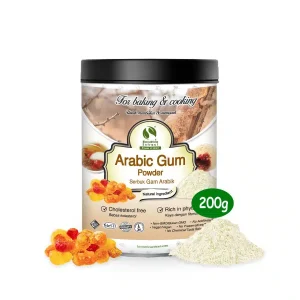
Encapsulating the anthocyanin pigment within a biopolymer wall creates a physical barrier against oxygen, light and moisture, slowing degradation. Lourith et al. (2020, Journal of Cosmetic Science, PMID 32271704) demonstrated improved stability of butterfly pea anthocyanins with biopolymeric walls, showing that encapsulation measurably extended colour retention compared with unencapsulated extract. For beverage applications, wall materials such as arabic gum or maltodextrin are food-grade, halal-compatible and already used in spray-dried extract powders — Bionutricia’s butterfly pea extract powder is itself spray-dried on a carrier, which provides a baseline level of physical protection. Further encapsulation for a specific RTD application can be discussed as a custom specification.
Light, oxygen and packaging
UV and visible light drive photo-oxidation of anthocyanins, cleaving the flavylium ring and producing colourless or brown degradation products. Dissolved oxygen in the beverage accelerates oxidative degradation independently of light. For a butterfly pea RTD:
- Packaging: amber or opaque PET, glass with UV-absorbing coatings, or cans provide the best light barrier. Clear PET under retail lighting will fade the colour measurably within weeks.
- Oxygen management: deaerate the beverage before filling, minimise headspace, and consider nitrogen flushing. Ascorbic acid as an oxygen scavenger can help, but at high concentrations it can itself accelerate anthocyanin degradation through condensation reactions — validate the interaction.
- Storage temperature: the finished product should be stored and distributed at ambient or chilled temperatures. Every 10°C increase roughly doubles the rate of anthocyanin degradation.
Standardised extract vs crude powder: why batch consistency matters for colour
A standardised 5:1 butterfly pea extract carries a defined anthocyanin assay (20–40 mg/100 g) and a total phenolics specification (170–190 mg/100 g), confirmed on each batch Certificate of Analysis. This means the formulator starts every production run with the same pigment load and the same colour intensity at the same dose — the colour target is reproducible.
A crude dried-flower powder, by contrast, varies in anthocyanin content with every harvest, growing region and drying condition. The formulator has no assay to work from, the colour varies batch to batch, and the only way to compensate is to over-dose — which introduces flavour and sediment issues. The difference is a specification and quality-control difference, not a physiological one: the COA per lot is the document that evidences batch-to-batch consistency, and it is what allows a brand to lock a colour standard and reproduce it across production runs.
Specification checklist for bulk butterfly pea extract
| Parameter | What to require |
|---|---|
| Botanical identity | Clitoria ternatea, flower — confirmed on COA |
| Extraction ratio | 5:1 (standardised extract, not crude powder) |
| Anthocyanin assay | 20–40 mg/100 g, confirmed per batch |
| Total phenolics | 170–190 mg/100 g |
| Solubility | Water-soluble — verify in your beverage base at target dose |
| Moisture | < 10% |
| Heavy metals | As ≤ 0.1 ppm, Pb ≤ 0.2 ppm, Cd ≤ 0.3 ppm, Hg ≤ 0.05 ppm |
| Microbiology | APC ≤ 10⁴ cfu/g, Y&M ≤ 10³ cfu/g, coliforms ≤ 10² cfu/g, E. coli absent |
| Certifications | JAKIM Halal, FSSC 22000, GMP, HACCP, MeSTI |
| Clean label | Vegan, non-GMO, gluten-free, not irradiated, no fillers or preservatives |
| COA | Issued per production lot |
Supplying butterfly pea extract and related ingredients in bulk
Bionutricia Extract supplies standardised butterfly pea flower extract as both a spray-dried powder and a liquid concentrate, produced with the patented enzymatic ultrasonic extraction process (MY-188945-A) under JAKIM Halal, FSSC 22000, GMP, HACCP and MeSTI certification, with a Certificate of Analysis on every lot. A buyer formulating a butterfly pea RTD may also need roselle extract powder as a co-pigment or companion red-pink anthocyanin colour, and arabic gum powder as a spray-dry carrier or natural stabiliser. Custom standardisation, extract ratios and packing options are available to match the grade, solubility and dosing to a specific beverage process. Documentation and export paperwork accompany each shipment; sample requests can be arranged for serious B2B enquiries.
Need a specification sheet, COA or custom extract ratio for your beverage formulation? Message us via our contact page
Order sample quantities or bulk standardised butterfly pea extract from our eStore at https://bionutriciaextract.com/product/butterfly-pea-flower-clitoria-ternatea-l-extract-powder/.
Frequently asked questions
At what pH is butterfly pea extract most stable as a blue colour in a beverage? The blue quinonoidal base form is dominant at pH 5.5–6.5. Below pH 5 the colour shifts violet; above pH 7 the colourless chalcone form increases and the pigment degrades. A buffer system helps hold the pH in the blue window across shelf life.
How does pasteurisation affect butterfly pea anthocyanin colour? Heat accelerates the conversion of coloured anthocyanin forms to the colourless chalcone and degradation products. Minimising total hold time at temperature, adding the extract after the main heat step where possible, and validating colour over accelerated shelf-life testing are the key strategies.
What is co-pigmentation and does it help butterfly pea colour stability? Co-pigmentation is the molecular association between anthocyanins and colourless phenolic compounds that stabilises the coloured form. Ingredients such as roselle extract or food-grade hydroxycinnamic acids can serve as co-pigments. The effect is concentration-dependent and should be validated in the actual beverage matrix.
Does encapsulation improve butterfly pea colour retention? Yes — a study by Lourith et al. (2020, Journal of Cosmetic Science, PMID 32271704) demonstrated improved stability of butterfly pea anthocyanins with biopolymeric walls. Encapsulation creates a physical barrier against oxygen, light and moisture. Food-grade wall materials such as arabic gum or maltodextrin are compatible with halal and clean-label requirements.
What is the difference between a standardised extract and a crude butterfly pea powder for beverage colour? A standardised 5:1 extract carries a defined anthocyanin assay (20–40 mg/100 g) confirmed on each batch COA, giving reproducible colour at a given dose. A crude dried-flower powder varies in pigment content with every harvest and has no assay to work from, making the colour target inconsistent batch to batch.