L-Citrulline Powder: Amino Acid Specification, HPLC Purity Assay and Bulk Supply for Sports Nutrition Formulation
Formulator’s summary: L-citrulline is a non-essential, non-proteinogenic alpha-amino acid naturally present in watermelon (Citrullus lanatus) rind and flesh — the fruit from which it takes its name. Bulk L-citrulline powder is manufactured to a food/nutraceutical grade, assayed for purity by HPLC, and supplied as a fine white crystalline powder that is highly water-soluble. This monograph covers pure L-citrulline (the free amino acid), which is chemically distinct from citrulline malate, a separate salt-form ingredient combining L-citrulline with malic acid. L-citrulline is widely used in sports and performance formulation, functional beverages, and other dry-blend applications where rapid, complete dissolution is a formulation requirement. For exact batch purity, particle size and manufacturing yield ratio, contact us for the current specification and certificate of analysis before finalising a formulation.
Quick facts for formulators
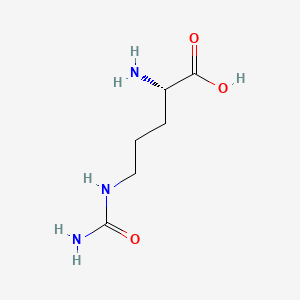
- Compound: L-Citrulline, a non-essential (non-proteinogenic) alpha-amino acid
- Chemical formula: C6H13N3O3
- CAS number: 372-75-8
- Assay method: HPLC (high-performance liquid chromatography)
- Purity: Contact us for the current specification — a product specification, certificate of analysis (COA) and safety data sheet (MSDS) are held on file for L-citrulline
- Manufacturing method: Commercial microbial fermentation (industry-standard route for food-grade amino acids); contact us for the current specification on yield ratio
- Particle size: Contact us for the current specification
- Solubility: Highly water-soluble
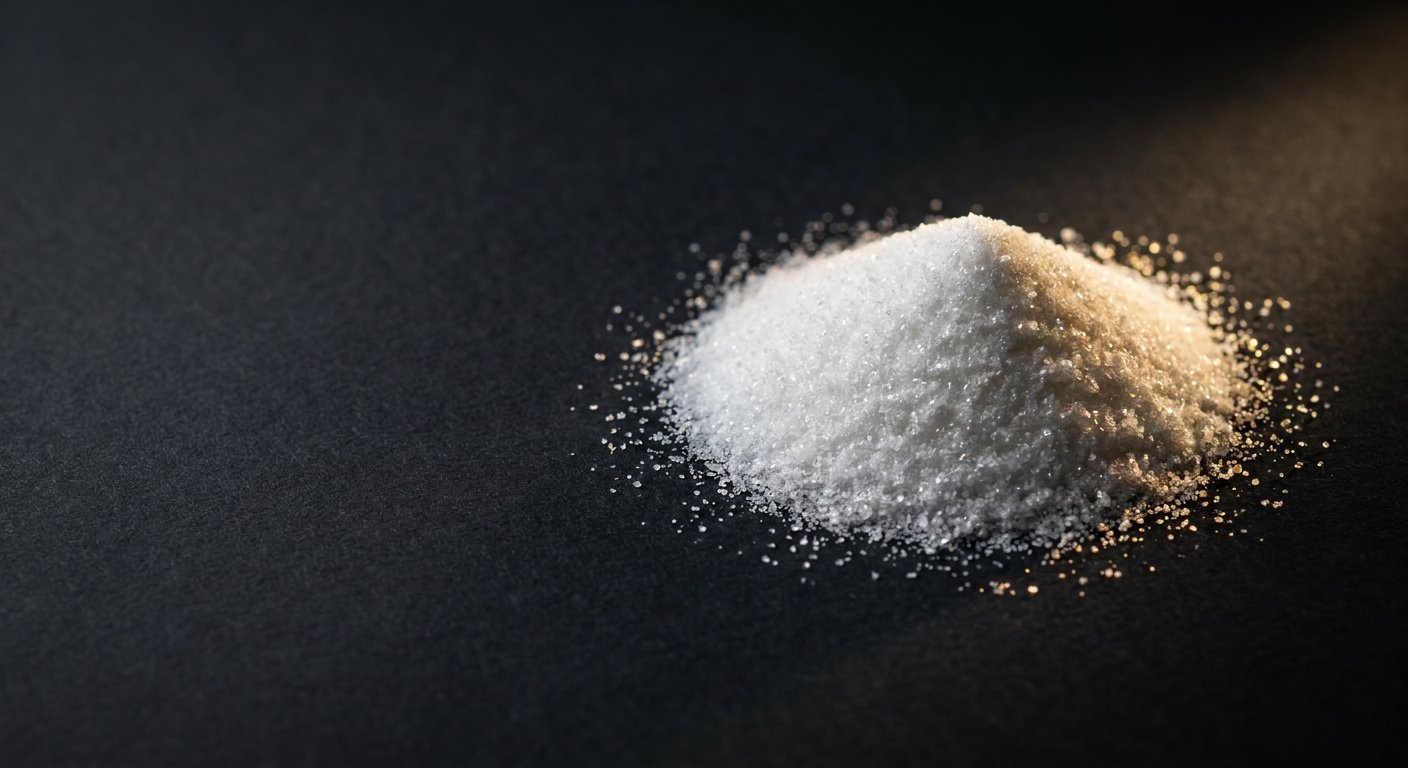
- Form: Fine white crystalline powder
- Natural occurrence: Naturally present in watermelon (Citrullus lanatus)
- Certifications: FSSC 22000, JAKIM Halal (L-Citrulline is named on our facility’s Halal certificate schedule), GMP, HACCP, MeSTI, US FDA facility registration
What is L-citrulline?
L-citrulline is an alpha-amino acid that is not one of the twenty amino acids coded for by DNA — it is described as non-essential and non-proteinogenic, meaning the body can synthesise it and it is not incorporated directly into proteins. It takes its name from Citrullus, the botanical genus of watermelon, where it was first isolated; watermelon rind and flesh are the best-known natural dietary sources of the compound. In human metabolism, L-citrulline is an intermediate in the urea cycle and is convertible to L-arginine, which is part of the basis for its use in sports and performance formulation. Commercially, L-citrulline is supplied as the free amino acid — a fine white crystalline powder — for use in sports-nutrition and functional-beverage products.
L-citrulline vs citrulline malate: which one are you buying?
Buyers sourcing “citrulline” for a formulation should confirm which of two distinct ingredients they are specifying. L-citrulline is the free amino acid on its own — the subject of this monograph. Citrulline malate is a separate, combined ingredient in which L-citrulline is bound to malic acid in a defined ratio (commonly quoted in the market as 1:1 or 2:1), which changes both the amino-acid content per gram and the ingredient’s overall composition. The two are not interchangeable on a like-for-like dose basis: a formulation built around a target L-citrulline dose needs more citrulline malate by weight than pure L-citrulline to deliver the same amino-acid content, because part of the citrulline malate’s weight is the malic acid component. Always confirm on the specification sheet and purchase order whether the ingredient supplied is L-citrulline (free amino acid) or citrulline malate (the salt form), as the two have different CAS numbers, different assay methods on the COA, and different labelling requirements.
Purity assay: how HPLC confirms L-citrulline content
The standard analytical method for confirming the identity and purity of an amino acid ingredient such as L-citrulline is high-performance liquid chromatography (HPLC). HPLC separates the amino acid from process impurities and related compounds, quantifying the L-citrulline peak against a reference standard to report a purity percentage on the certificate of analysis (COA). A COA for a food/nutraceutical-grade amino acid typically also reports appearance, loss on drying, heavy metals and microbiological limits alongside the assay value.
What a buyer should look for on the COA:
- Compound named: L-Citrulline (free amino acid, CAS 372-75-8) — distinct from citrulline malate
- Assay method stated: HPLC (with the specific method reference where available)
- Assay value reported: the L-citrulline purity percentage for the specific batch
- Batch identification: lot number linking the COA to the specific batch
- Supporting parameters: appearance, loss on drying, heavy metals and microbiological limits, where reported by the supplier
L-citrulline has an established evidence base in sports and performance formulation. This monograph does not restate specific clinical claims or cite particular studies; buyers who need the underlying research should request it from the supplier or consult the primary literature directly.
Production method: how food-grade L-citrulline is manufactured
Food and nutraceutical-grade L-citrulline is commercially produced by microbial fermentation, in which a selected microorganism strain is cultured under controlled conditions to biosynthesise the amino acid, which is then recovered, purified and crystallised into a dry powder. This is the industry-standard route for free amino acids used in food and sports-nutrition applications. For the specific fermentation yield, purification steps and any extraction/synthesis ratio used for a given batch, contact us for the current specification.
Solubility and formulation considerations
L-citrulline is highly water-soluble, dissolving readily and completely in aqueous systems at typical use levels. This makes it well suited to beverages and cordials, sachet drink mixes and dry powder blends, where rapid, complete dissolution and a clear solution are formulation requirements. It is also used in bakery systems, ice-cream and frozen desserts, and cosmetic applications where a water-soluble amino acid ingredient is called for. As with many free amino acids, L-citrulline can contribute a mild taste note at higher inclusion levels, which formulators working in delicate flavour systems may wish to account for with flavour masking.
Supplying L-citrulline powder in bulk
Bionutricia Extract supplies L-citrulline powder for bulk B2B supply, with documentation and export paperwork, custom packing options, and specification support available on request. Every batch ships with a certificate of analysis; buyers should request the current COA to confirm purity, appearance and microbiological data for the specific lot being quoted. Bulk supply, custom particle size, and private-label documentation are available on request.
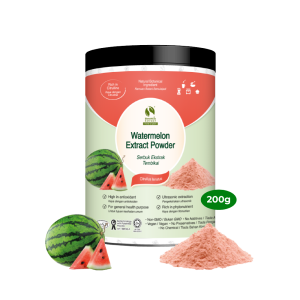
Buyers formulating with L-citrulline may also need companion ingredients from the published range: our watermelon extract powder guide covers the natural, citrulline-bearing botanical source of this amino acid, and our hydrolysed isolated soy protein guide covers a related bulk amino-acid/protein ingredient for sports and functional-nutrition formulation.
For specifications, samples, and bulk quotations, contact our team.
Related ingredient guides
- Watermelon Extract Powder: Citrulline-Bearing Bulk Ingredient Guide
- Hydrolysed Isolated Soy Protein (ISP): Bulk Buyer Guide
Frequently asked questions
What is L-citrulline and how does it differ from citrulline malate? L-citrulline is a non-essential, non-proteinogenic alpha-amino acid supplied as the free amino acid. Citrulline malate is a separate ingredient combining L-citrulline with malic acid in a defined ratio, which changes the amino-acid content per gram compared with pure L-citrulline. The two have different CAS numbers and should be specified separately on a purchase order.
What assay method confirms L-citrulline purity? High-performance liquid chromatography (HPLC) is the standard method for confirming the identity and purity of L-citrulline. HPLC separates the amino acid from process impurities and quantifies it against a reference standard, and the resulting assay value is reported on the certificate of analysis (COA) for the batch.
Is L-citrulline water-soluble, and what applications does that suit? Yes, L-citrulline is highly water-soluble and dissolves readily in aqueous systems. This makes it suitable for beverages and cordials, sachet drink mixes, dry powder blends, bakery systems, ice-cream and frozen desserts, and cosmetic applications.
Where does L-citrulline naturally occur? L-citrulline is naturally present in watermelon (Citrullus lanatus) rind and flesh, and takes its name from the plant’s botanical genus, Citrullus. Commercial L-citrulline powder used in sports-nutrition and functional-beverage formulation is manufactured separately by fermentation rather than extracted from watermelon.
How is food-grade L-citrulline manufactured? Food and nutraceutical-grade L-citrulline is commercially produced by microbial fermentation, in which a selected microorganism strain biosynthesises the amino acid under controlled conditions before it is recovered, purified and crystallised into a powder. This is the industry-standard route for free amino acids used in food and sports-nutrition applications.