Coenzyme Q10 (CoQ10) Bulk Powder: Ubiquinone Identity, HPLC Assay and Batch Standardisation
Formulator’s summary: Coenzyme Q10 (CoQ10, chemically ubiquinone) is a fat-soluble, isoprenoid benzoquinone found naturally in the mitochondria of every cell, where it participates in cellular energy production and functions as an antioxidant. In bulk supply, CoQ10 is a plain, non-liposomal crystalline powder — distinct from lipid-encapsulated delivery formats — standardised to a stated assay percentage confirmed by HPLC, so that a formulator knows the ubiquinone-10 content of every batch. This is the specification difference that matters: a standardised bulk powder with a declared HPLC assay and batch-to-batch consistency, versus an uncontrolled crude material with no marker quantification. CoQ10 is practically insoluble in water and freely soluble in fats and oils, which is the central formulation consideration for this ingredient — it needs a matched delivery approach before it will disperse into beverages and cordials, ice-cream and frozen desserts, bakery systems, sachet drink mixes, dry powder blends or cosmetic applications.
Quick facts for formulators
- Common names: Coenzyme Q10, CoQ10, ubiquinone, ubidecarenone
- CAS number: 303-98-0
- Chemical class: Fat-soluble isoprenoid benzoquinone
- Assay marker: Ubiquinone-10 (all-trans CoQ10)
- Assay method: HPLC with UV detection
- Typical commercial purity: Bulk CoQ10 powder is commonly marketed at ≥98% assay by HPLC; the exact assay percentage for this batch is not yet confirmed — request the certificate of analysis for the specific lot
- Solubility: Practically insoluble in water; freely soluble in fats, oils and most organic solvents
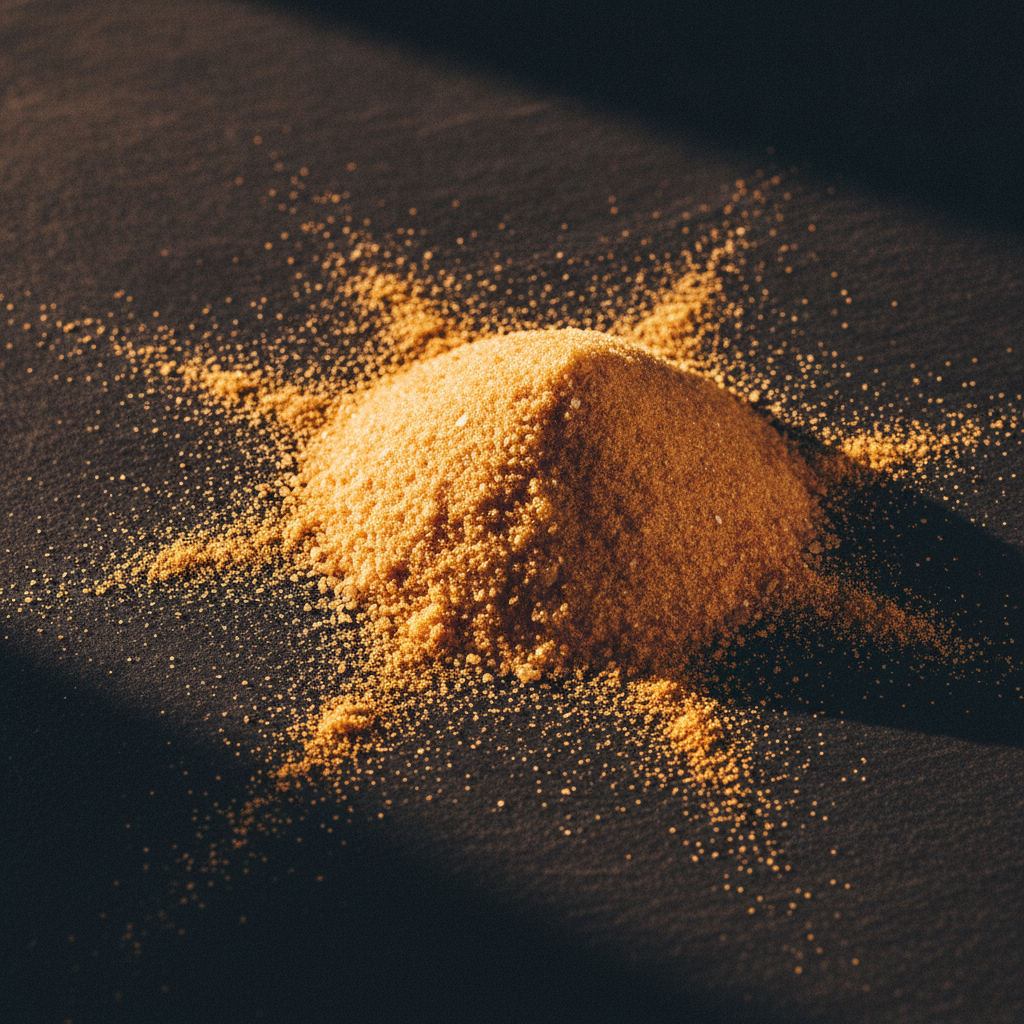
- Appearance: Fine, light-yellow to orange crystalline powder
- Production route: Predominantly manufactured industrially by microbial fermentation followed by extraction and purification; the specific extraction ratio and process parameters for this material are not yet confirmed
- Certifications: Bionutricia’s manufacturing facility holds FSSC 22000, JAKIM Halal, GMP, HACCP, MeSTI and US FDA facility registration; a batch-specific documentation pack for this CoQ10 powder is not yet confirmed
What Coenzyme Q10 is, chemically
Coenzyme Q10 is the common name for ubiquinone-10, a lipid-soluble benzoquinone carrying a side chain of ten isoprenoid units (CAS 303-98-0). It belongs to the same broad family of fat-soluble quinone compounds as vitamin K, and it occurs naturally in the inner mitochondrial membrane of virtually every cell, where it functions as an electron carrier in cellular energy metabolism and as a lipid-soluble antioxidant. The “10” in CoQ10 refers to the number of isoprenoid units in the side chain — the human and most mammalian form — distinguishing it from the shorter-chain ubiquinones found in some other organisms.
Because the molecule is almost entirely hydrocarbon in character outside its quinone head group, it behaves like other large fat-soluble actives: it is stable as a dry crystalline powder under normal storage, but it does not behave like a water-soluble ingredient once it is added to an aqueous system (Pastor-Maldonado et al., International Journal of Molecular Sciences, 2020; DOI 10.3390/ijms21228432).
The assay marker: ubiquinone-10
For a bulk powder specification, the marker compound that a certificate of analysis should name is ubiquinone-10 (the fully oxidised, all-trans form of CoQ10). A related reduced form, ubiquinol-10, can also occur and is sometimes supplied as a distinct raw material; the two interconvert biologically but are typically specified and assayed separately because they are different compounds with different stability profiles. For a plain bulk CoQ10 powder, the specification sheet should state clearly which form (ubiquinone or ubiquinol) the batch is standardised to, since this determines the correct assay method and expected purity range.
Assay methods: how purity is confirmed
The standard analytical method for confirming CoQ10 identity and purity in raw material is high-performance liquid chromatography (HPLC), typically with UV detection at the wavelength characteristic of the quinone chromophore. A single-laboratory validation study published the HPLC-UV method used across the industry for determining ubidecarenone (CoQ10) content in raw materials and dietary supplements, establishing the method’s accuracy and reproducibility for this ingredient (Orozco et al., Journal of AOAC International, 2007; 90(5):1227–1236; PMID 17955966).
What a buyer should look for on the COA:
- Marker compound named: ubiquinone-10 (or ubiquinol-10, whichever form is being supplied)
- Assay method stated: HPLC, ideally with the specific method reference
- Assay value reported: the percentage purity of the batch by HPLC
- Batch identification: a lot number linking the COA to the specific batch
- Standard supporting parameters: heavy metals and microbial limits, alongside the identity and assay results
Standardised bulk powder vs uncontrolled crude material
The distinction that matters for procurement is between a standardised bulk CoQ10 powder — purified, assayed by HPLC and backed by a batch-specific COA — and an uncontrolled crude material with no declared purity and no batch-to-batch consistency guarantee. Because CoQ10 does not occur in commercially useful concentrations in any common food crop, essentially all bulk CoQ10 on the market has already been through a purification step; the real specification question is how tightly that purification and the resulting assay are documented and verified per lot.
| Parameter | Standardised bulk powder | Uncontrolled crude material |
|---|---|---|
| Marker compound | Ubiquinone-10, declared and assayed | Not declared; purity unverified |
| Assay method | HPLC, reported on COA | Not reported |
| Purity | Stated percentage, batch-verified | Unknown; may include unspecified diluents |
| Batch consistency | Verified per lot by COA | Unverified; varies lot to lot |
| Formulation dosing | Predictable — assay % known per gram | Unpredictable — assay % unknown |
How bulk CoQ10 powder is produced
Commercial CoQ10 is predominantly produced industrially by microbial fermentation — using selected bacterial or yeast strains that biosynthesise ubiquinone-10 — followed by cell disruption, extraction and multi-step purification to a crystalline powder. Fermentation is the dominant commercial route because it yields the natural all-trans configuration of the molecule, and a recent review consolidates the strain-engineering and process advances behind current microbial CoQ10 production (Fan et al., World Journal of Microbiology and Biotechnology, 2022; 38:194; DOI 10.1007/s11274-022-03326-0). The specific extraction ratio, solvent system and process parameters used for any particular batch of bulk powder are manufacturer-specific and are not yet confirmed for this material — request the process summary alongside the COA when evaluating a supplier.
Solubility and formulation considerations
CoQ10 is practically insoluble in water and freely soluble in fats, oils and most organic solvents — a limitation that has driven a substantial body of formulation research into delivery systems that can carry the molecule into aqueous or semi-aqueous applications (Pastor-Maldonado et al., 2020). For a plain bulk powder, this means the ingredient needs to be pre-dispersed in an oil phase, an emulsifier system or a compatible carrier before it is added to a water-based product; simply stirring the dry powder into an aqueous mix will not disperse it evenly. With the correct dispersion approach, plain CoQ10 powder is used in beverages and cordials, ice-cream and frozen desserts, bakery systems, sachet drink mixes, dry powder blends and cosmetic applications. The fine crystalline powder can also impart a pale yellow tint to a finished product, which is a formulation consideration where visual clarity matters.
Supplying Coenzyme Q10 powder in bulk
Bionutricia Extract can source plain, non-liposomal bulk CoQ10 powder for supplement and functional-food brands. A dedicated eStore listing for this specific bulk powder grade is not yet live; in the meantime, tell us your target assay percentage, form (ubiquinone or ubiquinol) and application and we will quote bulk pricing, lead time, a sample and the certificate of analysis for the batch on offer.
For specifications, samples and bulk quotations, contact our team or message us on WhatsApp at +60 12 622 6918.
Related ingredient guides
- CoQ10 Ingredient Bulk: Grades, Bioavailability & How to Source
- Nanoemulsion vs Liposomal Encapsulation: Which Delivery System for Your Actives?
- Water-Soluble vs Oil-Soluble Botanical Extracts: A Formulator’s Guide
Frequently asked questions
What is Coenzyme Q10 (CoQ10) and how is it usually supplied in bulk? CoQ10 is a fat-soluble isoprenoid benzoquinone (ubiquinone-10) found naturally in cell mitochondria. In bulk B2B supply it is most commonly sold as a plain, non-liposomal crystalline powder standardised to a stated purity confirmed by HPLC, distinct from lipid-encapsulated or other specialist delivery formats.
What is the standardisation marker for CoQ10, and how is it assayed? The marker is ubiquinone-10, or ubiquinol-10 for the reduced-form raw material. Purity is confirmed by HPLC, typically with UV detection, following validated methods such as the single-laboratory validation published for raw-material and supplement CoQ10 determination (Orozco et al., 2007).
Is CoQ10 powder water-soluble, and what applications does that suit? No — CoQ10 is practically insoluble in water and freely soluble in fats and oils. Once pre-dispersed in a compatible oil phase, emulsifier system or carrier, it is used in beverages and cordials, ice-cream and frozen desserts, bakery systems, sachet drink mixes, dry powder blends and cosmetic applications.
How is bulk CoQ10 powder produced? Commercial CoQ10 is predominantly manufactured by microbial fermentation using selected bacterial or yeast strains, followed by extraction and purification to a crystalline powder, because fermentation yields the natural all-trans configuration of the molecule (Fan et al., 2022).
What is the difference between standardised bulk CoQ10 powder and an uncontrolled crude material? A standardised bulk powder has a declared ubiquinone-10 (or ubiquinol-10) assay confirmed by HPLC on a batch-specific certificate of analysis, with verified purity and consistency lot to lot. An uncontrolled crude material has no declared purity and no batch-to-batch verification, so its actual CoQ10 content is unknown.