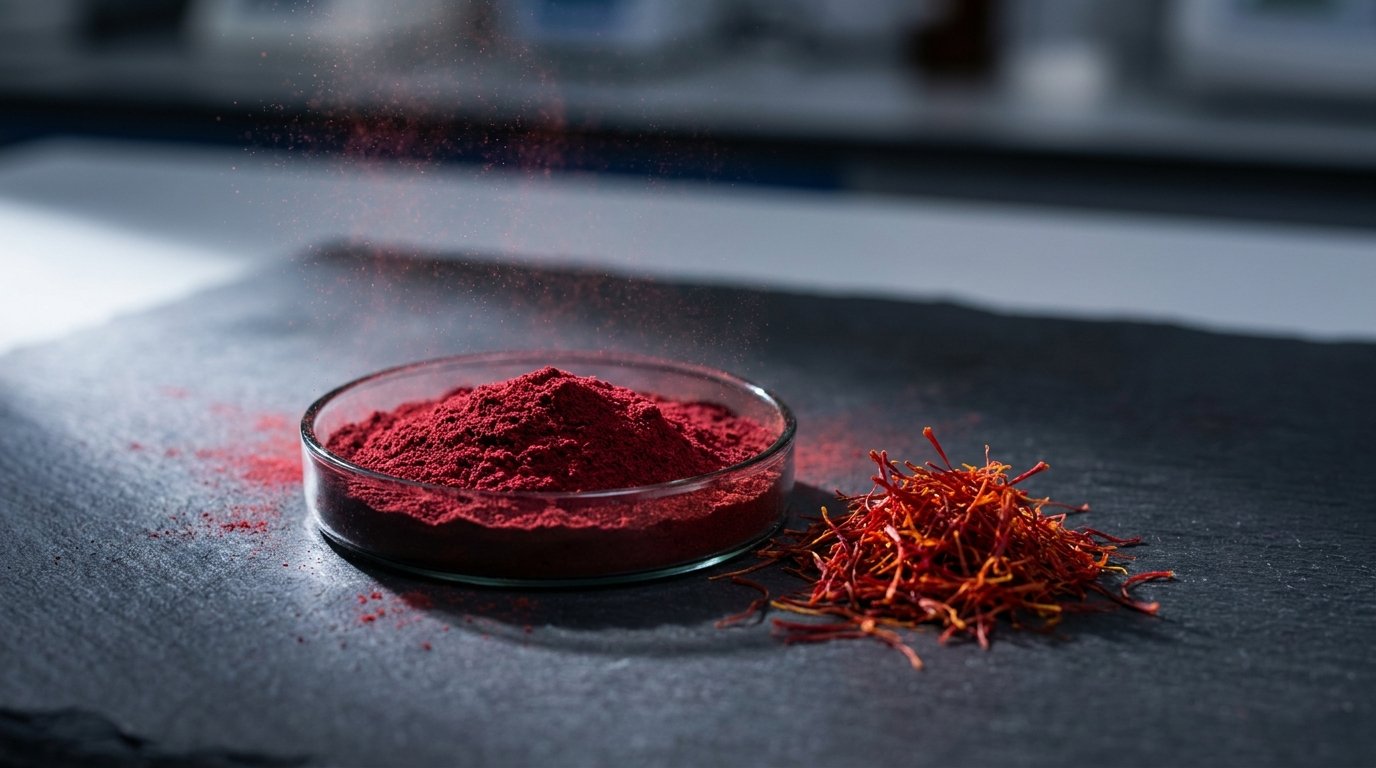
Saffron extract (Crocus sativus) — a concentrated, standardised raw material for food and supplement brands seeking natural colour, aroma and consistent bioactive markers. This guide helps procurement, R&D and formulation teams evaluate crocin / crocetin / safranal specifications, authenticate batches, and design stable finished products that meet market rules.
Quick facts & why source from a B2B specialist
- Botanical / part: Crocus sativus, stigma
- Forms: water/hydroalcoholic extracts, CO2 fractions, spray-dried carrier powders
- Markers: crocins (colour, water-soluble), crocetin, safranal (volatile aroma)
- Function: natural yellow–orange colour, aroma, and potential bioactive properties (research-backed)
- Typical shelf life: 12–24 months sealed — validate in final matrix
- Supplier value: lot COAs, annotated chromatograms, adulteration screening and food-safety credentials (reduces development risk and regulatory friction for brands)
For related guidance on delivery and colour use-levels see our delivery systems guide and natural food colouring article.
Standardisation & authentication — crocin and safranal
Ask suppliers to declare which marker(s) they standardise to and to provide the method. Common, practical requirements for B2B procurement:
- Quantitative assay: HPLC for crocin/crocetin (report mg/g or % w/w), GC‑MS for safranal if aroma is a selling point.
- Chromatograms: annotated lot-level HPLC chromatogram showing retention times and peak areas; UV‑Vis colouring-strength data where requested.
- Adulteration screening: targeted tests for safflower, turmeric and synthetic dyes; DNA barcoding for raw botanical identity where available.
- Reporting format: COA with method details, limits, and units — critical for comparing suppliers.
Useful peer-reviewed references: a review of saffron constituents and analytics (PMC4599112), an updated narrative review of saffron bioactives (PMC10400758), and an analytical study covering crocin, crocetin and safranal (PubMed 33356506).
Formulation, stability & packaging guidance
- Match form to function: use crocin-rich water extracts or water-dispersible powders for colour in aqueous products; use CO2 or oil-based fractions for aroma delivery.
- Microencapsulation: protects volatile safranal from loss during processing and storage and aids incorporation into dry mixes.
- Thermal and oxidative sensitivity: safranal is heat- and oxidation-sensitive; validate aroma retention in pilot runs and include antioxidants or protective carriers when permitted.
- Packing: opaque, airtight containers with nitrogen flush or oxygen-scavenging liners preserve pigment and aroma; recommend clear storage instructions (cool, dry, dark).
- Stability testing: accelerated and real-time stability in the finished matrix are mandatory for label claims and shelf-life assignment.
Regulatory considerations, supplier checklist & typical spec
Regulatory classification varies by country and by intended use (colouring, flavouring, supplement ingredient). Brands must confirm allowable use levels and labelling rules before launch. Use this supplier checklist when qualifying lots:
- Lot COA with crocin/crocetin assay (mg/g or %), annotated chromatogram and method used.
- Adulteration and authenticity screening report.
- Heavy metals, pesticide residues, mycotoxin and microbial testing.
- Traceability documents: batch trace, country of origin and supplier contact.
- Relevant certifications for your markets (e.g., Halal, GMP, FSSC 22000) if required.
- Stability data or commitment to co-develop stability testing in your SKU.
| Parameter | Example value |
|---|---|
| Form | Spray-dried powder (carrier-bound) or liquid extract |
| Crocin (assay) | reported as mg/g or % w/w per COA |
| Safranal | reported if aroma claimed (GC-MS) |
| Moisture | < 8–10% (powder) |
| Packing | 1 kg, 5 kg, 20 kg or OEM bulk |