Clean-label beverages and ice-cream with a red dragon fruit, coconut water and monk fruit matrix — usage level, stability and processing
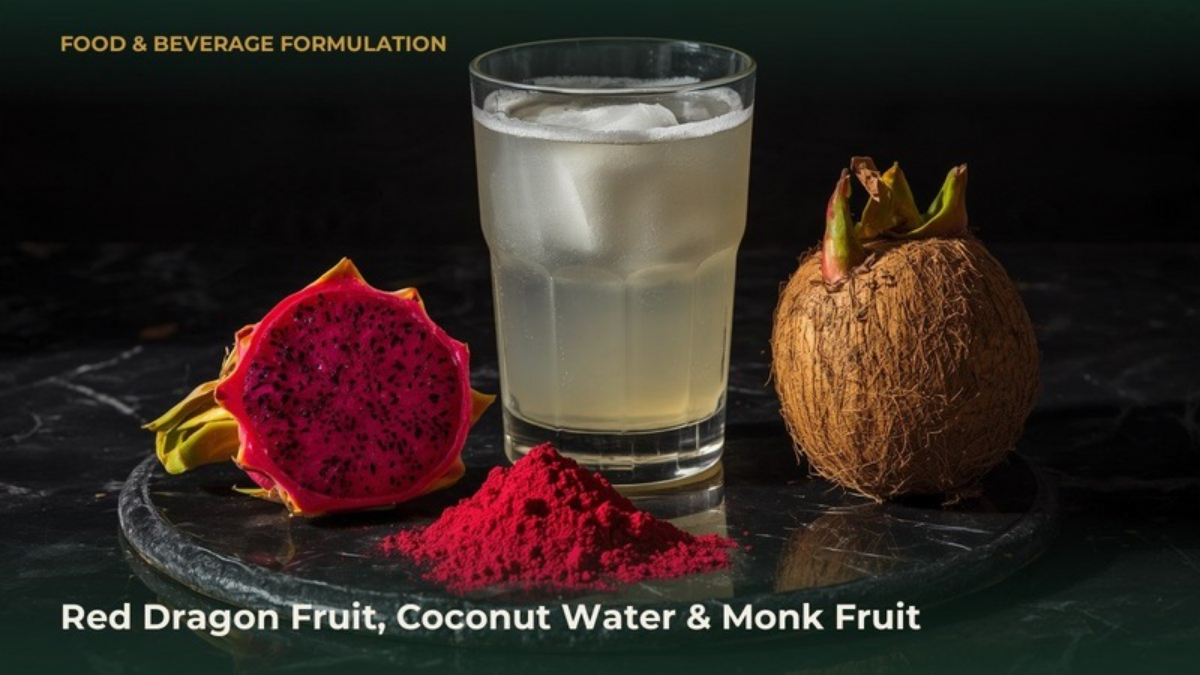
Formulator’s summary: A red dragon fruit (Hylocereus polyrhizus), coconut water (Cocos nucifera) and monk fruit (Siraitia grosvenorii) matrix for beverages, with ice-cream as a secondary application. The marker-standardised dragon fruit extract supplies consistent active-marker specification batch to batch. Red dragon fruit use is stated at 2–6% of total weight on the product page; monk fruit addition is set by formulation trials.
Quick facts for formulators
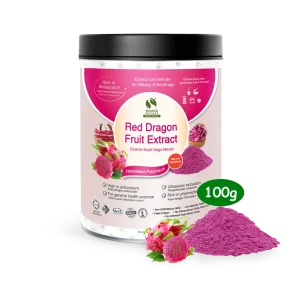
- Red dragon fruit: water-soluble extract powder; red-purple colour; 2–6% of total weight stated on the product page.
- Coconut water: spray-dried powder on starch hydrolysate; natural flavour and low water content.
- Monk fruit: extract powder containing mogrosides, including mogroside V; dosage depends on product-development requirements.
- Shared storage: sealed packaging, below 25°C and below 65% relative humidity; 24-month shelf life stated per product.
What is this three-ingredient matrix?
This is a formulation concept for beverage developers combining red dragon fruit (Hylocereus polyrhizus) extract powder, spray-dried coconut water powder (Cocos nucifera) and monk fruit (Siraitia grosvenorii) extract powder. Each ingredient page identifies a distinct function: red-purple colour and water solubility for dragon fruit, coconut-water flavour for the beverage base, and mogrosides as monk fruit sweetening compounds. This matrix combines colour, base flavour and sweetness — each supplied as a separate catalogue ingredient with its own published specification.
What buyer question does this matrix answer?
This matrix addresses how a beverage developer can plan a three-ingredient blend when each powder has its own specification and the complete formulation requires product-specific trials. The primary application is beverages, with ice-cream as a secondary use.
For red dragon fruit the product page states a use range of 2–6% of total weight. Coconut water powder and monk fruit inclusion are set against the target flavour and sweetness in the intended base.
How should the three ingredients be specified?
| Component | Formulation role in the matrix | What to determine in development |
|---|---|---|
| Red dragon fruit powder | Colour-bearing fruit ingredient. | Confirm target colour and sensory profile at the selected use level in the intended base. |
| Coconut water powder | Beverage base component carrying natural flavour. | Assess flavour contribution and dispersion in the chosen base. |
| Monk fruit extract powder | Sweetening component. | Determine inclusion through sensory and formulation trials; check the lot specification for mogroside content. |
Buyers should review the current specification and certificate of analysis for each component lot before finalising a purchasing specification. The product information identifies betacyanin as a compositional marker for dragon fruit and mogroside V for monk fruit; actual assay percentages should be confirmed from the lot documentation.
How can usage levels be developed?
Use the dragon-fruit product-page range of 2–6% of total weight as the starting interval, then evaluate the selected level in the finished beverage base. Record colour appearance and sensory attributes at each trial point.
Set monk fruit addition by controlled sensory trials in the complete matrix. The product page states that dosage depends on product-development requirements. Determine coconut water powder inclusion against the target flavour profile and solids contribution.
- Record the weight basis used for each addition; keep dragon-fruit inclusion within the product-page range.
- Document the monk-fruit grade and lot specification.
- Record the coconut-water powder lot and its stated carrier.
- Evaluate the complete blend in the intended drink base; treat any ice-cream version as a separate trial.
What processing and stability checks are relevant?
Select tests that match the intended process and compare the blend before and after the relevant production steps. Retain observations on colour, flavour, appearance and dispersion through the planned product evaluation.
For the beverage route verify dispersion in the actual base at the intended addition sequence. Water solubility of the red dragon fruit component should be confirmed in the specific beverage system, as behaviour can vary with base composition and processing conditions.
For ice-cream and frozen desserts develop and assess the formulation separately. Test the combined matrix for freezing behaviour, texture and colour retention through product-specific trials.
Raw-ingredient storage conditions do not replace finished-product shelf-life validation. The individual product pages state a 24-month shelf life for sealed packs stored below 25°C and below 65% relative humidity. Determine finished-product packaging and shelf-life conditions from the buyer’s complete formulation.
What should a buyer check before scale-up?
Use a document-led qualification process. Match the botanical and common names on purchasing records to the product pages, confirm the current specification and certificate of analysis for each supplied lot, and record the carrier information where stated. The three components have distinct roles and different public specification detail, so acceptance criteria should be written separately.
- Confirm red dragon fruit solubility, colour description and the 2–6% use range against current product documentation.
- Record coconut water powder spray-dried form and starch-hydrolysate carrier.
- Request the monk fruit specification showing identity and assay basis.
- Review the certificate of analysis and lot documentation for each component.
- Set separate beverage and frozen-dessert trial protocols before commercial scale-up.
Supplying red dragon fruit and related ingredients in bulk
Bionutricia’s published range includes red dragon fruit extract powder, coconut water powder and monk fruit extract powder as separate catalogue ingredients. Buyers planning this combination can use each component’s current specification and certificate of analysis as the basis for their own formulation evaluation. The published pages list spray-dried and powder forms and storage under sealed conditions.
Relevant product pages provide ingredient-level details for red dragon fruit (Hylocereus polyrhizus) extract powder, coconut water powder and monk fruit extract powder. The company publishes FSSC 22000, JAKIM Halal, GMP, HACCP, MESTI and US FDA facility registration among its quality credentials.
For individual component guidance, see the red dragon fruit ingredient guide, the coconut water powder formulation guide and the monk fruit ingredient guide.
Frequently asked questions
What dragon-fruit inclusion level is stated for the matrix? The product page states 2–6% of total weight. That range applies to the red dragon fruit component, not to the complete three-ingredient blend.
Does the product information specify a monk fruit use level? No fixed rate is given; set the inclusion through sensory trials with the complete matrix using the lot specification as a reference.
What does coconut water powder contribute to the blend? Its product page describes a spray-dried powder carried on starch hydrolysate, with natural flavour and low water content. Assess final flavour and dispersion in the target base.
How should combined stability be assessed for beverages and ice-cream? Formulate and test the complete blend under the intended beverage process or frozen-dessert conditions to establish finished-product stability characteristics.
Request component specifications
Request the certificate of analysis, specification sheet and a sample of red dragon fruit (Hylocereus polyrhizus) extract powder, coconut water powder and monk fruit (Siraitia grosvenorii) extract powder. Submit a custom premix brief specifying each component along with your target application, batch size and required documentation so that appropriate lot specifications and blending guidance can be prepared.