Phytosterol (Plant Sterol) Powder: Sterol Composition, GC Assay Methods and Bulk Specification for Formulators
Formulator’s summary: Phytosterols (plant sterols) are plant-derived compounds that share cholesterol’s steroid ring structure but differ in side-chain substitution and ring saturation. The three major dietary phytosterols — beta-sitosterol, campesterol and stigmasterol — make up the bulk of the naturally occurring sterol pool in vegetable oils, nuts, seeds and whole grains. A standardised phytosterol powder specifies total sterol content and the individual sterol-type breakdown on the certificate of analysis, confirmed by gas chromatography (GC), so that every batch delivers a known, reproducible sterol profile. Supplied as a fine powder, it is intended for dry-blend and fortification systems — bakery systems, sachet drink mixes, dry powder blends, ice-cream and frozen desserts, beverages and cordials, and cosmetic applications — where a declared, GC-verified sterol content is a formulation requirement.
Quick facts for formulators
- Source: Plant-derived sterol complex, recovered and purified from vegetable-oil processing streams
- Major sterol types: Beta-sitosterol, campesterol, stigmasterol (the three major dietary phytosterols)
- Structural relationship: Shares cholesterol’s steroid ring nucleus; differs in side-chain and ring saturation
- Assay method: Gas chromatography (GC), reporting total sterol content and individual sterol-type breakdown
- Total sterol assay / sterol-type ratio (this batch): Not yet confirmed for this batch — request the current lot COA
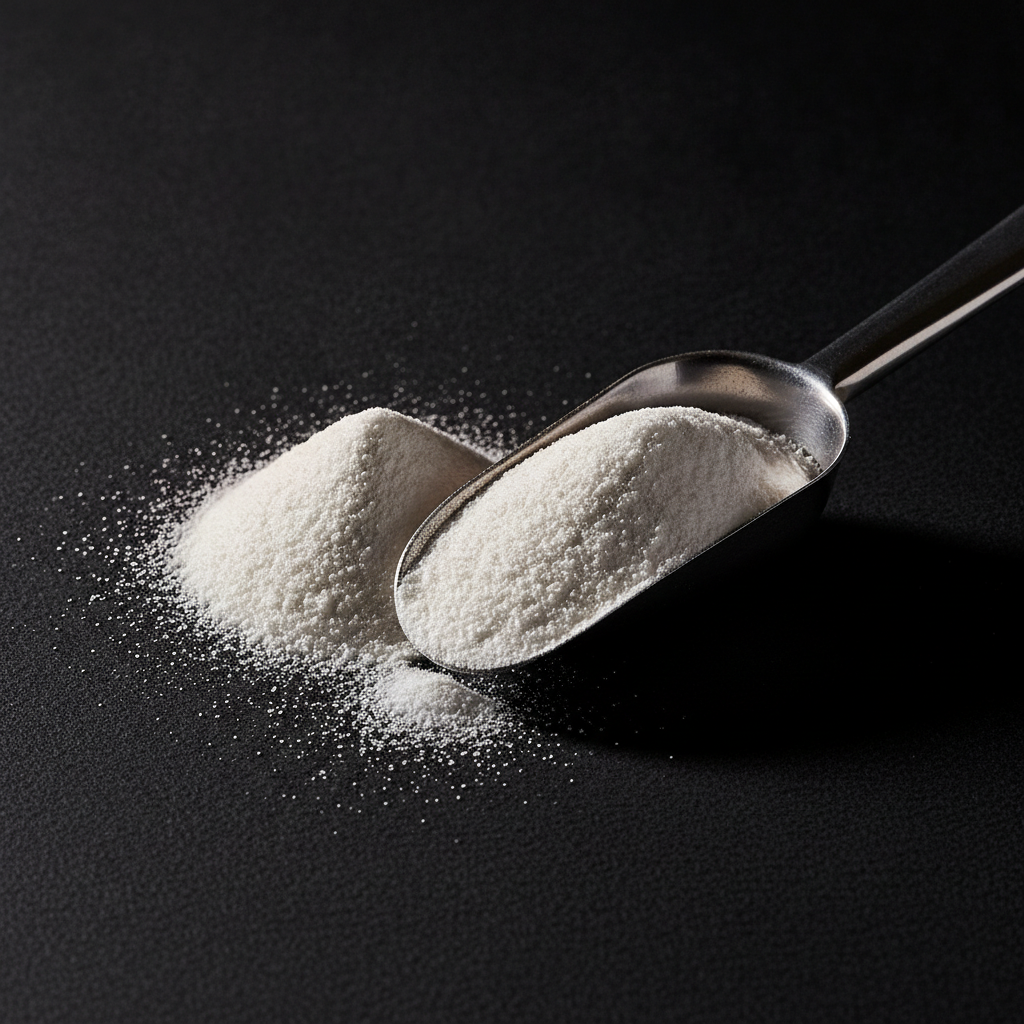
- Form / colour: Fine powder, white to off-white
- Particle size / mesh (this batch): Not yet confirmed for this batch — request the current lot COA
- Solubility: Free sterols are poorly water-soluble; typically pre-dispersed or emulsified for beverage systems, used directly in dry-blend systems
- Certifications: FSSC 22000, JAKIM Halal facility, GMP, HACCP, MeSTI, US FDA facility registration
- Processing location: Malaysia (FSSC 22000 / JAKIM Halal / US FDA-registered facility)
- Dietary context: Typical mixed-diet sterol intake is approximately 150-400 mg/day (population reference; not a batch dosage figure)
What is phytosterol (plant sterol) powder?
Phytosterols, also called plant sterols, are a family of steroid compounds naturally present in vegetable oils, nuts, seeds, legumes and whole grains. Industrially, they are recovered and concentrated from vegetable-oil processing streams into a standardised powder ingredient, giving formulators a consistent, easy-to-dose sterol complex rather than the variable trace amounts found in whole foods.
Chemical structure and the major dietary phytosterols
Phytosterols share the same core steroid ring system as cholesterol but differ in the structure of the side chain and in the degree of ring saturation, with functional groups commonly located at the C3, C4, C7, C12 and C17 positions. This structural similarity to cholesterol underlies phytosterols’ role in intestinal cholesterol handling. The three compounds that make up the bulk of dietary phytosterol intake are beta-sitosterol, campesterol and stigmasterol; together they typically account for a combined dietary intake of roughly 150-400 mg per day from a mixed diet (Foods, 2024; 13(11):1754). A standardised phytosterol powder concentrates this same sterol family into a declared blend, reporting the proportion of each sterol type on the certificate of analysis.
Assay method: confirming sterol content by GC
Gas chromatography (GC) is the internationally recognised analytical method for quantifying sterol content and composition in plant-derived ingredients. The determination of individual and total sterol content by GC is described in ISO 12228-1:2014, the international standard method for animal and vegetable fats and oils, and the same chromatographic principle is applied to sterol powders and fortified foods. GC separates the individual sterol compounds in a sample and quantifies each against a reference standard, producing a chromatogram with a distinct peak for beta-sitosterol, campesterol, stigmasterol and any minor sterol present.
What a buyer should look for on the COA:
- Total sterol content declared: the overall percentage of sterols in the powder
- Sterol-type breakdown reported: the individual percentages of beta-sitosterol, campesterol and stigmasterol (and any minor sterols)
- Assay method stated: GC, ideally referencing the ISO 12228 methodology
- Batch identification: lot number linking the COA to the specific batch
- Particle size / mesh: reported where the application requires a defined particle size
Bionutricia’s current phytosterol powder batch documentation, including the exact total sterol assay and sterol-type ratio, is not yet confirmed for this article; the figures on the lot-specific certificate of analysis are the figures to use for formulation and release testing.
Free sterol powder vs plant sterol esters
Phytosterols are sold in two principal forms, and the distinction is a specification difference that affects both solubility and application. Free phytosterol powder is the unmodified sterol complex, dosed and blended as a dry powder. Plant sterol esters are produced by esterifying the free sterol with a fatty acid, which increases fat solubility and is the form most commonly used in fat-continuous systems. This guide covers the free phytosterol powder grade for dry-blend and fortification systems.
| Parameter | Free phytosterol powder | Plant sterol ester |
|---|---|---|
| Chemical form | Unmodified sterol (free -OH group) | Sterol esterified with a fatty acid |
| Fat solubility | Lower | Higher |
| Typical carrier systems | Dry powder blends, sachet drink mixes, bakery systems | Fat-continuous systems |
| Assay convention | Reported as free sterol content by GC | Reported as free-sterol-equivalent content by GC |
Clinical evidence: plant sterols and LDL cholesterol
The cholesterol-lowering effect of dietary plant sterols and stanols is one of the most extensively studied relationships in functional food science. A meta-analysis of randomised controlled trials found that plant sterol/stanol-containing products lowered LDL cholesterol by an average of 0.31 mmol/L compared with placebo (AbuMweis, Burr & Jones, Food and Nutrition Research, 2008; PMC2596710), with the effect influenced by the food carrier and by the frequency and timing of intake. This body of evidence underpins the authorised health claim permitting foods delivering at least 3 g/day of plant sterols/stanols to state an LDL-cholesterol-lowering effect under EU Regulation (EC) No 1924/2006, Article 19. This is scientific and regulatory background on the ingredient category; it is not an efficacy claim for this specific batch or product, and any finished-product health claim remains the brand owner’s regulatory responsibility in their target market.
Manufacturing and purification
Plant sterols are commercially recovered from vegetable-oil processing by-products, such as the deodoriser distillate generated during vegetable oil refining, or from tall oil. The crude sterol fraction is separated, purified and crystallised to concentrate the sterol content, then dried and milled to the target powder particle size. Bionutricia’s specific process parameters and yield figures for this ingredient line are not yet confirmed for this article; contact our team for the process summary and current specification.
Solubility and formulation considerations
Phytosterols in free form are poorly soluble in water, a property inherent to their steroid structure. In bakery systems, sachet drink mixes and dry powder blends, the fine powder can be incorporated directly as a dry ingredient. In beverages and cordials, the powder benefits from pre-dispersion with an emulsifier or carrier before addition to the main batch, to achieve an even suspension rather than settling. In ice-cream and frozen desserts, the fat phase of the formulation assists dispersion of the sterol powder. Phytosterols are also used in cosmetic applications as skin-conditioning and emollient ingredients, taking advantage of the same lipid-compatible structure that assists their incorporation into fat-continuous food systems.
Supplying phytosterol powder in bulk
Bionutricia Extract supplies phytosterol (plant sterol) powder as a bulk B2B/OEM ingredient from a facility holding FSSC 22000, JAKIM Halal, GMP, HACCP, MeSTI and US FDA facility registration. Every batch ships with a certificate of analysis; request the current lot COA for the confirmed total sterol content and sterol-type breakdown before finalising a formulation. Bulk supply, custom specification, documentation and export paperwork, and packing options are available on request.
Buyers formulating cholesterol-management or functional-beverage systems may also want to review our dandelion extract powder, which carries phytosterols alongside chicoric acid as a marker constituent, or the standardised botanical extract COA requirements guide for how to read a marker-compound certificate of analysis.
For specifications, samples, and bulk quotations, contact our team or message us on WhatsApp at +60 16-661 8510.
Related ingredient guides
- Dandelion Extract Powder (Taraxacum officinale)
- Standardised Botanical Extract COA Requirements: Marker Compounds, Assay Methods and Acceptance Criteria
Frequently asked questions
What are the major sterol types in a standardised phytosterol powder? Beta-sitosterol, campesterol and stigmasterol are the three major dietary phytosterols and the compounds a standardised powder should report on its certificate of analysis, individually and as a total sterol figure.
What assay method confirms sterol content and composition? Gas chromatography (GC) is the standard method, following the analytical principle set out in ISO 12228-1 for sterol determination. The COA should state the method, the total sterol content, and the individual sterol-type breakdown for the batch.
Is phytosterol powder water-soluble? Free phytosterols are poorly water-soluble. For beverages and cordials, the powder is typically pre-dispersed with an emulsifier or carrier; in dry-blend systems such as bakery systems, sachet drink mixes and dry powder blends, the powder can be incorporated directly.
What is the difference between phytosterol powder and plant sterol esters? Free phytosterol powder is the unmodified sterol; plant sterol esters are esterified with a fatty acid for higher fat solubility, and are the form most used in fat-continuous systems. Bionutricia supplies both forms — this guide covers the free powder grade.
What formats can a brand owner make with it? Bionutricia supplies the bulk ingredient for B2B formulation; brand owners formulate it into beverages and cordials, ice-cream and frozen desserts, bakery systems, sachet drink mixes, dry powder blends and cosmetic applications.
Is there clinical evidence behind plant sterols and cholesterol? Yes — a meta-analysis of randomised controlled trials found an average LDL-cholesterol reduction of 0.31 mmol/L with plant sterol/stanol intake, and an EU health claim authorises foods delivering at least 3 g/day of plant sterols/stanols to state an LDL-lowering effect. This is ingredient-category evidence, not a claim about this specific batch.
Request a bulk phytosterol powder quote →