Soursop Extract for the Functional Beverage Market: Acetogenin Standardisation and Solubility for RTD Applications
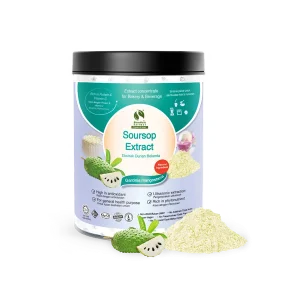
Formulator’s summary: Soursop (Annona muricata) is supplied as two distinct extract formats for the functional beverage market: a fruit extract powder (20:1) that contributes a sweet tropical flavour and nutritional content, and a leaf extract powder (100:1) standardised for acetogenin content at 0.01–0.02%. For ready-to-drink beverage formulation, the fruit extract powder is the primary choice because it disperses readily in water, carries the characteristic creamy-sour soursop flavour, and contributes protein and vitamin C. The leaf extract powder, standardised for acetogenins, is the functional-ingredient grade where phytochemical standardisation is the formulation requirement. Both formats are water-dispersible and suitable for ready-to-drink beverages, cordials and sachet drink mixes. The standardised active marker for the leaf extract is the acetogenin fraction, with annonacin as the most studied compound. Buyers should be aware that EFSA published a risk assessment in 2020 flagging neurotoxicity concerns associated with acetogenin intake, and should review this assessment before formulating soursop leaf extract into any beverage product.
Quick facts for formulators
- Botanical: Annona muricata (Annonaceae)
- Two formats: Fruit extract powder (20:1) and leaf extract powder (100:1)
- Key marker (leaf): Acetogenins, standardised at 0.01–0.02%
- Key nutrients (fruit): Protein, vitamin C, dietary fibre
- Extraction method: Patented enzymatic ultrasonic extraction (MY-188945-A)
- Solubility: Water-dispersible; fruit powder rehydrates readily in warm water
- Best applications: Ready-to-drink beverages, cordials, sachet drink mixes, functional beverage premixes
- Certifications: FSSC 22000, JAKIM Halal, GMP, HACCP, MeSTI, US FDA facility registration
Soursop fruit extract vs soursop leaf extract for beverage formulation
The two soursop extract formats serve different formulation purposes in the functional beverage market, and they are not interchangeable. Understanding the distinction is the first specification decision.
| Parameter | Soursop fruit extract powder (20:1) | Soursop leaf extract powder (100:1) |
|---|---|---|
| Plant part | Ripe fruit pulp | Leaf |
| Key composition | Protein, vitamin C, dietary fibre | Acetogenins (0.01–0.02%) |
| Flavour profile | Sweet, tropical, creamy-sour soursop flavour | Herbaceous, mild |
| Primary beverage role | Flavour and nutrition ingredient | Functional ingredient where acetogenin standardisation matters |
| Typical usage rate | 2–6% of total weight in beverage | Determined by desired acetogenin content, calculated from COA assay |
| Solubility | Rehydrates readily in warm water | Water-dispersible |
For a ready-to-drink soursop-flavoured beverage, the fruit extract powder is the primary ingredient — it delivers the flavour, the nutritional content and the sensory profile that consumers associate with soursop. The leaf extract powder is a separate functional ingredient for formulations where acetogenin standardisation is the specification requirement, not flavour.
Acetogenin standardisation: the marker for soursop leaf extract
Annonaceous acetogenins are a class of long-chain fatty acid derivatives unique to the Annona genus. They are the characteristic phytochemicals of soursop leaf and the primary marker compound that distinguishes genuine soursop leaf extract from generic plant powder. The most studied acetogenin is annonacin.
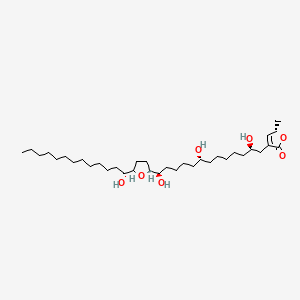
For procurement, acetogenin content is the single most important specification for soursop leaf extract powder. A review of Annona muricata phytochemistry documented the acetogenin constituents and their structural diversity across the Annona genus (International Journal of Molecular Sciences, 2015; PMC4519917). A 2026 study examined the analytical detection of acetogenins in starch and pectin fractions extracted from Annona muricata, confirming that acetogenin detection and quantification are achievable through analytical methods (Phyton, 2026; DOI 10.32604/phyton.2026.076197). Buyers should verify that the COA reports the acetogenin assay value and the analytical method used.
Solubility and dispersion for ready-to-drink applications
For ready-to-drink beverage formulation, solubility and dispersion behaviour are critical. Soursop fruit extract powder rehydrates readily in warm water, releasing the characteristic soursop aroma. In a ready-to-drink system, the powder should be pre-dispersed in a small volume of warm water before adding to the main batch to ensure uniform distribution. The fruit extract contributes a cloudy, opaque visual profile — typical of a soursop smoothie or nectar — rather than a clear beverage. This is a formulation consideration: soursop fruit extract is suited to opaque or cloudy ready-to-drink beverages, cordials and dairy systems, not clear beverages.
Soursop leaf extract powder is water-dispersible and can be incorporated into ready-to-drink beverages at the dose determined by the desired acetogenin content, calculated from the COA assay value. The leaf extract has a milder, more herbaceous flavour profile than the fruit extract, which may require flavour masking or complementary flavour ingredients in a beverage formulation.
Regulatory considerations: the EFSA risk assessment
Formulators considering soursop leaf extract for a functional beverage must be aware of the regulatory landscape. The European Food Safety Authority (EFSA) published a risk assessment in 2020 regarding the use of Annona muricata in food, flagging neurotoxicity concerns associated with acetogenin intake (EFSA Journal, 2020; PMC7691614). A systematic review in the Journal of Pharmacy and Pharmacology also examined the safety and tolerability of Annona muricata leaf extract (PMID 31659754).
These assessments mean that soursop leaf extract formulated into a beverage product may face regulatory restrictions in certain markets — particularly the EU. Buyers should review the EFSA assessment, check the regulations of their destination market, and ensure their formulations and labelling comply before launching a product containing soursop leaf extract. The soursop fruit extract, which is not standardised for acetogenin content, may face fewer restrictions, but formulators should still verify regulatory status in the target market.
Standardised extract vs crude powder
The distinction between a standardised soursop extract and a crude ground-plant powder is a specification and quality-control difference. A standardised soursop fruit extract has a declared extraction ratio (20:1), confirmed nutritional content, and a COA covering identity, moisture, heavy metals and microbial limits per batch. A standardised soursop leaf extract has a declared extraction ratio (100:1), a confirmed acetogenin content (0.01–0.02%), and a COA covering the same parameters plus the acetogenin assay. Batch-to-batch consistency is verifiable through the COA.
A crude ground-plant powder — whether from fruit or leaf — has no concentration step, no marker assay and no batch consistency guarantee. For a functional beverage where consistent flavour, nutritional content or acetogenin dose per serving is a requirement, a standardised extract with full COA documentation is the grade to specify.
Supplying soursop extract and related ingredients in bulk
Bionutricia Extract supplies both soursop fruit extract powder (20:1) and soursop leaf extract powder (100:1, standardised at 0.01–0.02% acetogenins) from its manufacturing facility in Sungai Buloh, Malaysia, under FSSC 22000, GMP, HACCP, JAKIM Halal, MeSTI and US FDA facility registration. Every batch ships with a certificate of analysis. Bulk supply, custom specification and extract ratio, spray-dried and powder forms, documentation and export paperwork, and packing options are available on request.
Buyers formulating soursop into functional beverages may also need companion ingredients from the published range: soursop fruit extract powder for the primary beverage flavour, or soursop leaf extract powder for the functional-ingredient grade. The soursop powder bulk buyer’s guide covers the full specification, COA and application data.
For specifications, samples, and bulk quotations, contact our team or message us on WhatsApp at +60 16-661 8510.
Order sample quantities or bulk standardised soursop extract from our eStore at https://bionutriciaextract.com/product/soursop-fruit-annona-muricata-standardized-extract-powder/.
Related ingredient guides
- Soursop Powder Bulk Buyer’s Guide: Specification, COA and Application Data
- Formulating Botanical Extracts into Functional Beverages
- Banana Powder: What It Is, How It’s Made and How to Buy in Bulk
Frequently asked questions
How stable are acetogenins in soursop extract when formulated into functional beverages? Acetogenin stability in a finished beverage depends on pH, temperature, light exposure and storage time. Acetogenins are complex lipid-soluble compounds that may degrade under acidic conditions or prolonged heat treatment. Formulators should conduct accelerated shelf-life testing in the specific beverage matrix to confirm acetogenin retention over the target shelf life, and should review the EFSA 2020 risk assessment on acetogenin intake before formulating soursop leaf extract into any beverage product.
What solubility grade should I specify for a ready-to-drink soursop beverage? For a ready-to-drink beverage, specify a water-dispersible extract powder that rehydrates without sediment. Soursop fruit extract powder (20:1) rehydrates readily in warm water and is the primary choice for a soursop-flavoured RTD. Soursop leaf extract powder (100:1) is water-dispersible and is used where acetogenin standardisation is the formulation requirement. Pre-disperse in a small volume of warm water before adding to the main batch.
What is the difference between soursop fruit extract and soursop leaf extract for beverage formulation? Soursop fruit extract powder is made from the ripe fruit and delivers the sweet, tropical, creamy-sour soursop flavour plus protein and vitamin C — it is the primary ingredient for a soursop-flavoured beverage. Soursop leaf extract powder is made from the leaf and is standardised for acetogenin content (0.01–0.02%) — it is a functional ingredient where phytochemical standardisation matters, not flavour. The two are not interchangeable.
Are there regulatory restrictions on soursop in beverage products? Yes. The European Food Safety Authority published a risk assessment in 2020 flagging neurotoxicity concerns associated with acetogenin intake from Annona muricata (EFSA Journal, 2020; PMC7691614). Buyers should review this assessment and check the regulations of their destination market before formulating soursop leaf extract into a beverage. The soursop fruit extract, which is not standardised for acetogenin content, may face fewer restrictions, but regulatory status should still be verified.
What should I look for on the COA when buying soursop extract for RTD beverages? For soursop fruit extract: request botanical identity (Annona muricata), extraction ratio (20:1), moisture, particle size, heavy metals and microbial limits. For soursop leaf extract: additionally request the acetogenin assay value (0.01–0.02%) and the analytical method used. Confirm each parameter per batch to ensure consistent dosing in the finished beverage.