Reviewed by Dr Yong Yi Yi, Bionutricia
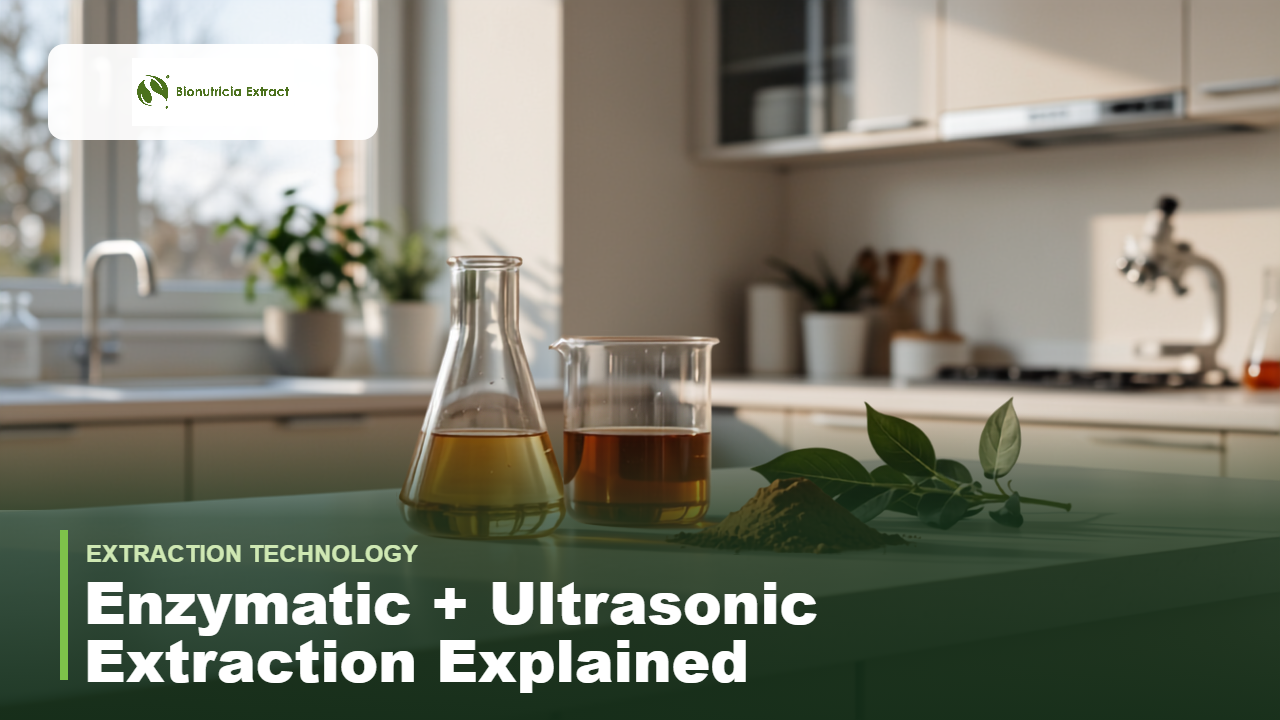
Enzymatic and ultrasonic extraction is a two-part method for releasing a plant’s active compounds: food-grade enzymes gently break down cell walls so the target actives are freed, while controlled ultrasonic energy improves the release without the harsh, prolonged heat of conventional extraction. The result is a higher yield of intact actives from the same raw material. This guide explains how the process works and what it means when you source a bulk botanical extract.
Quick facts
- What it is: enzyme-assisted extraction supported by controlled ultrasonic energy
- Why it matters: higher active yield, gentler on heat-sensitive compounds, shorter process time
- Bionutricia’s process: patented as “Process for Preparing Nutritional Powder Extract” (MY-188945-A)
- Backed by: FSSC 22000, GMP, HACCP, JAKIM Halal, US FDA registration, MeSTI & NanoVerify; per-lot testing
What is enzymatic, ultrasonic-supported extraction?
Every botanical actives sit inside plant cells, locked behind rigid cell walls made largely of cellulose, pectin and other structural polysaccharides. Conventional extraction relies on solvent and heat, often for long periods, to break through those walls — which also exposes delicate compounds to thermal stress. Enzyme-assisted extraction takes a different route: selected food-grade enzymes are used to digest the cell-wall structure, opening the cells so the target actives can be released efficiently at milder conditions. Ultrasonic support adds controlled acoustic energy that promotes the movement of actives out of the plant matrix. Used together, the two techniques do the mechanical work that heat and time would otherwise have to do — but more selectively.
How is it different from conventional solvent extraction?
Traditional maceration or reflux extraction pushes solvent through plant material and leans on temperature and dwell time to pull actives out. It works, but it has trade-offs: heat-sensitive compounds can degrade, extraction can be slow, and yields from tough or fibrous material can be modest. Enzyme-assisted, ultrasonic-supported extraction targets the barrier itself — the cell wall — rather than relying on brute-force heat. Because the actives are released more readily, the process can run at gentler conditions and finish faster, which helps preserve the integrity of the very compounds a buyer is paying for. For a broader comparison of downstream drying choices, see our guide on spray-drying versus linked below.
Why the process produces a better extract
For a B2B ingredient buyer, three benefits matter most:
- Higher active yield: freeing actives at the cell-wall level recovers more of the target compounds from each kilogram of raw botanical, which supports a more concentrated, standardisable extract.
- Gentler on sensitive actives: milder conditions reduce thermal stress on heat-labile compounds, helping the finished extract better reflect the profile of the source plant.
- Cleaner, greener process: shorter processing and efficient release support a more resource-efficient operation — a growing priority for buyers assessing supplier sustainability.
None of this changes what an extract is — it is still defined by its species, plant part, extraction ratio and marker/assay figure. What the method changes is how completely and how gently those actives are captured, which shows up as consistency batch to batch.
What it means when you’re sourcing in bulk
A more efficient, gentler extraction is only useful if it is reproducible. That is where manufacturing discipline matters as much as the technique. A credible extract should arrive with a defined specification — species and plant part, extraction ratio, a marker or assay value, and full contaminant limits — and a batch-specific Certificate of Analysis that evidences them. The extraction method underpins consistency; the quality system proves it. When you compare suppliers, ask not only how the extract is made but how each lot is standardised and released, and request the documentation pack that backs those claims.
The patented process behind Bionutricia extracts
Bionutricia’s extraction technology is protected by Malaysian patent MY-188945-A, officially titled “Process for Preparing Nutritional Powder Extract” (inventor: Ng Kuak Ping; applicant: Bio Nutricia Mfg Sdn Bhd). It covers the enzymatic and ultrasonic approach described above, applied through to the preparation of a stable powder extract. In line with normal trade-secret practice, we describe the method and its benefits — higher active yield, gentler processing and shorter cycle times — but do not publish the specific enzymes, solvents or process parameters involved.
This extraction patent is distinct from our Herbosomal® technology, a separate registered trademark and patent-pending (PI2023005773) liposomal encapsulation and sustained-release system used for compounds such as vitamins, amino acids and minerals. Extraction and encapsulation are two different steps in our capability — we keep them clearly separated so buyers know exactly which technology applies to their ingredient.
How Bionutricia applies enzymatic + ultrasonic extraction
Bionutricia is a Malaysian botanical-extract manufacturer founded in 2006, with more than 20 years of R&D and 15 years of manufacturing behind a catalogue serving 239+ brand partners. Extraction runs inside a food-safety system certified to FSSC 22000, with GMP, HACCP, JAKIM Halal, US FDA registration, MeSTI and NanoVerify. From raw-material intake through in-process control to finished-goods release, each lot is tested for identity, strength and contaminants, and every bulk shipment is accompanied by a batch-specific Certificate of Analysis. The extraction technology sets the ceiling for quality; the quality system is what delivers it consistently, drum after drum.
Want to see how our extraction translates into a specific ingredient spec?
Related guides
Frequently asked questions
What is enzyme-assisted extraction?
It is an extraction method that uses selected food-grade enzymes to break down plant cell walls so the target actives are released more efficiently, allowing the process to run at gentler conditions than conventional heat-and-solvent extraction.
How does ultrasonic extraction help?
Controlled ultrasonic energy promotes the release and movement of actives out of the plant matrix, complementing the enzymatic step so that more of the target compounds are recovered without prolonged heat exposure.
Does enzymatic extraction increase the yield of actives?
By opening cell walls at the structural level rather than relying on heat and time alone, the method typically recovers more of the target actives from the same raw material, supporting a more concentrated and consistently standardisable extract.
Is Bionutricia’s extraction process patented?
Yes. The enzymatic and ultrasonic extraction process is protected by Malaysian patent MY-188945-A, “Process for Preparing Nutritional Powder Extract.” The specific enzymes, solvents and parameters are proprietary and not published.
Is this the same as Herbosomal® encapsulation?
No. Extraction (MY-188945-A) and Herbosomal® liposomal encapsulation (a registered trademark, patent-pending PI2023005773) are separate technologies. Extraction captures the actives from the plant; Herbosomal® encapsulates certain compounds for sustained release.