Private Label vs OEM vs Contract Manufacturing for Botanical Extracts
The difference between OEM, private label and contract manufacturing comes down to who owns the formulation and how much of the product is custom. Private label means putting your brand on a manufacturer’s existing, ready-made product; OEM (original equipment manufacturing) means the manufacturer produces a product to your specification and often to your own formulation; and contract manufacturing is the broad umbrella term for outsourcing production to a third-party facility under a supply agreement. For botanical extracts specifically, these models decide whether you launch fast on a proven ingredient or build a differentiated, custom-encapsulated product of your own. Bionutricia Extract, Southeast Asia’s only manufacturer with Herbosomal® technology, offers all three models from its FSSC 22000-certified facility in Sungai Buloh, Selangor.
The three models at a glance
- Private label: manufacturer’s existing product, your brand — fastest, lowest development cost, least differentiation
- OEM: made to your specification or formulation — highest differentiation, more development work
- Contract manufacturing: the umbrella term — outsourcing production; private label and OEM are both forms of it
- Bionutricia offers: all three, plus Herbosomal® encapsulation for eligible ingredients
- MOQ & pricing: on quotation · COA: every batch
What is the difference between OEM, private label and contract manufacturing?
The three terms overlap in everyday use, but each describes a distinct commercial relationship:
| Model | Who owns the formulation | Degree of customisation | Best for |
|---|---|---|---|
| Private label | The manufacturer (you licence/buy an existing product) | Low — mainly branding, packaging, pack size | Fast launch, testing a market, filling a range gap |
| OEM | Often the brand (made to your spec/formula) | High — custom formulation, actives, format, standardisation | Differentiated products, proprietary blends, custom encapsulation |
| Contract manufacturing | Either — depends on the agreement | Variable — the umbrella term covering both above | Outsourcing production at scale under a supply contract |
In practice, “contract manufacturing” is the parent category; private label and OEM are two ways of contracting a manufacturer. A brand may even mix them — private-labelling a standard extract to launch quickly, then moving to an OEM formulation once the product proves itself.
Private label — fastest route to market
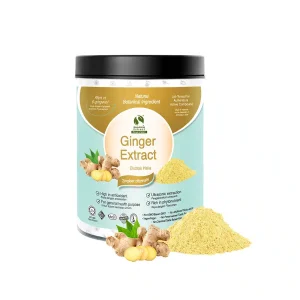
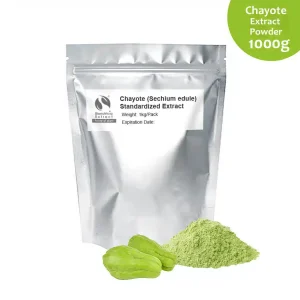
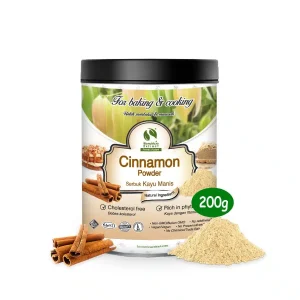
With private label, you select a product the manufacturer already makes — say, a standardised tongkat ali extract or a butterfly pea flower powder — and sell it under your own brand and packaging. The formulation, specification and documentation already exist, so lead times and minimum orders are typically lower and there is little development work. The trade-off is differentiation: because the underlying product is available to other buyers too, your edge comes from branding, positioning, market access and price rather than the ingredient itself. Private label suits brands testing a new category, filling a gap in an existing range, or launching on a tight timeline.
OEM — a product built to your specification
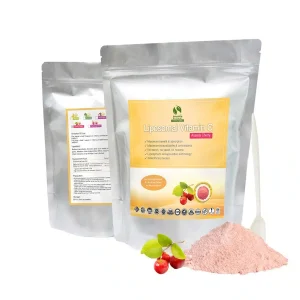
OEM is the route for brands that want something the market does not already offer. Here the manufacturer produces to your brief: your target actives, standardisation, particle size, format (powder or liquid), and — with Bionutricia Extract — the option of Herbosomal® liposomal encapsulation for vitamins, minerals, amino acids and selected actives where an encapsulated delivery format is the differentiator. You can supply your own formulation or co-develop one with our technical team. OEM involves more up-front development and documentation than private label, but it produces a genuinely proprietary product that competitors cannot simply buy off the shelf. It is the natural path for brands building a defensible position on bioavailability, a signature blend or a novel format.
Contract manufacturing — the umbrella, and what it means for botanical extracts
Contract manufacturing is the general practice of outsourcing production to a specialist facility under a supply agreement, rather than owning a plant yourself. For botanical extracts, choosing a contract manufacturer means you rely on their extraction capability (for example, our patented enzymatic + ultrasonic extraction — Malaysian patent MY-188945-A — for higher active-compound yield), their quality systems, and their certifications. The manufacturer handles sourcing of raw botanicals, extraction, standardisation, quality control and batch documentation; you handle the brand, regulatory registration in your market, and go-to-market. The decision that matters most is the facility’s certifications and traceability, because those determine how easily the finished ingredient clears your QA and your export markets.
How to choose — and how Bionutricia Extract supports each model
Choose private label when speed and simplicity matter most and an existing product fits your range. Choose OEM when differentiation, a proprietary formulation or a custom encapsulated format is worth the extra development. In both cases you are contract manufacturing — outsourcing production to a certified third party. Bionutricia Extract supports the full spectrum from its Selangor facility: a 100+ species A–Z botanical catalogue for private label, full OEM development including Herbosomal® encapsulation for eligible ingredients, and a single quality and certification framework behind every batch — JAKIM Halal, FSSC 22000, US FDA registered, GMP, HACCP, MeSTI and NanoVerify. Every order ships with a Certificate of Analysis and the export documentation your market requires, with MOQ and pricing provided on quotation.
Frequently Asked Questions
Q: What is the difference between OEM, private label and contract manufacturing?
A: Private label puts your brand on a manufacturer’s existing product; OEM produces a product to your own specification or formulation; contract manufacturing is the umbrella term for outsourcing production to a third-party facility. Private label and OEM are both forms of contract manufacturing.
Q: Which is cheaper — private label or OEM?
A: Private label usually has lower development cost and faster lead times because the product already exists. OEM costs more up front due to formulation and documentation work, but delivers a differentiated, proprietary product. Pricing for both is provided on quotation.
Q: Can I start with private label and move to OEM later?
A: Yes. Many brands launch on a private-label extract to test the market, then move to an OEM formulation — for example adding Herbosomal® encapsulation — once the product is established.
Q: Do you offer Herbosomal® encapsulation under OEM?
A: Yes, for eligible ingredients such as vitamins, minerals and amino acids. Herbosomal® is our registered-trademark liposomal encapsulation and sustained-release technology (patent-pending, PI2023005773); see our pillar guide for how it works. Separately, our extraction process itself is patented — enzymatic + ultrasonic extraction, Malaysian patent MY-188945-A.
Q: What is the minimum order quantity?
A: MOQ depends on the ingredient and the manufacturing model. Exact MOQ, tiered pricing and lead time are provided on quotation.
Related Guides
Ready to choose the right manufacturing model for your botanical extract? Contact Bionutricia Extract for bulk pricing, COA, and FSSC 22000 documentation. Email: ng@bio-nutricia.com | bionutriciaextract.com/contact