Caramel (Caramelum)
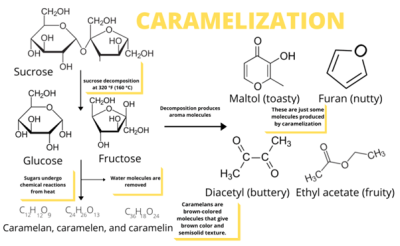
Caramel is an orange-brown confectionery product made by a process called caramelization. It is usually formed when sugars are being heated at temperature above 80 °C, at pH 3-9. As the sugar heats, the molecules break down and reform into compounds with a characteristic colour and flavour called caramel. Caramel is used as pigment for food additive and consumed widely around the world.
There are 4 distinct types of caramel color to satisfy the requirements of different food and beverage systems (JECFA 1992; Codex 1996):
Caramel Color I (also known as plain or spirit caramel)
Caramel Color II (caustic sulfite caramel)
Caramel Color III (ammonia or beer caramel, baker’s and confectioner’s caramel)
Caramel Color IV (known as sulfite-ammonia, soft drink caramel, or acid-proof caramel).
Melanoidins are responsible for the caramel’s brownish colour, which is caused by the Maillard reaction, a chemical reaction that produces melanoidins and other substances.
Caramelized sucrose contains 3 main products: a dehydration product, caramelan; and two polymers, caramelen and caramelin
High Standard Product Quality Control
We provide practical, easy & consistent on food processing application.
Fresh natural flavor extract powder for Bakery & Beverage.
Vegan, Non-GMO, No Fillers, No Flavors, No Additives, No Artificial Colors, Soy and Gluten Free, Lab Tested for Authentic & Active Compound
1. Antioxidant

Antioxidant
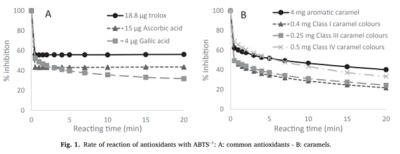
Caramels have been shown to possess measurable antioxidant capacity in laboratory assays and in a Caenorhabditis elegans model (Journal of Functional Foods, 2020; DOI: 10.1016/j.jff.2020.104308). This describes a property measured in those studies, not an effect in humans.
Usages:
- Flavouring and colouring in food and beverage
Caramel Powder 200g -Sprinkle on Ice-Cream, Coffee, Fresh Fruit
- Vegan
- Non-GMO
- No Fillers
- No Flavors
- No Additives
- No Preservatives
- No Artificial Colors
- Soy and Gluten-Free
Reference
- Investigation of the antioxidant capacity of caramels: Combination of laboratory assays and C. elegans model
DOI: 10.1016/j.jff.2020.104308