
Description
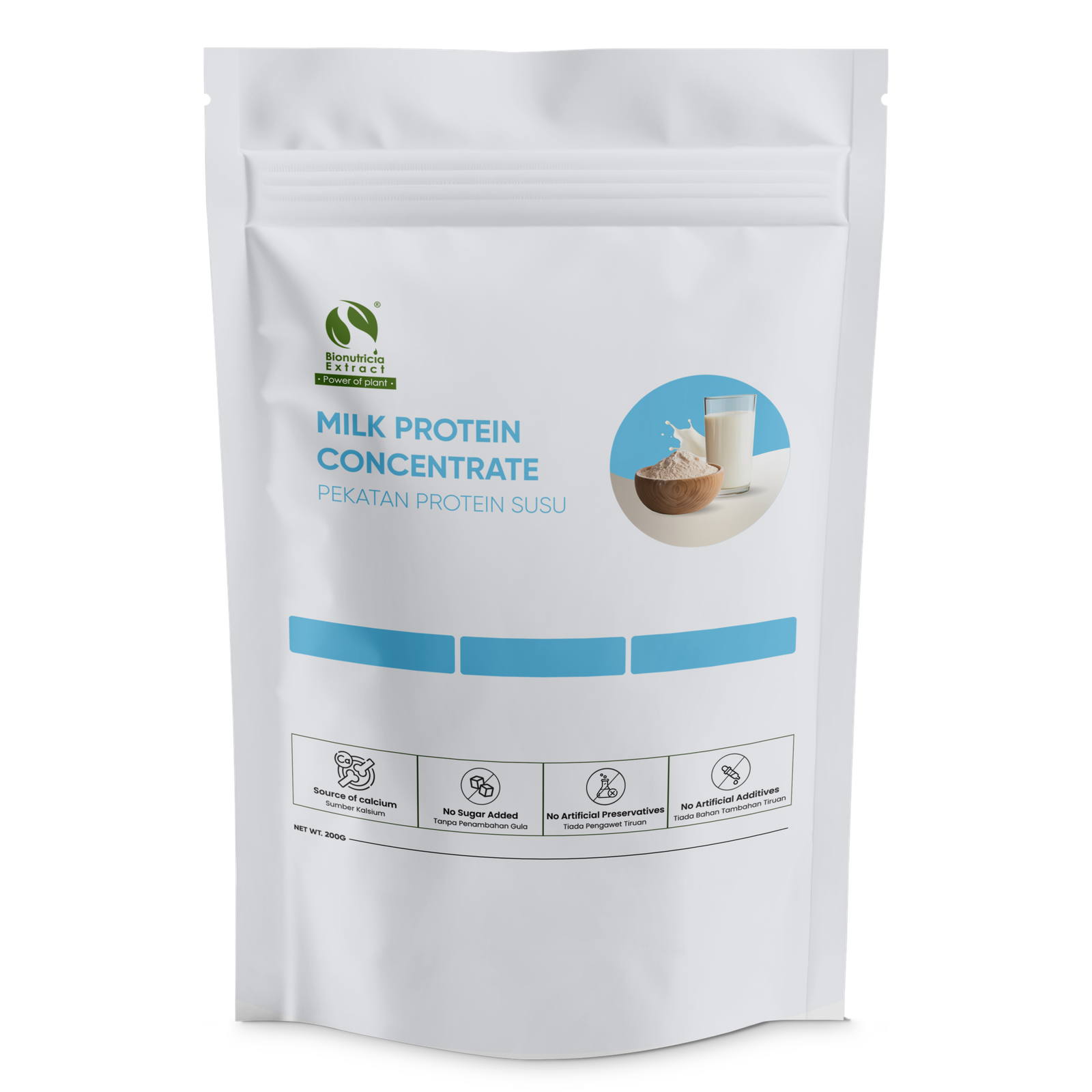
Milk protein concentrate is what you get when you take milk and keep the protein. The water, most of the lactose and nearly all of the fat are filtered out; what is left is a fine, creamy-white powder that is about 70% protein. Ours is exactly that and nothing else — no sweetener, no flavoring, no thickeners, no instantizers, no emulsifiers.
It is a plain, honest dairy protein you can add to the food and drinks you already make.
Why milk protein, not just whey
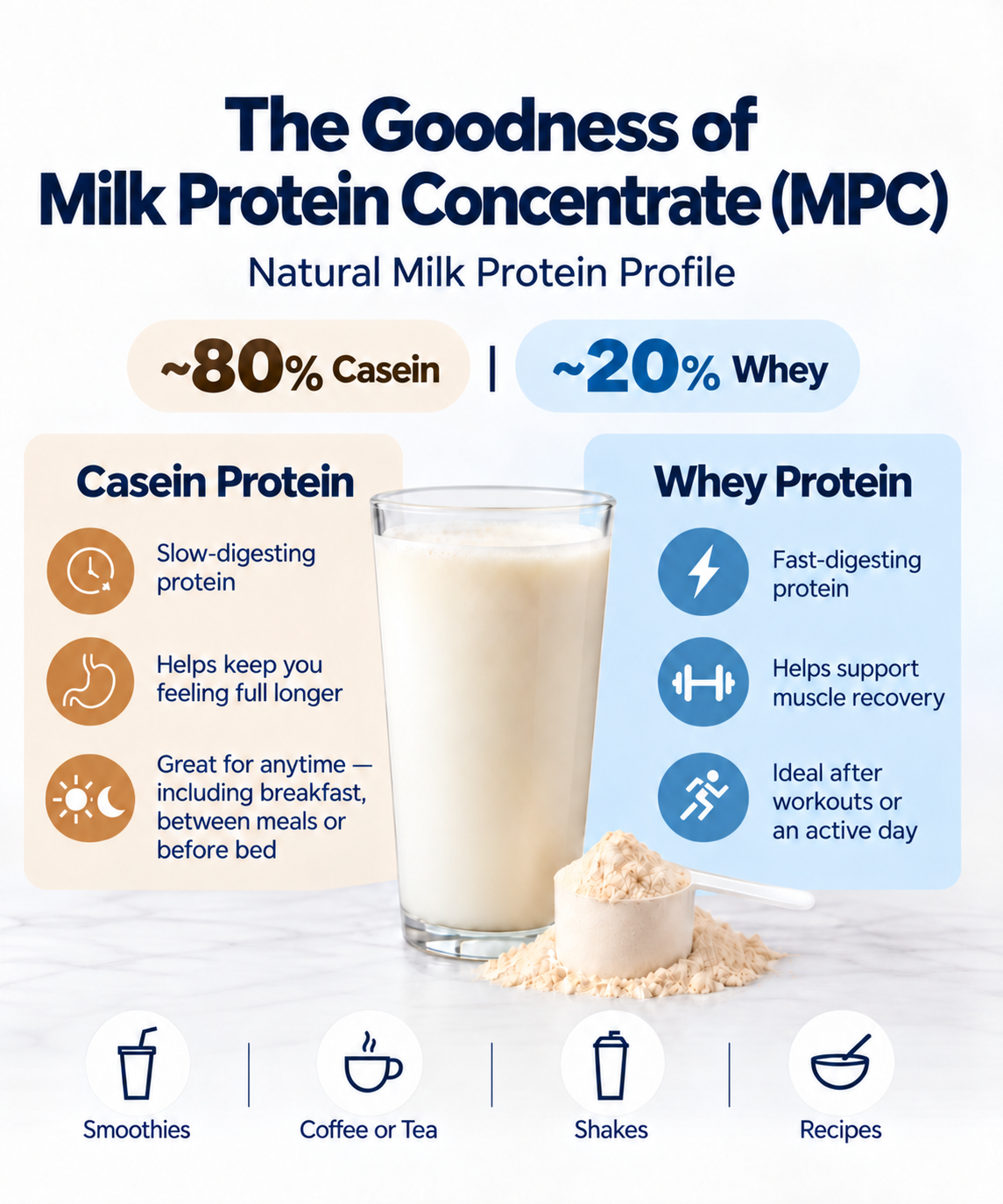
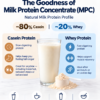
Most protein powders are whey. Milk protein keeps both of the proteins milk naturally contains, in roughly the proportions milk has them:
| Casein (about 80%) | Whey (about 20%) | |
|---|---|---|
| How it digests | Slowly | Quickly |
| What that means | A steadier release that helps you stay full for longer | Absorbed fast, which is why whey is popular after exercise |
| Good for | Breakfast, between meals, before bed | After a workout or an active day |
You get both in one scoop, without buying two products.
Pure, natural, nothing added
- Just milk protein. Many protein powders are coated with instantizing agents or emulsifiers so they disappear into water on contact. We leave all of that out. What you get is pure milk protein, and it mixes the way real milk protein naturally does — a quick shake, whisk or blend and it turns smooth and creamy.
- A clean, natural milk taste. Unflavored and unsweetened, so it takes on the flavor of whatever you add it to: coffee, cocoa, fruit, oats.
- Naturally creamy. Casein gives a thicker, richer body than whey alone — it is what makes it so good in smoothies and lattes.
- No added sugar. The only sugar is the lactose naturally present in milk, about 1.8 g per 10 g serving.
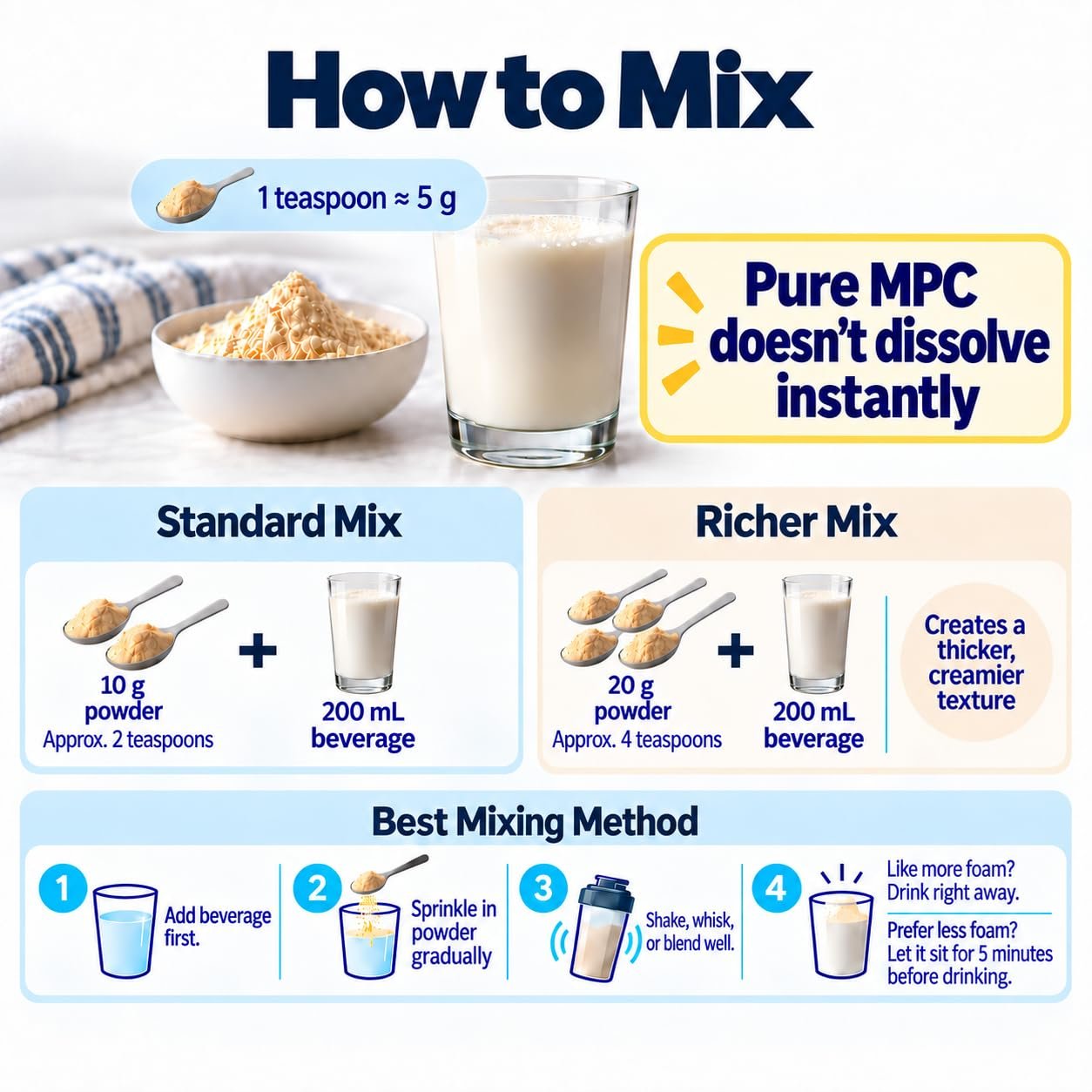
How to mix
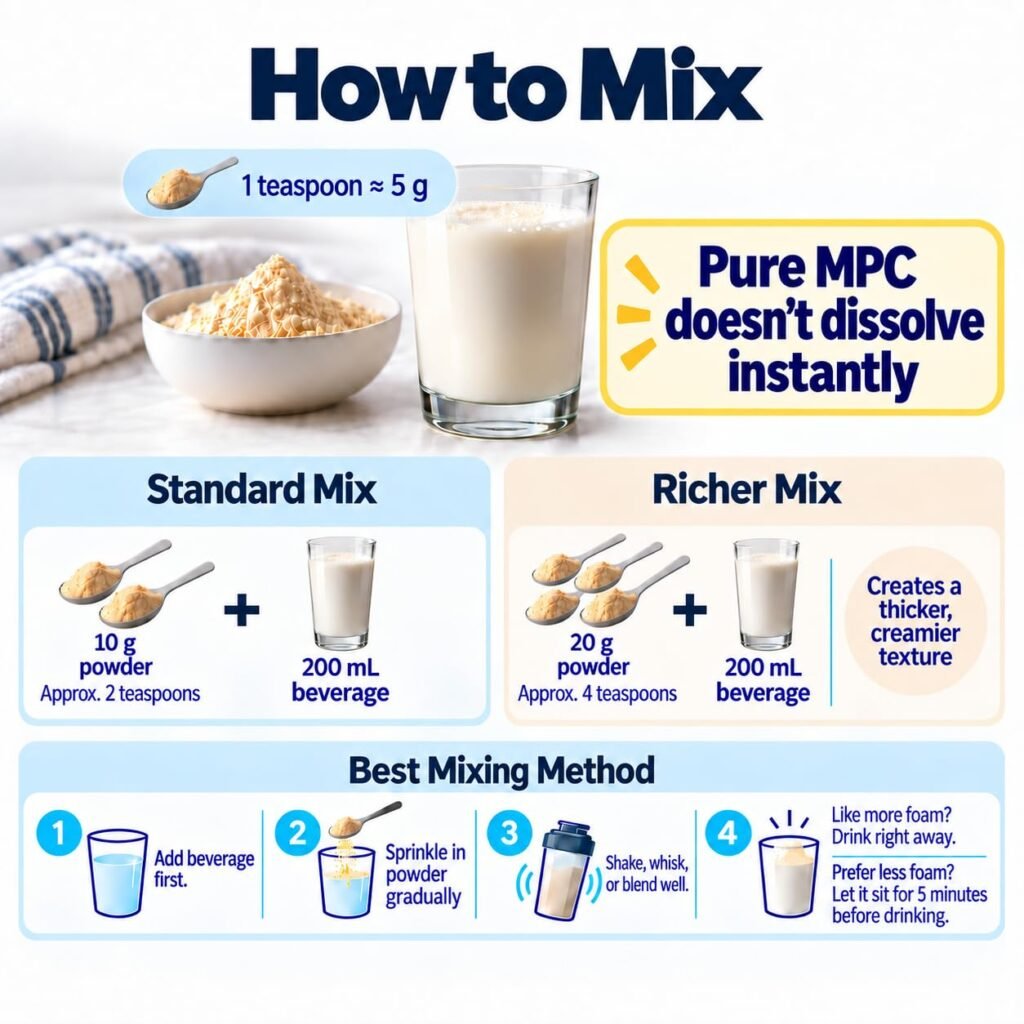
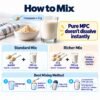
| Powder | Beverage | |
|---|---|---|
| Standard mix | 10 g (about 2 teaspoons) | 200 mL |
| Richer mix — thicker, creamier | 20 g (about 4 teaspoons) | 200 mL |
- Add your beverage first — milk, coffee, a smoothie base or water.
- Sprinkle in the powder gradually.
- Shake, whisk or blend well. A shaker bottle, milk frother or blender gives the smoothest result.
- Like more foam? Drink it right away. Prefer less? Let it sit for 5 minutes before drinking.
Ways to use it
Add 10–20 g to your food or drink and mix well. It can be taken with a meal or before one.
- Coffee or tea: froth it into your milk, then add to your cup for a creamier latte.
- Smoothies and shakes: blend it in with fruit, milk or yogurt — the easiest way to use it.
- Oats and cereal: stir into overnight oats or porridge once it has cooked.
- Yogurt: fold a scoop through Greek or plain yogurt.
- Baking: swap a little of the flour in pancakes, muffins or bread for extra protein.
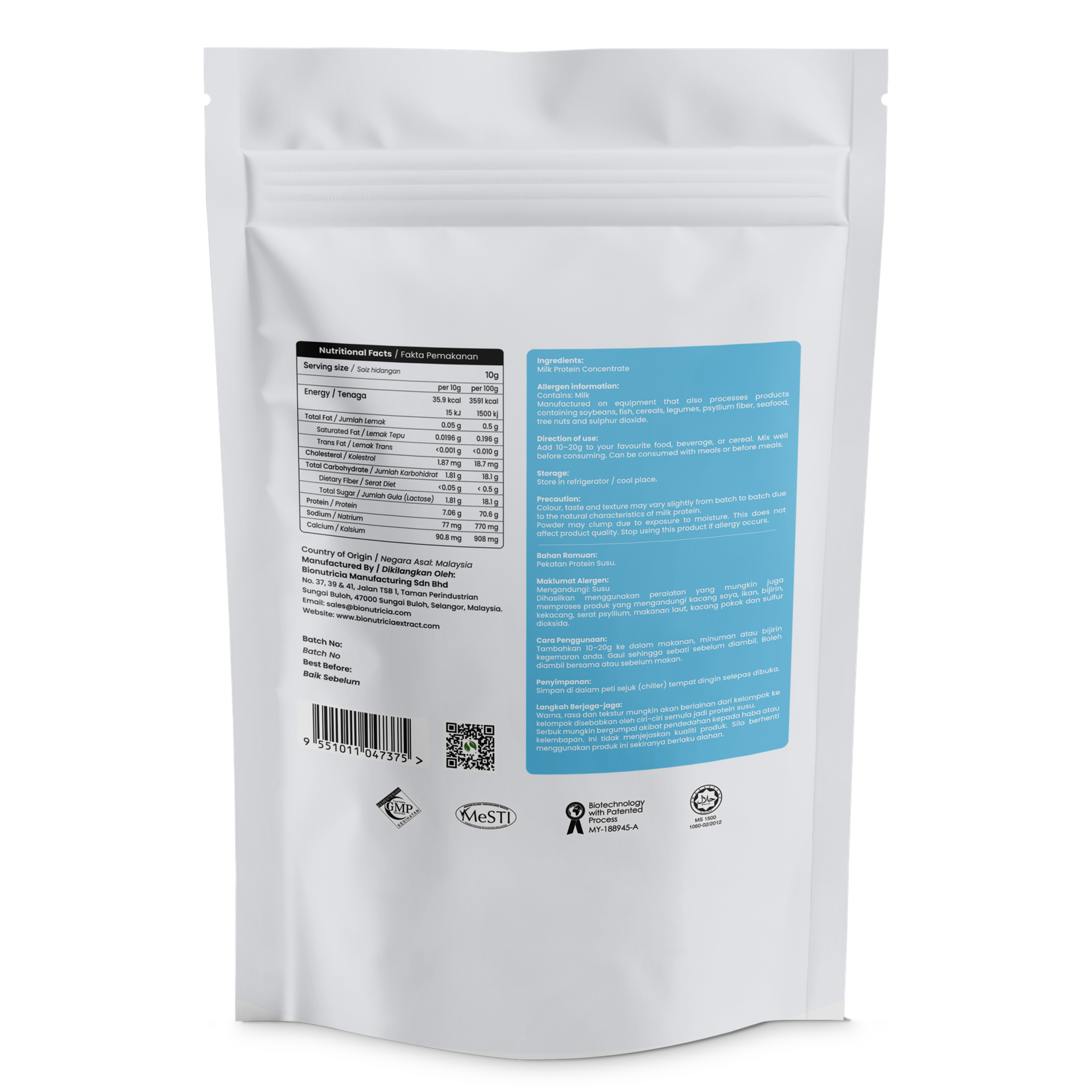
Nutrition facts
| Serving size 10 g | Per 10 g | Per 100 g |
|---|---|---|
| Energy | 35.9 kcal / 150 kJ | 359 kcal / 1,500 kJ |
| Protein | 7.06 g | 70.6 g |
| Total carbohydrate | 1.81 g | 18.1 g |
| of which total sugar (lactose) | 1.81 g | 18.1 g |
| Dietary fiber | < 0.05 g | < 0.5 g |
| Total fat | 0.05 g | 0.5 g |
| Saturated fat | 0.0196 g | 0.196 g |
| Trans fat | < 0.001 g | < 0.010 g |
| Cholesterol | 1.87 mg | 18.7 mg |
| Sodium | 77 mg | 770 mg |
| Calcium | 90.8 mg | 908 mg |
Product details
| Ingredients | Milk protein concentrate |
|---|---|
| Net weight | 200 g |
| Pack | Resealable stand-up zip-lock pouch, 135 × 190 mm |
| Allergens | Contains milk. Made on equipment that also processes soybeans, fish, cereals, legumes, psyllium fiber, seafood, tree nuts and sulphur dioxide. |
| Storage | Store in the refrigerator or a cool, dry place, and reseal the pouch after each use. |
| Good to know | Color, taste and texture can vary slightly between batches — that is the nature of a natural milk protein. The powder may clump if it meets moisture; this does not affect quality. Stop using if you have an allergic reaction. |
| Certifications | Halal (MS 1500) · GMP · MeSTI · Patented process (MY-188945-A) |
| Country of origin | Malaysia |
| Made by | Bionutricia Manufacturing Sdn. Bhd., Sungai Buloh, Selangor, Malaysia |
Frequently asked questions
Is milk protein concentrate the same as whey protein?
No. Whey is one of the two proteins in milk. Milk protein concentrate contains both — roughly 80% casein and 20% whey — so it digests more slowly and feels more filling than whey alone.
How do I get the smoothest mix?
Pour your beverage in first, then sprinkle the powder in gradually and shake, whisk or blend. Because it is pure milk protein with nothing added, a shaker bottle, frother or blender works best, and warm drinks blend in especially easily. Letting it sit for a few minutes gives a smoother, less foamy drink.
Is it suitable if I am lactose intolerant?
Probably not. There is no added sugar, but it naturally contains lactose, about 1.8 g in a 10 g serving. It also contains milk, so it is not suitable for anyone with a milk allergy.
How much should I use?
10 to 20 g at a time (about 2 to 4 teaspoons), which gives you about 7 to 14 g of protein. Add it to food, a drink or cereal, with a meal or before one.

















 Liposomal Vitamin C + Kurma Standardized Extract Powder
Reviews
There are no reviews yet.