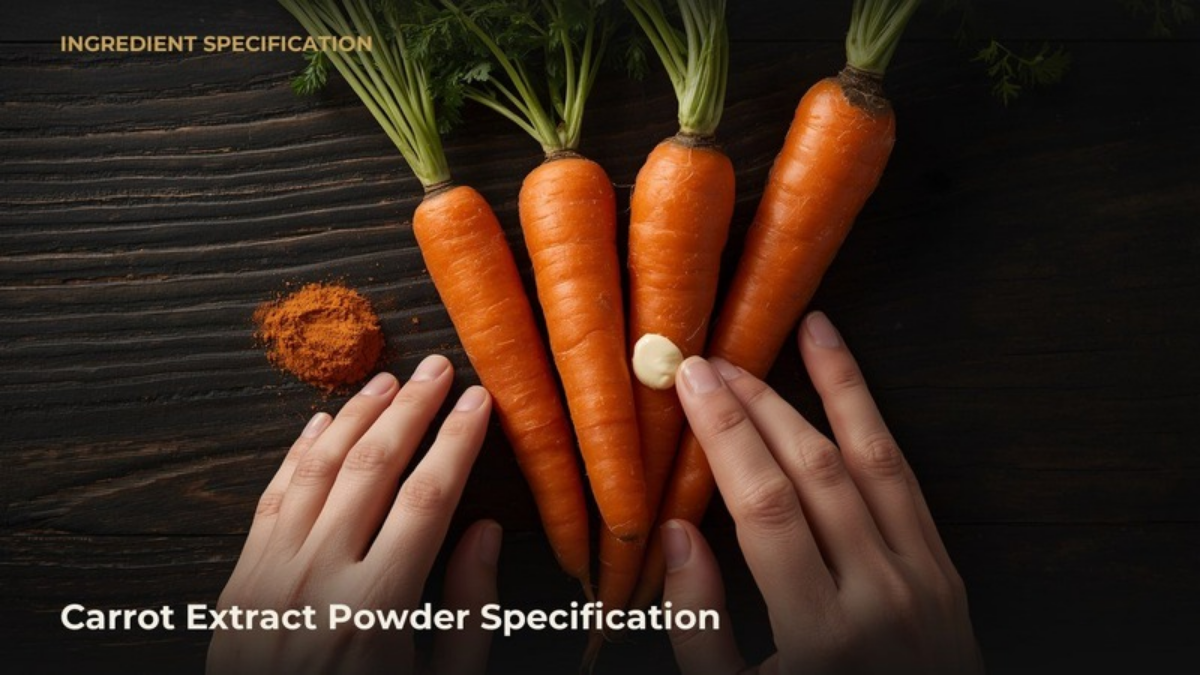
Carrot Standardized Extract Powder for Food Colour and Beverages: Specification and COA Checklist
Formulator’s summary: Carrot (Daucus carota subsp. sativus) standardized extract powder is a 20:1 extract with a bright orange colour and a sweet taste. It disperses when mixed, topped or blended into water, smoothies and beverages, and is used as a natural colourant and flavouring in cake, biscuits and ice-cream. Powder texture varies by batch and the powder can clump with heat or moisture. A 1 kg bench assessment should check colour and dispersion in the target system.
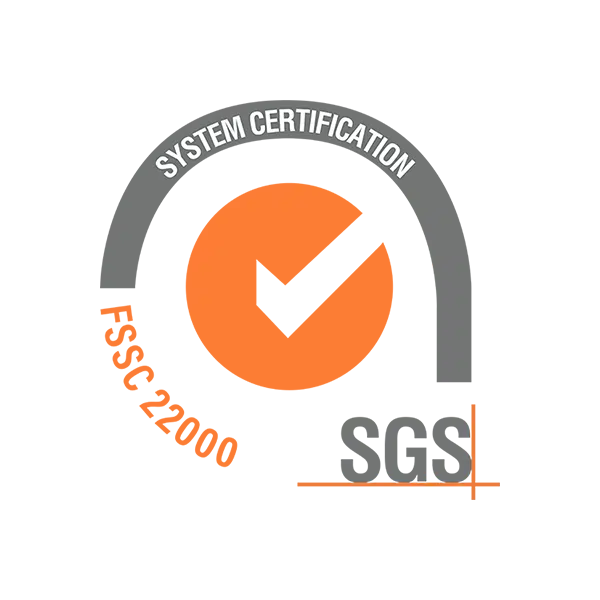
Company certifications/registrations
Quick facts for formulators
- Physical form: extract powder, bright orange, sweet taste
- Extraction ratio: 20:1
- Dispersion: mix, top or blend into water, smoothies and beverages
- Addition range: 2–6% of total weight, as a starting reference for a small-scale trial
- Storage: 24 months in original sealed packaging, below 25°C, relative humidity below 65%
What does a carrot extract powder specification need to state?
A specification for this item states the botanical identity (Daucus carota subsp. sativus), the 20:1 extraction ratio, appearance and colour, sensory profile, dispersion method, storage conditions, the 24-month shelf life, and the lot COA results. Where the item is sold as standardised, the specification also names the marker, the assay method and the acceptance range.
Carrot’s orange colour and sweet flavour are the formulation attributes to assess. The catalogue describes the ingredient as a natural colourant and flavouring agent for food and drink, and the colour contribution and sensory fit are confirmed in the intended matrix with the actual lot.
Standardised and crude carrot powder: the specification difference
A marker-standardised extract is specified by a named marker, its assay method and an acceptance range, verified on each lot COA. A crude carrot powder is specified by the milled vegetable material and its processing, without a marker assay range. The buyer should require the marker method and lot result for any material sold as standardised. This is a difference in specification and quality-control documentation, not a claim about physiological effect.
Colour, taste and dispersion in use
The product record describes a bright orange colour and a sweet taste. Carrot extract powder is mixed, topped or blended into water, smoothies and beverages, and is listed for use in ice-cream, cake, biscuits, jam and dressings. Dilution, opacity and process conditions change the shade seen in the finished product, so colour should be checked in the actual matrix.
Colour and flavour stability
Colour, taste and texture may vary from batch to batch. The powder can clump with heat or moisture, and the storage guidance is to keep it sealed, away from sunlight, in a cool and dry place. Hold each lot to the approved shade and sensory reference, and record the result with the lot number.
Starting addition range and trial design
The product record gives an addition range of 2–6% of total weight as a starting reference for a small-scale trial. Define the target shade and sensory profile, select the intended matrix, add the ingredient using normal powder-handling controls, and record mixing conditions and visible uniformity. Choose between a clear solution and a dispersed powder according to the target product, and assess both with the actual lot.
Certificate of analysis checklist
A lot certificate of analysis should identify the product and lot, show the measured results and methods, and state the acceptance criteria. For a standardised extract, the marker and its assay percentage are the central fields, and the record should state the marker measured, the method and the release limit.
- Product name and botanical identity match the purchase specification.
- Lot number and report identity match the delivered material.
- Any marker, assay result, method and acceptance range are explicit.
- Dispersion statement includes its test basis, where supplied.
- Storage, packaging and shelf-life conditions are consistent across documents.
- Certification documents are current and applicable to the intended market.
Storage and batch information
The product record gives a 24-month shelf life in original sealed packaging, below 25°C at relative humidity below 65%, with protection from sunlight and moisture. Powder texture can vary and may clump with heat or moisture, and colour, taste and texture can vary between batches. Compare incoming material with the COA and keep the storage conditions with the lot record.
The catalogue knowledge entry
The carrot knowledge entry covers botanical background. This guide is limited to specification, document review, marker disclosure and processing checks.
Reference compound structure
The carrot product record names beta-carotene as a carotenoid present in the extract. The structure below is beta-carotene itself, shown for reference. It is not a statement that beta-carotene is this extract’s standardised marker.
Supplying carrot extract powder and related ingredients in bulk
The catalogue lists Carrot (Daucus carota subsp. sativus) standardized extract powder, the subject of this guide, and three related ingredients, each a distinct product:
- Carotene Oil Powder (Natural Vitamin A), a carotenoid colour ingredient with its own specification.
- Jackfruit (Artocarpus heterophyllus) Standardized Extract Powder, a sweet fruit powder for beverage and bakery use.
- Shan Yao (Chinese Yam) Standardized Extract Powder, a tuber powder for beverage and powder-blend use.
Bulk supply, a certificate of analysis per lot, supporting documentation and packing options are arranged through the quotation for each item. Company documentation lists FSSC 22000, JAKIM Halal, GMP, HACCP, MESTI and US FDA facility registration.
Frequently asked questions
What marker should a carrot extract COA report? The item is specified as a 20:1 extract. Confirm the marker, method and acceptance range for the lot on its COA.
How is the carrot extract powder dispersed? Mix, top or blend it into water, smoothies and beverages. Verify the dispersion in the intended matrix with a controlled bench test using the actual lot.
Which COA details should be checked? Match the product and lot identifiers, review the test methods and measured results, and confirm that any stated marker result meets its acceptance criteria. Check storage and shelf-life conditions against the accompanying specification.
What food applications are listed? The catalogue lists beverages, bakery products such as cake and biscuits, ice-cream, jam and dressings. Confirm colour and sensory fit in the specific formulation.
Request the specification sheet and the lot certificate of analysis for Carrot (Daucus carota subsp. sativus) standardized extract powder.