Pandan vs. Matcha
Two bright green ingredients that are constantly confused for each other — and do completely different jobs.
Matcha is a tea. Pandan is a herb. Matcha is powdered Japanese green tea leaf with caffeine and a grassy, umami flavour. Pandan is a Southeast Asian leaf with no caffeine, used for its sweet vanilla-coconut aroma. They look alike because both are green — but they are not substitutes for each other.
If a café menu has both on it and you cannot tell which one you want, this is the difference in plain terms.
Side by side
| Matcha | Pandan | |
|---|---|---|
| Plant | Camellia sinensis (tea) | Pandanus amaryllifolius (screwpine) |
| Origin | Japan | Southeast Asia |
| Caffeine | 19–44 mg per gram | None |
| Taste | Grassy, umami, bitter finish | Sweet, nutty, vanilla-coconut |
| Main role | The drink itself | Aroma and colour |
| Signature compound | L-theanine, EGCG catechins | 2-acetyl-1-pyrroline (2AP) |
| Western analogue | Strong green tea | Vanilla |
Taste: bitter versus sweet
Matcha leads with umami — the savoury depth you also find in seaweed or good broth — and finishes with a green, slightly bitter edge. That bitterness is not a defect. It is the reason matcha holds up against milk and sugar instead of disappearing into them.
Pandan does the opposite. It has almost no bitterness and reads as sweet even with no sugar present, because the aroma compound 2-acetyl-1-pyrroline is the same one that makes jasmine rice and basmati smell the way they do. Your brain files that smell under “sweet” before you have tasted anything.
This is why they are not interchangeable. Swapping matcha for pandan in a latte gives you a sweet-smelling milk drink with no tea in it. Swapping the other way gives you a bitter dessert.
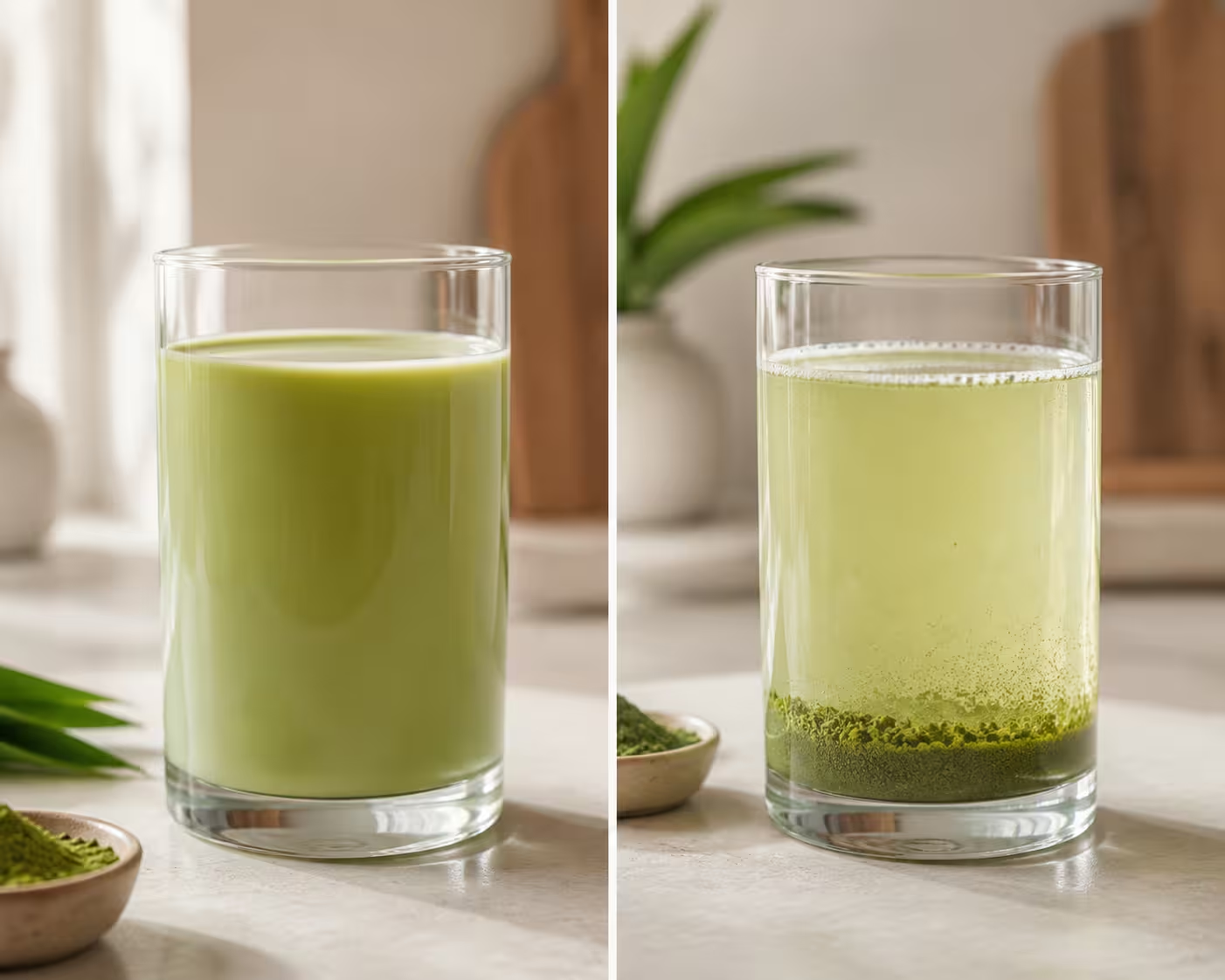
Pandan in powder form. The green looks like matcha, but the plant and the flavour are unrelated.
Caffeine: only one of them has any
Matcha carries roughly 19–44 mg of caffeine per gram, so a typical teaspoon lands somewhere near half a cup of coffee. Pandan contains no caffeine whatsoever.
If you want the green colour and the aroma but not the stimulant, pandan on its own is the answer — a pandan latte at night is a real thing in Southeast Asia for exactly this reason. If you want the lift, you need the matcha.
Why both are green
Neither one is dyed. Both get their colour from chlorophyll, and in both cases the vividness of the green is a rough proxy for freshness and handling.
Matcha is shade-grown before harvest, which pushes chlorophyll production up and gives ceremonial grade its almost fluorescent colour. Pandan leaves are naturally deep green and hold that colour well when they are dried and milled properly — badly processed pandan turns dull olive, which is usually the first sign of a cheap powder.
Nutrition and compounds
Matcha is the more studied of the two. Because you drink the whole leaf rather than an infusion, it delivers catechins — particularly EGCG — along with L-theanine, the amino acid green tea drinkers associate with a calmer alertness than coffee.
Pandan has had less attention in human research, but laboratory analysis of the leaf consistently finds flavonoids and phenolic compounds, along with beta-carotene and vitamin C. Most of that work is preliminary, so it is fair to say pandan is a flavour ingredient with some interesting chemistry rather than a health supplement.
Which should you use?
It depends entirely on the job:
- You want a caffeinated green drink — matcha. If plain matcha is too sharp for you, an iced pandan matcha latte recipe is the gentlest way in.
- You want dessert aroma without caffeine — pandan. It is standard in kaya, chiffon cake, kuih and coconut rice.
- You want green colour with no food dye — either works, but pandan is cheaper for this and tastes sweeter.
- You like matcha but find it too bitter — this is where the two stop competing.
That last case is where the comparison stops being a comparison.
The verdict: they are better together
Look back at the table and you will notice something. Almost every row is an opposite. Caffeine against none. Bitter against sweet. Savoury depth against dessert aroma. Tea against vanilla.
Opposites are exactly why the blend works. Matcha brings the backbone — the caffeine, the umami, the structure that survives milk. Pandan fixes matcha’s one real weakness — it rounds off the bitter finish with a creamy, vanilla-like aroma, and it does that with a second plant instead of a spoonful of sugar.
The result tastes like a dessert drink and reads on the label as two ingredients. That is a combination neither leaf manages on its own: plain matcha needs sweetening for most palates, and plain pandan gives you the aroma but nothing to drink.
So the honest answer to “pandan or matcha” is usually both — which is the whole idea behind pandan matcha.
Frequently asked questions
Is pandan a type of matcha?
No. They are unrelated plants. Matcha comes from the tea bush; pandan is a tropical leaf from a completely different family. The only thing they share is the colour.
Does pandan taste like green tea?
Not at all. Green tea is vegetal and slightly bitter. Pandan is sweet and aromatic, closer to vanilla or coconut than to tea.
Can I substitute pandan for matcha in a recipe?
Only if you want the colour and not the tea flavour or caffeine. For baking where the green is decorative, pandan works and tastes sweeter. For a matcha latte, it is not a substitute.
Which is more expensive?
Ceremonial-grade matcha is considerably more expensive per gram, and prices have risen further with recent supply pressure in Japan. Pandan is comparatively inexpensive.
Buying pandan matcha? Three things to check
Most powders sold as flavoured matcha are mostly sugar. These three checks separate the real thing from the rest.
Bionutricia Extract Pandan Matcha Powder is a 50/50 blend of Japanese matcha (Camellia sinensis) and pure Malaysian pandan (Pandanus amaryllifolius). Two ingredients, no added sugar, no maltodextrin and no colouring. One 200 g pack holds about 100 servings at 1 teaspoon each, and a teaspoon carries roughly 20–45 mg of caffeine — about a third of a cup of coffee. It is produced in Malaysia by Bionutricia Manufacturing Sdn. Bhd., a JAKIM Halal, FSSC 22000, GMP and HACCP certified facility operating since 2006.