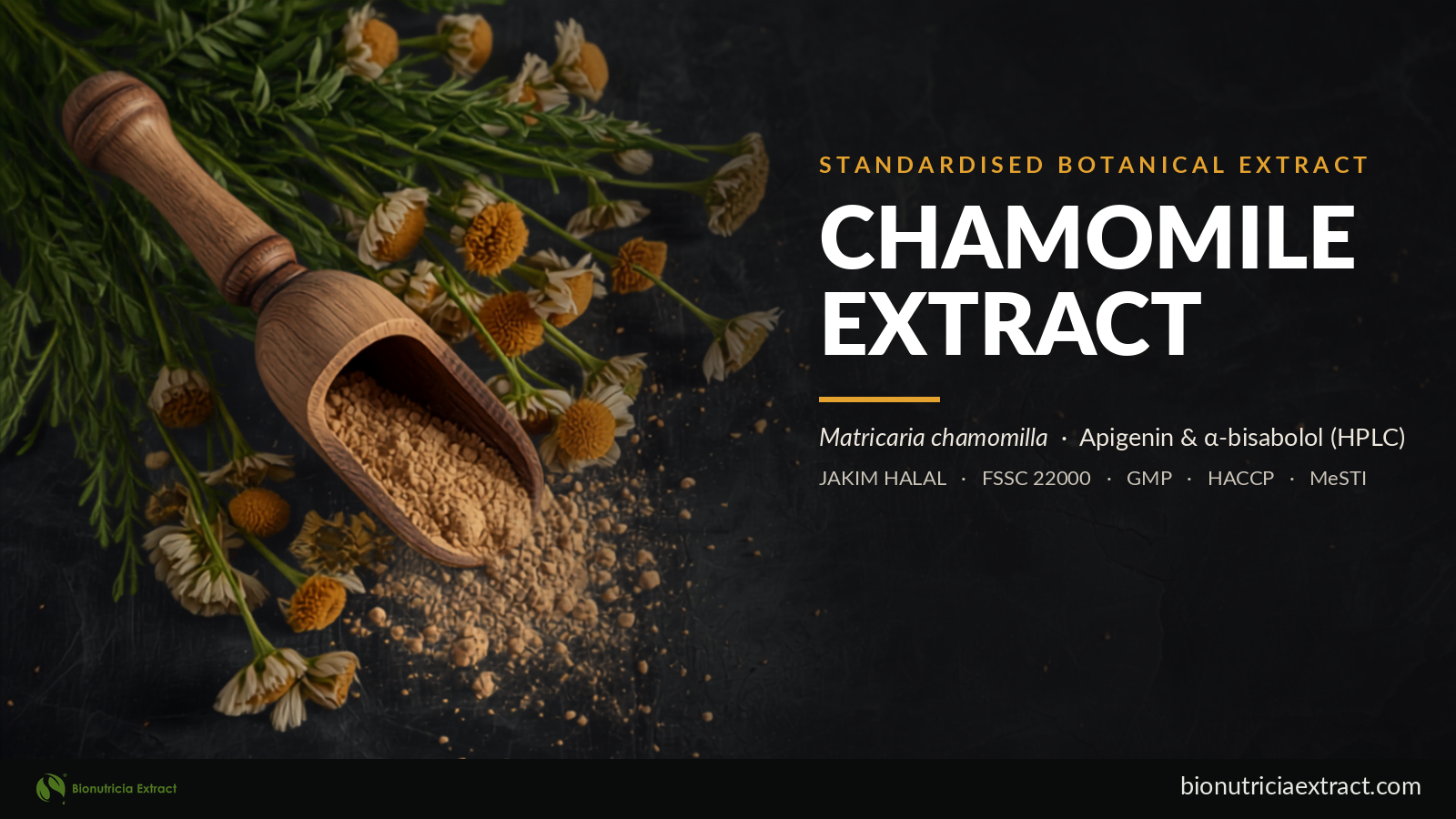
Chamomile (Matricaria chamomilla, German chamomile) is one of the most-used calming botanicals. Its marker compound is the flavone apigenin; it works largely through the GABA-A benzodiazepine site; and it has placebo-controlled trial support in anxiety. This guide covers the active compound, the mechanism, the clinical evidence and how to source a chamomile ingredient for B2B formulation.
Active compound & standardisation
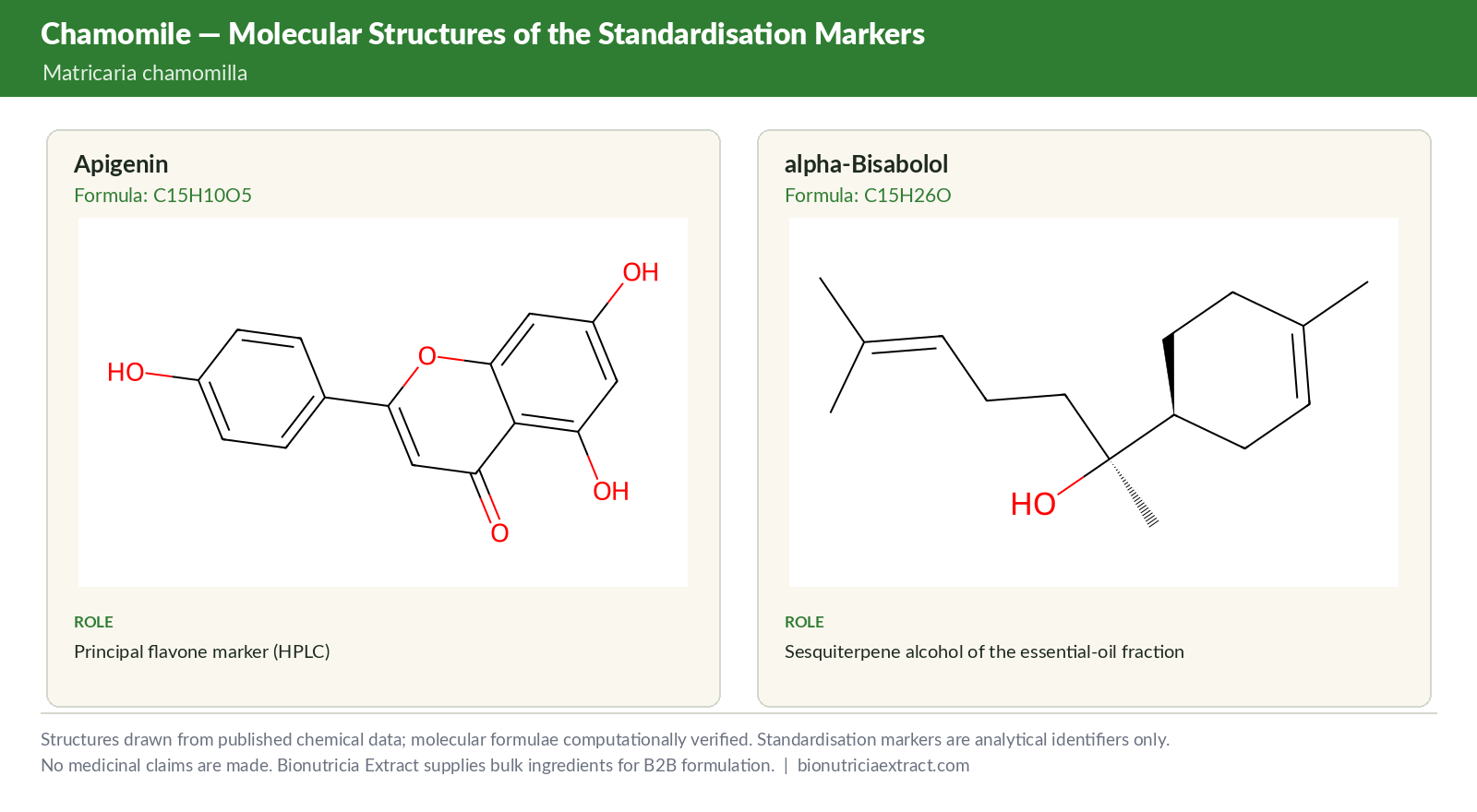
German chamomile is characterised by the flavone apigenin (and its glycoside apigenin-7-O-glucoside), together with an essential oil rich in α-bisabolol and chamazulene. A quality chamomile ingredient is standardised on apigenin by HPLC — the clinical extract used about 1.2% apigenin — which serves as the identity-and-consistency marker for each batch.
How chamomile works (mechanism)
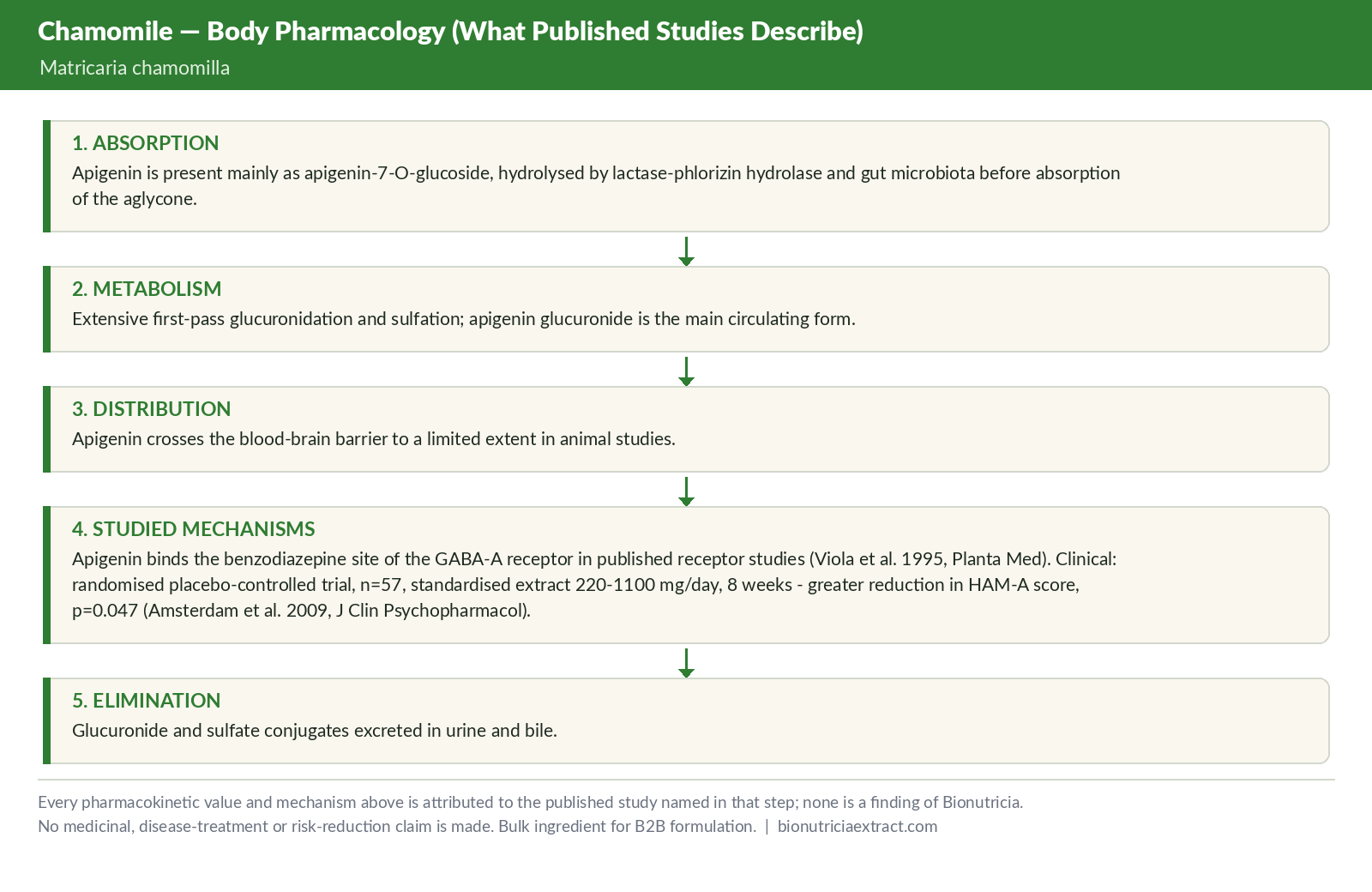
Apigenin is a partial agonist at the benzodiazepine binding site of GABA-A receptors, the principal inhibitory neurotransmitter system in the brain — the accepted pharmacological basis for chamomile’s calming and sleep-supportive research. Apigenin also modulates monoamine (serotonin, dopamine, noradrenaline) signalling, while the oil’s bisabolol and chamazulene contribute anti-inflammatory and spasmolytic activity behind chamomile’s traditional digestive and skin uses. Mechanism is provided as scientific background on the botanical; it is not a claim that any finished product treats, cures or prevents a condition.
Clinical evidence
| Study | Design | Result (attributed to the study) |
|---|---|---|
| Amsterdam et al. 2009, J Clin Psychopharmacol | Placebo-controlled RCT, n=57, standardised extract 220-1,100 mg/day, 8 weeks | Significant reduction in Hamilton Anxiety (HAM-A) scores vs placebo (p=0.047) in generalised anxiety |
| Mao et al. 2016 | Long-term study, 1,500 mg/day chamomile extract | Explored maintenance and relapse in the studied group |
Trials use specific apigenin-standardised extracts; results describe those preparations, not any finished product. Sleep-specific trials have been mixed.
Sourcing chamomile as a B2B ingredient
Chamomile is not a current Bionutricia catalogue SKU. Bionutricia is a JAKIM Halal-certified botanical extract manufacturer (also FSSC 22000, US FDA-registered, GMP, HACCP, MeSTI) that develops standardised extracts for brand owners. A company wanting a halal, apigenin-standardised chamomile ingredient can enquire about custom development and OEM manufacturing.
Frequently asked questions
What is the active compound? The flavone apigenin (apigenin-7-glucoside), by HPLC; ~1.2% in the clinical extract.
How does it work? Partial agonism at the GABA-A benzodiazepine site; plus anti-inflammatory oil constituents.
What does the evidence show? Amsterdam 2009 (n=57): significant HAM-A reduction vs placebo in anxiety.
Does Bionutricia sell it? Not a catalogue SKU; custom halal OEM development can be enquired about.
Safety? Well tolerated; Asteraceae-allergy caution; high doses usually avoided in pregnancy; follow local claim rules.