Indonesia’s Mandatory Halal Certification (BPJPH): What Ingredient Exporters Need to Know
The headline for an ingredient supplier: Indonesia’s halal law reaches your raw material, not just your customer’s finished product. Under Law No. 33/2014 and its current implementing regulation, raw materials, food additives and processing aids used in food and beverages are in scope in their own right. A Malaysian JAKIM certificate is recognised in Indonesia — but recognition is not automatic. The foreign certificate has to be registered with BPJPH before the goods move, and the registration number displayed alongside the halal label.
Who does what: BPJPH, LPPOM MUI and the Fatwa Commission
The most common confusion among overseas suppliers is thinking Indonesian halal certification still means “MUI”. It has not since 2019. Three bodies now share the work:
- BPJPH (Badan Penyelenggara Jaminan Produk Halal), under the Ministry of Religious Affairs, is the state authority. It administers the system and issues the certificate.
- LPPOM MUI and other accredited inspection bodies (LPH) carry out the document review and the technical audit.
- The MUI Fatwa Commission issues the religious ruling on which the certificate rests.
So the audit may still feel like the old LPPOM MUI process, but the certificate — and the enforcement — sits with the state.
The phase-in timetable
| Phase | Scope | Mandatory from |
|---|---|---|
| 1 | Food, beverages, food packaging, raw materials, food additives and processing aids for food and beverages, slaughter products and related services | 17 October 2024 — with a relaxation for importers, retailers and micro/small enterprises extending to 17 October 2026 |
| 2 | Cosmetics, traditional and herbal medicines, health supplements, certain household chemicals in contact with the body, other consumer goods, Class A medical devices | 17 October 2026 |
| 3 | Pharmaceuticals and medical devices in contact with the body | 17 October 2029 |
Read those two 2026 dates together and the picture for an ingredient supplier is clear. If you sell a botanical extract into an Indonesian food or beverage manufacturer, the relaxation runs out in October 2026. If you sell into a supplement or herbal-medicine manufacturer, that category becomes mandatory on the same date. Either way, October 2026 is when the question stops being commercial and becomes legal.
Why the ingredient itself is in scope
Indonesia’s implementing regulations name three categories of input explicitly: bahan baku (raw materials), bahan tambahan pangan (food additives such as flavourings, colourings and preservatives) and bahan penolong (processing aids such as emulsifiers and thickeners). The obligation attaches both to the business that supplies the material and to the manufacturer that uses it — which means a certified Indonesian manufacturer found to be using an uncertified input is itself exposed.
The practical consequence is the one that matters commercially: your Indonesian customer cannot simply take your word for it. Your ingredient has to be documented inside their own halal assurance system, with an audit trail. For a botanical extract, auditors look closely at exactly the things a spec sheet often omits — the origin of the plant material, any animal-derived inputs anywhere in the chain, and the solvents, carriers and processing aids used to make the extract.
One point to check rather than assume. Indonesia maintains a “halal positive list” of materials considered inherently halal and exempt from certification, covering unprocessed natural materials and a long list of named chemical substances. Whether a processed botanical extract falls inside that exemption is not something to assume — extraction involves solvents and processing steps that may take a material outside the “no further processing” criterion. Check the specific ingredient against the current list rather than relying on the general principle.
How a JAKIM certificate is treated
Indonesia and Malaysia signed a memorandum of cooperation in August 2023 under which JAKIM is recognised as a halal certification body in Indonesia, and BPJPH as one in Malaysia. Indonesia holds similar arrangements with a large number of foreign halal bodies across many countries.
What recognition means in practice is narrower than most suppliers expect. It means your certificate does not need to be re-audited from scratch. It does not mean it is valid in Indonesia by virtue of existing in Malaysia. The mechanism is SHLN — Sertifikat Halal Luar Negeri, foreign halal certificate registration — and the sequence is:
- Confirm JAKIM’s current recognition status and the product scope it covers on BPJPH’s live list of recognised foreign bodies. Scope matters; recognition is not blanket.
- Work through an Indonesian importer or local representative — a foreign business cannot register alone.
- Submit through BPJPH’s portal: the legalised JAKIM certificate, company profile and business licence (or the importer’s NIB), the product list with HS codes, the ingredient list and process flow, and halal assurance system documentation.
- BPJPH verifies and issues a registration number, valid for the same period as the underlying JAKIM certificate.
- Display that foreign registration number alongside the halal label, and renew it when the JAKIM certificate is renewed.
Labelling and enforcement
BPJPH has introduced a new official Halal Indonesia logo, with existing stock of old-logo packaging usable until 17 October 2026. Products that cannot meet halal requirements are not simply left unmarked — they must carry a “Tidak Halal” (non-halal) label. There is no third option.
Enforcement machinery arrived in June 2026 in the form of a BPJPH regulation on administrative sanctions. The escalation runs written warning → administrative fine → revocation of the certificate (including revocation of foreign certificate registration) and/or mandatory product recall → for repeated or serious failures, temporary closure and public disclosure of the non-compliance. Response windows are short: a matter of days to respond to a warning or file an appeal, and weeks to complete a recall. Failing to register a foreign certificate, failing to display the foreign registration number, and failing to renew it are each separately named as sanctionable.
What Indonesian buyers will ask you for
- The halal certificate itself, legalised for BPJPH submission
- A full ingredient, additive and processing-aid declaration, with origin and species for each material, flagging anything animal-derived, alcohol-derived or fermentation-derived
- A production process flowchart showing receipt, storage, processing and packing, and how halal and non-halal materials are kept apart
- Your halal assurance system documentation
- A batch-specific Certificate of Analysis
- Company profile, business licence, and the product list mapped to HS codes
If that list looks like the document pack a serious buyer in any regulated market asks for, that is because it largely is. The halal-specific additions are the origin declarations and the segregation evidence.
Where Bionutricia sits
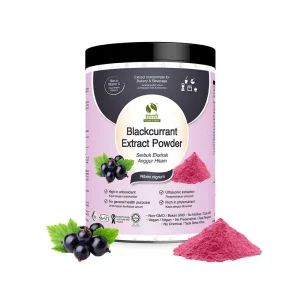
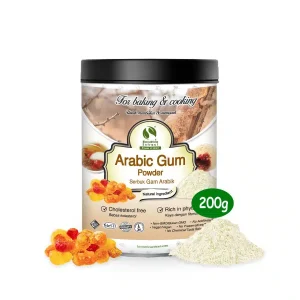
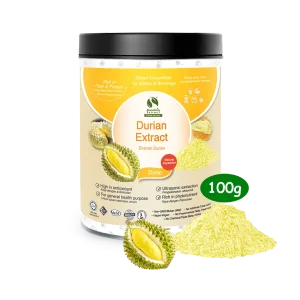
Bionutricia Extract manufactures standardised botanical extracts in Malaysia under JAKIM Halal certification together with FSSC 22000, GMP, HACCP, MeSTI and US FDA registration, and issues a Certificate of Analysis on every lot. Halal control is handled at facility level rather than as a per-product exercise, which is what makes the ingredient-origin and segregation evidence straightforward to produce when a customer’s auditor asks for it. For buyers preparing an Indonesian registration, we supply the ingredient documentation set above as a matter of course.
Frequently asked questions
Does the raw ingredient need certification, or only the finished product? Raw materials, additives and processing aids for food and beverages are in scope in their own right. Your Indonesian customer will need your ingredient covered within their own halal assurance documentation.
Is a JAKIM certificate accepted in Indonesia? JAKIM is recognised under the August 2023 Malaysia–Indonesia memorandum of cooperation, but the certificate must be registered with BPJPH before import, and the registration number displayed alongside the halal label.
What is the deadline? Food, beverages and their raw materials: 17 October 2024, relaxed to 17 October 2026 for importers, retailers and MSMEs. Cosmetics, herbal medicines and health supplements: 17 October 2026. Pharmaceuticals: 2029.
BPJPH, LPPOM MUI or the Fatwa Commission — who does what? BPJPH issues the certificate; LPPOM MUI and other accredited bodies audit; the MUI Fatwa Commission issues the underlying religious ruling.
What will an Indonesian buyer ask me for? The certificate, a full ingredient and processing-aid declaration with origins, a process flowchart showing segregation, halal assurance system documentation, a batch COA, and the product list with HS codes.