Pandan Leaf Extract Powder vs. Raw Ground Leaf: The Science of Soluble Beverage Blends
Why does your homemade pandan matcha leave gritty sand at the bottom of the glass? This Pandan Leaf Extract Powder guide explains the science — and the fix.
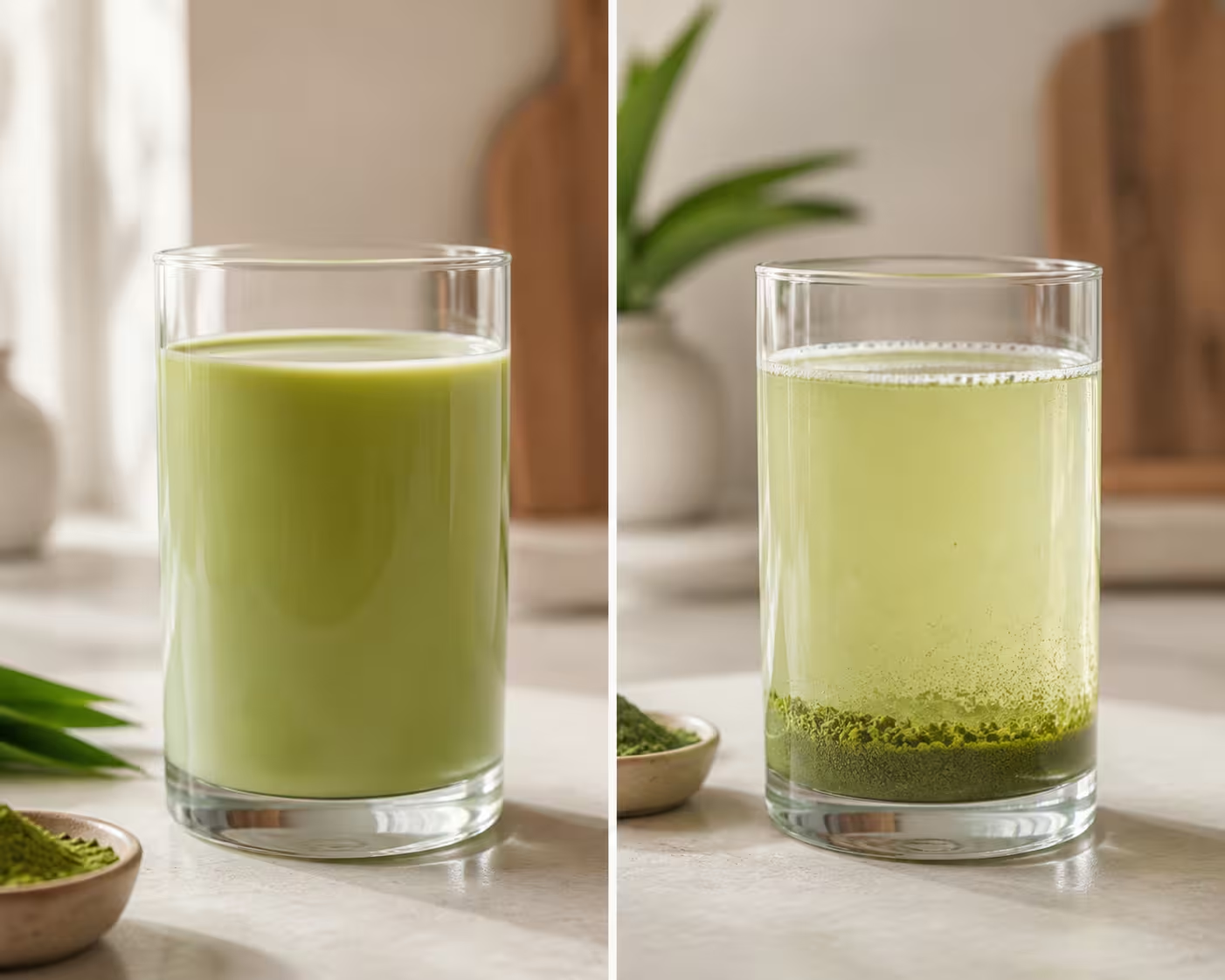
Figure 1: Standardized extract powder (left) vs. raw ground leaf residue (right).
🏝️ Why Raw Ground Pandan Leaves Leave Gritty Residue in Your Drinks
If you’ve ever tried making a pandan matcha latte at home with raw ground pandan leaf powder, you’ve probably noticed the same problem every wellness consumer runs into: a sandy, gritty texture that settles stubbornly at the bottom of the glass, no matter how hard you stir. This isn’t a preparation mistake — it’s a structural limitation of the raw material itself.
Raw ground leaf is exactly what it sounds like: dried pandan leaves crushed into a coarse powder. The plant’s cellulose fiber doesn’t break down in water, so it never truly dissolves — it just gets suspended, then sinks. Worse, pandan’s signature “vanilla of the East” aroma comes from a volatile compound called 2-acetyl-1-pyrroline, which degrades quickly once the leaf is cut and dried. By the time raw ground leaf reaches your cup, much of that fragrance has already evaporated.
🔬 The Science of Standardized Extraction and Microencapsulation
A true Pandan Leaf Extract Powder is made differently. Instead of simply grinding dried leaves, the plant material goes through enzymatic or ultrasonic extraction to pull out the soluble actives and aromatic compounds, leaving the indigestible fiber behind. The resulting liquid extract is then spray-dried into a fine, standardized powder.
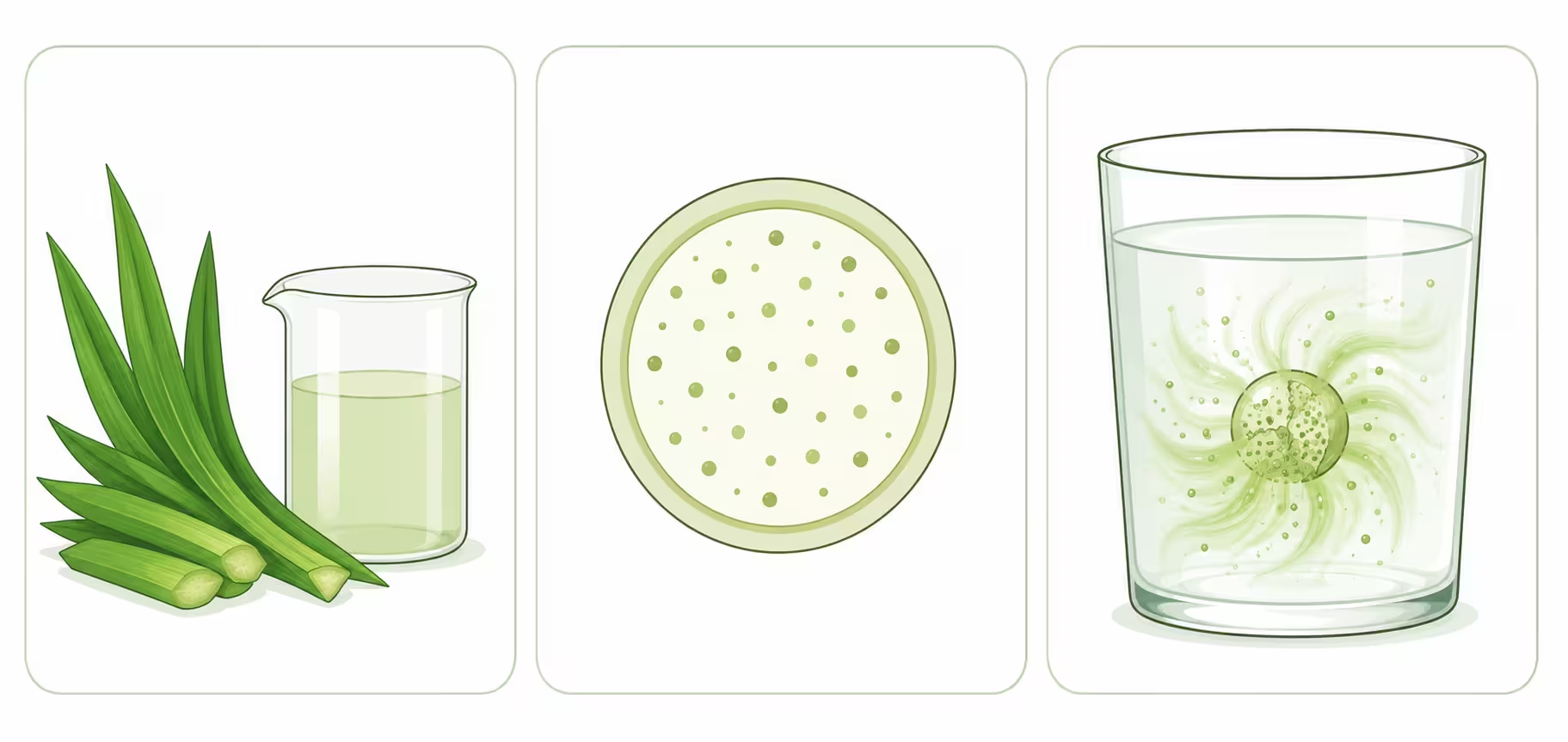
Figure 2: Microencapsulation locks in aroma and preserves it during storage, releasing it once heated.
- No Fiber, No Grit: Extraction removes the insoluble cellulose that causes sandy residue, leaving only the soluble actives.
- Microencapsulated Aroma: The volatile 2-acetyl-1-pyrroline fragrance is protected inside a stable carrier matrix, so it survives storage and releases once heated.
- Standardized Potency: Every batch is calibrated to a consistent concentration, so flavor and color don’t vary from pack to pack.
📊 Side-by-Side: Extract Powder vs. Raw Ground Leaf
| Feature | Pandan Leaf Extract Powder | Raw Ground Leaf |
|---|---|---|
| Solubility | Fully dissolves, zero grit | Sandy residue settles at the bottom |
| Aroma Retention | Microencapsulated, stable in storage | Volatile fragrance degrades quickly |
| Batch Consistency | Standardized concentration, every batch | Varies with leaf age and drying method |
| Beverage Application | Works in hot and cold liquids instantly | Requires boiling and straining |
🛡️ Purity Standards: Heavy Metal Testing and Certifications
Because extraction concentrates the plant’s compounds, it’s essential that the raw leaf itself is sourced and tested responsibly before processing. Bionutricia’s Pandan Leaf Extract Powder is produced under Halal-certified, FSSC 22000, GMP and HACCP facility conditions, with every batch screened for heavy metals and microbial limits before it leaves the factory — the same contaminant-spec checklist we publish for our B2B buyers.
❓ Frequently Asked Questions
Raw ground pandan leaf contains insoluble plant fiber that never fully dissolves in liquid. It suspends briefly when stirred, then settles as sandy sediment at the bottom of the glass.
Pandan Leaf Extract Powder is pure pandan extract on its own. Pandan matcha powder blends this extract 1:1 with Japanese green tea for a beverage-ready mix.
Retail-sized pouches are available directly through our online store, formulated for home use with no minimum order.
📘 Sourcing Pandan Leaf Extract Powder in Bulk?
If you’re formulating beverages, syrups, or bakery products and need consistent, standardized pandan extract at scale, our OEM and bulk buyer’s guide covers specifications, MOQ, and certifications.
*Halal-certified, GMP facility, heavy-metal tested every batch.*